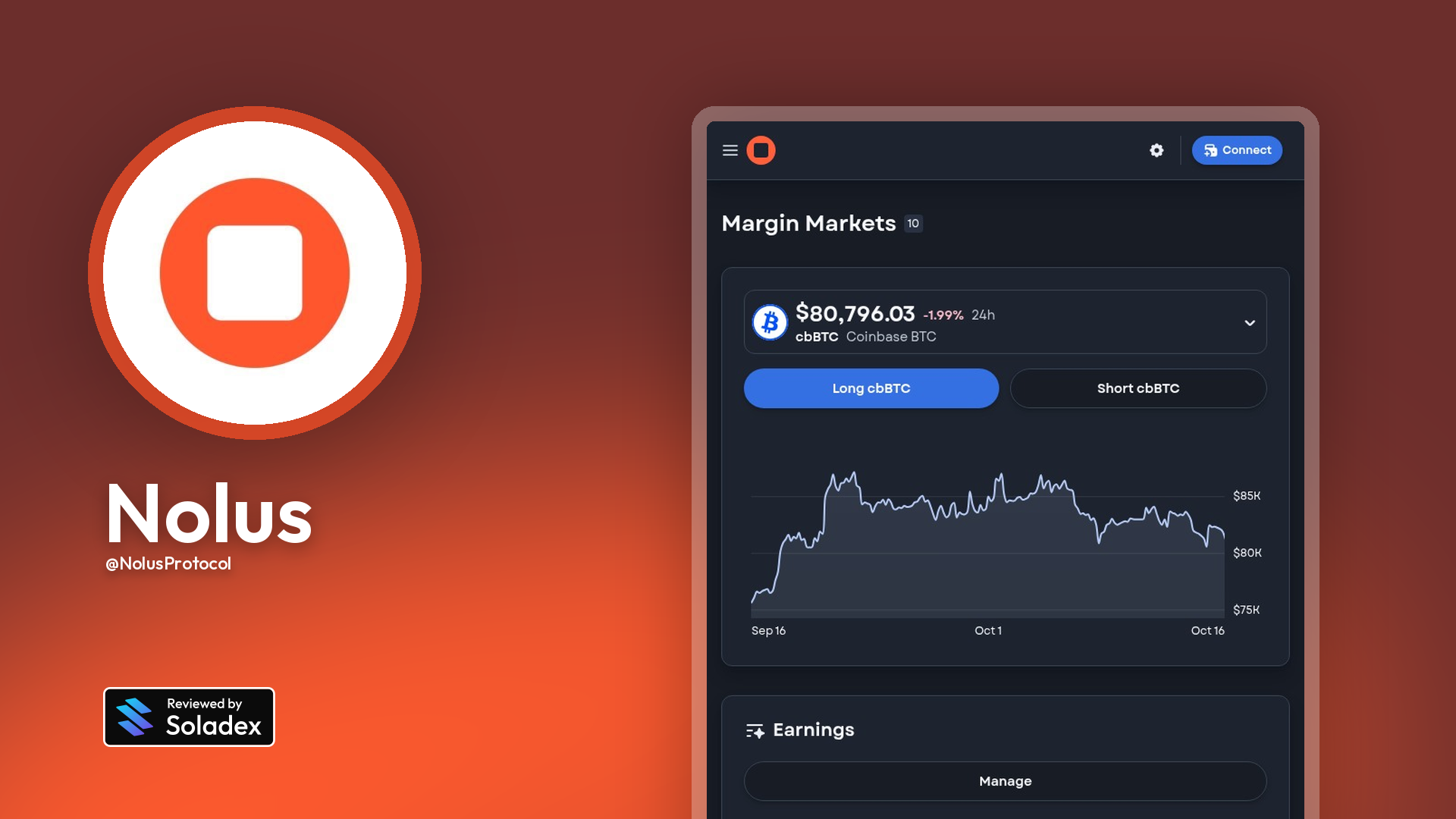
What Is Nolus?
Nolus Protocol is a decentralized finance platform that lets users access leveraged exposure to crypto assets through a feature called a lease. Instead of requiring users to deposit more collateral than they borrow, Nolus allows users to open a lease using a down payment. The protocol combines that down payment with borrowed liquidity to purchase the selected crypto asset. This can make it easier for users to increase their exposure to an asset while keeping their capital.

How Nolus Protocol Works
A Nolus lease works similarly to financing an asset purchase. A user starts by choosing an asset and depositing a down payment. Nolus then adds borrowed funds to the position and uses the combined amount to buy the asset. The purchased asset is held as collateral for the lease until the user repays the borrowed amount or closes the position. For example, a user may contribute stablecoins as a down payment to open a lease on SOL (I used this in the example in the screenshot). The protocol uses the deposit plus borrowed funds to acquire SOL. If SOL rises in value, the user benefits from the increased exposure. If SOL falls, however, the position may lose value and could eventually be liquidated.
Leverage Positions on Nolus
Margin leverage lets you open a larger position than your own funds by combining your capital with a loan. Example: You put in $200 as collateral. The protocol lends another $200. The combined $400 is used to buy the asset, which becomes the collateral for the position. Leverage is capped at 5x. Higher leverage gives more exposure but reduces the price buffer before liquidation.
Click on Fund to deposit crypto into the Nolus app.

I deposited $100 USDC stablecoin into the account created for my wallet. This is the same page you use to withdraw funds after a trade is completed.

The highest leverage possible is 5x for now. I used a 3x leverage to open a $300 SOL position. This was financed using the $100 balance.

You can close open positions by clicking the “Close” option in the top-right corner of the margin section, right after opening the position. Users can also close a position by just selecting the specific one in the list of open trades displayed in the margin or balance summary.
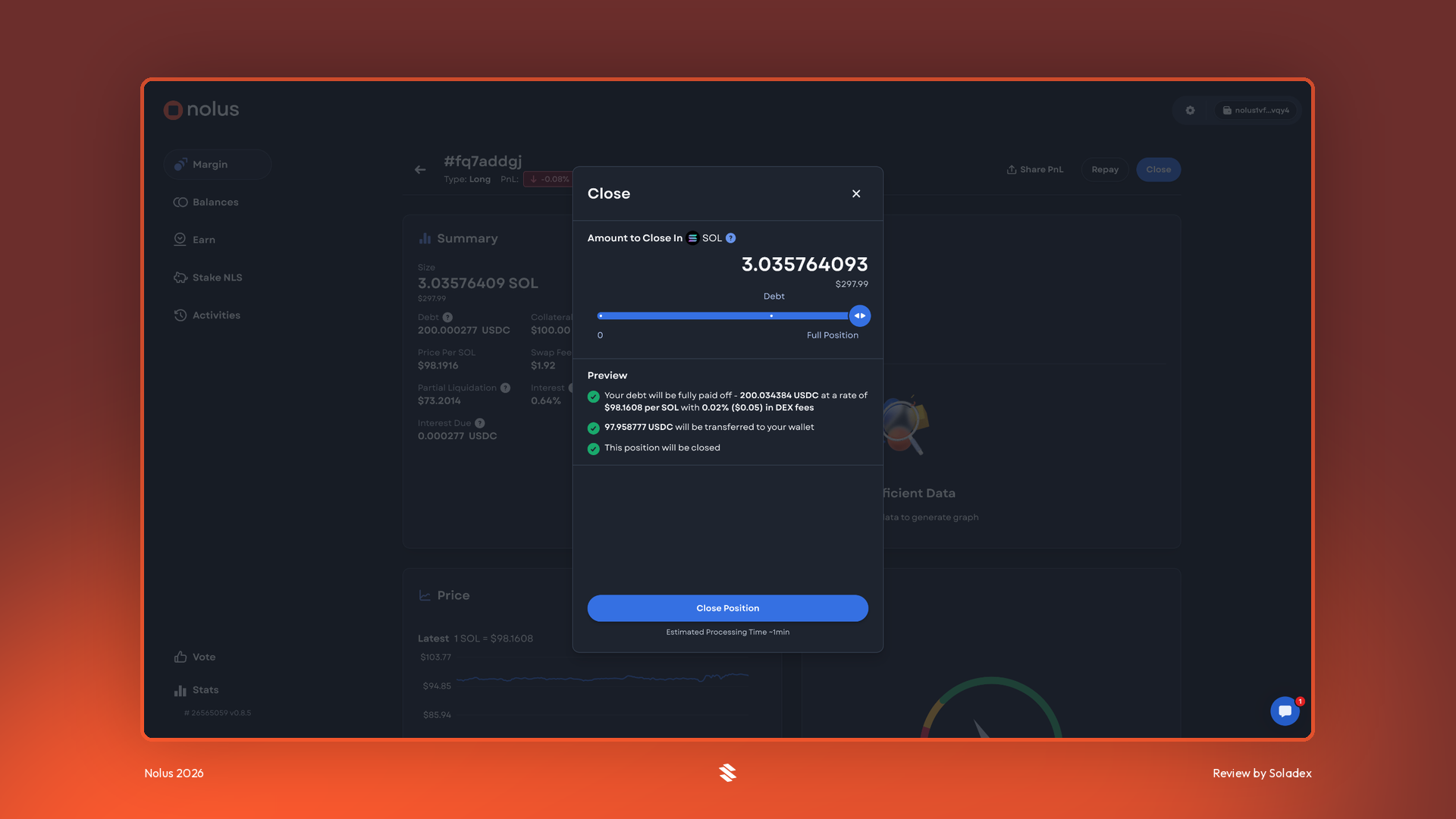
Clicking “Details” displays the full debt taken on Nolus and other important information such as the PnL and the liquidation threshold.

Opening a Lease on Nolus
The process of opening a lease generally includes the following steps (after connecting your wallet):
- Choose the crypto asset you want to gain exposure to.
- Select the amount you want to deposit as a down payment.
- Review the available lease terms, including borrowing costs and position details.
- Confirm the transaction in your wallet, then monitor the position and manage repayment, partial repayment, or closure as needed.
Why Use a Lease Instead of Traditional Borrowing?
Traditional DeFi borrowing often requires users to lock up more collateral than the value they want to borrow. For example, borrowing $1,000 may require depositing significantly more than $1,000 in collateral. With a lease, users contribute a down payment, while the protocol provides additional liquidity to purchase the selected asset. The purchased asset acts as collateral for the lease. This approach may suit you if you want exposure to an asset but do not want to sell existing holdings or lock a large amount of capital in an overcollateralized loan.
Who Is Nolus Protocol For?
Nolus may be suitable for users who understand leverage and want to increase their exposure to a crypto asset without using a traditional centralized exchange or an overcollateralized DeFi loan. It may also appeal to users who want to use stablecoins to open leverage trades on-chain.
Risks to Consider
Nolus uses leverage, which can increase both potential gains and losses. If the leased asset falls in price, the position can lose value and may be liquidated if it reaches the protocol’s required threshold. Interest, fees, and changing market conditions can also reduce returns or make it harder to close a position at the expected price. As with all DeFi platforms, there are also smart-contract and liquidity risks on the app.
Conclusion
Nolus Protocol brings a lease-based approach to DeFi, allowing users to gain leveraged crypto exposure through a down payment rather than a traditional overcollateralized loan. The protocol offers a more capital-efficient way to access crypto markets, but it also comes with the risks that accompany borrowing and leverage. Before opening a lease, users should review the available assets, fees, borrowing terms, and liquidation rules carefully.