What is Sirius?
Sirius Protocol is a privacy-focused financial layer that lets users trade, transfer, swap, and pay with USDC-backed balances without publicly exposing every balance or transaction amount. Built around Solana, Sirius aims to give apps and their users access to private on-chain activity while keeping transactions verifiable on-chain. Unlike traditional public blockchain transfers, where balances and transaction details can often be viewed by anyone, Sirius is designed to keep a user’s balance and transactions private by default.

Using the Sirius Application
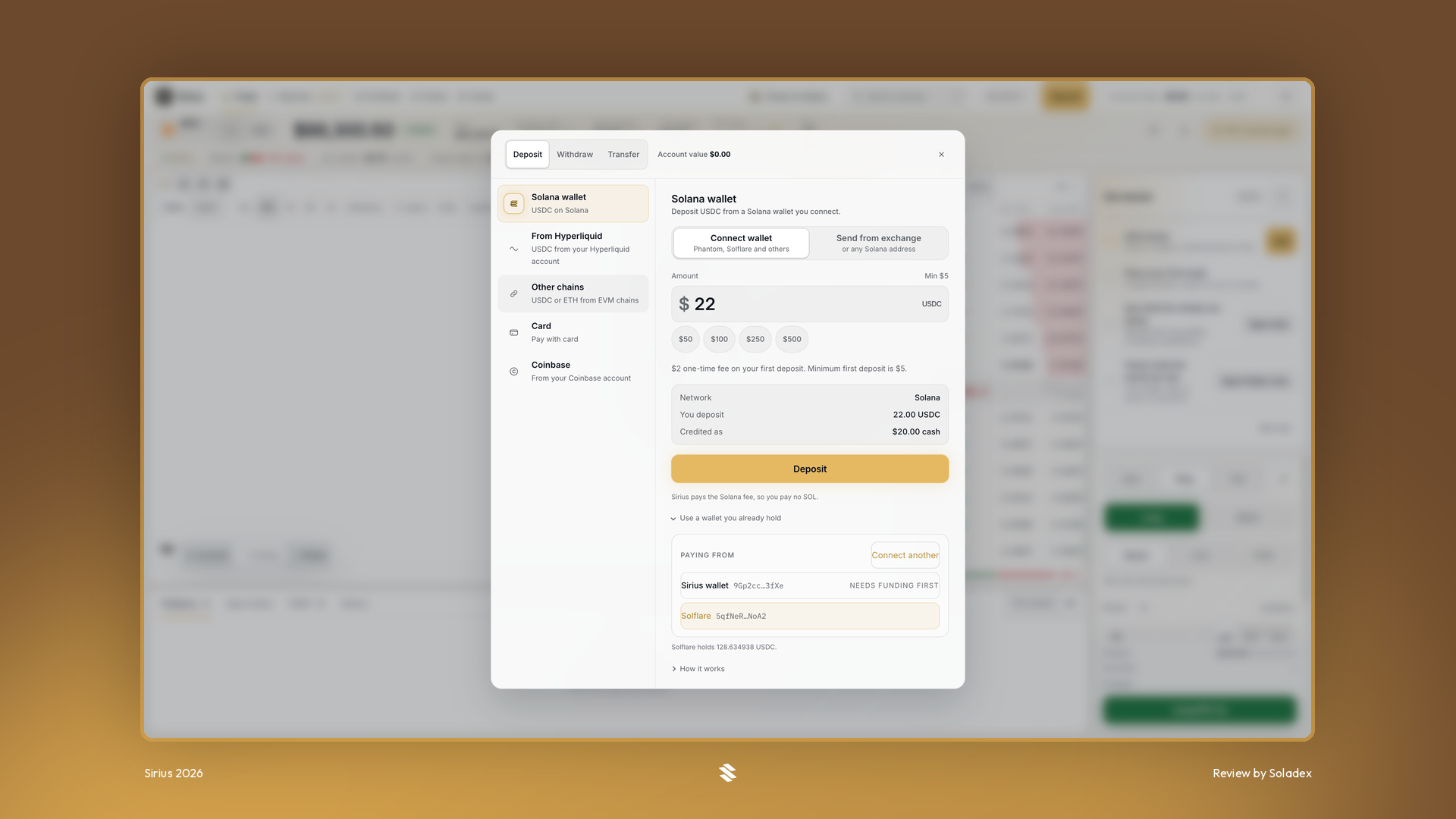
Users can deposit USDC from Solana into Sirius to create a private, USDC-backed balance. Once the token is in, the balance is held privately and can be transferred to another Sirius account, used to trade supported assets, or withdrawn back to Solana. I deposited $22 to try out the app (there is a one-time $2 fee to set up an account).
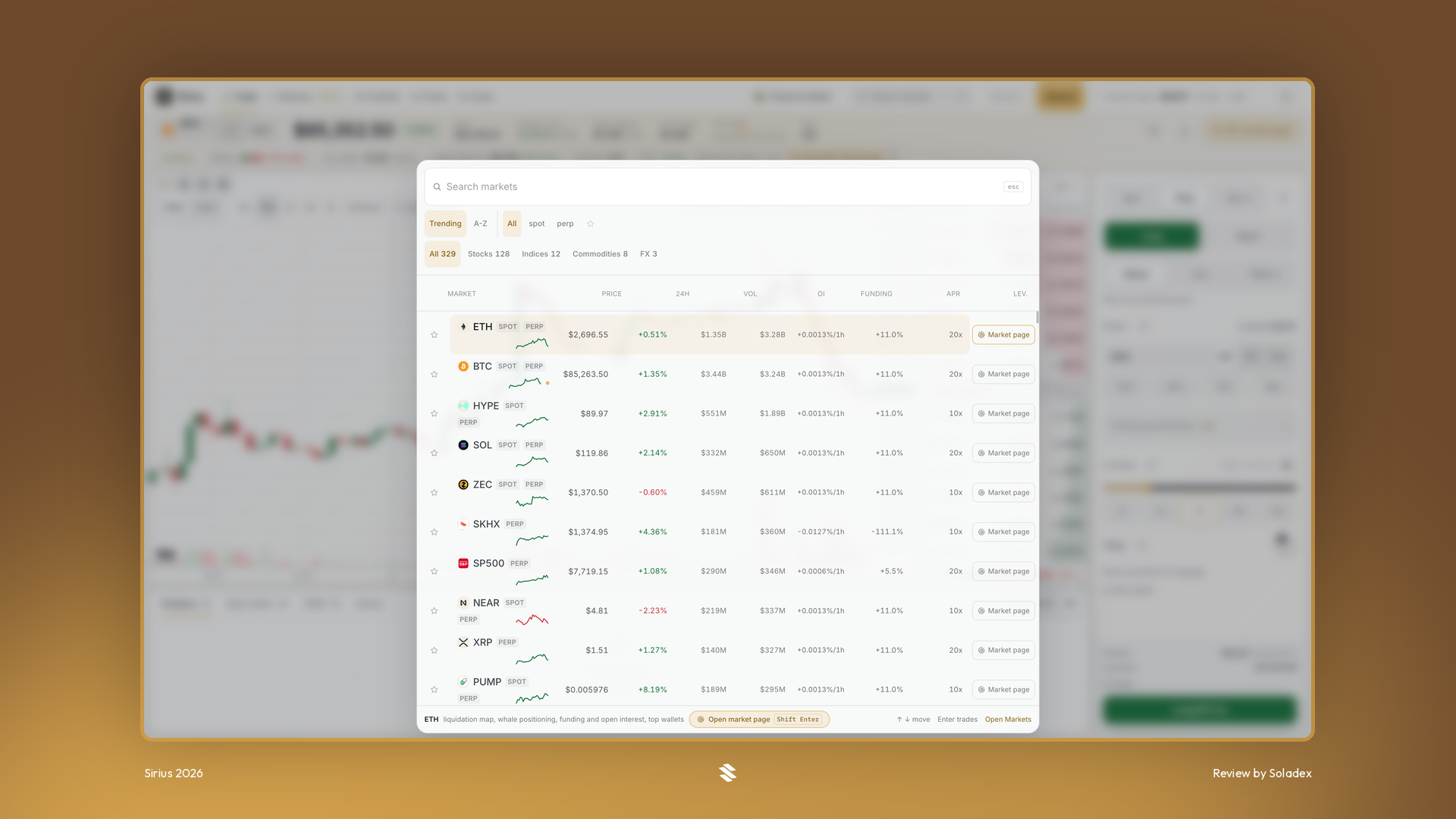
Sirius lets users privately swap USDC-backed balances for supported assets at oracle-referenced prices. The trading app also supports privately traded partner-listed assets, including tokenized products and verified inventory-backed assets.
Private Swaps and Trading
Users can swap their USDC-backed balance for supported listed assets through Sirius. Trades are priced using oracle-referenced market data, with the protocol offering private exposure to assets it supports. Sirius also allows partners to list their own assets. This could include tokenized products, fund shares, real-world assets, wrapped positions, or other inventory-backed products. Once listed, users can hold and trade these assets privately through the same system.

I opened a long position on SOL in the screenshot below. All necessary details for a trade are shown in the lower-left region of the page. Sirius also provides the option to trade using Limit orders instead of market orders. For traders who want the TWAP feature, they must trade $1,000 or more to unlock it.

Market Intel
Market Intel gives users a quick overview of market activity to help them spot potential opportunities. It includes market size by trading volume, top gainers and losers, funding rates, open interest, liquidation activity, and notable whale movements. These insights help users understand market momentum, volatility, and where significant capital is flowing.

Portfolio
A Sirius portfolio is built around private balances. Users can hold supported assets without publicly displaying their balances, while retaining the ability to trade or withdraw value back to Solana.

Points
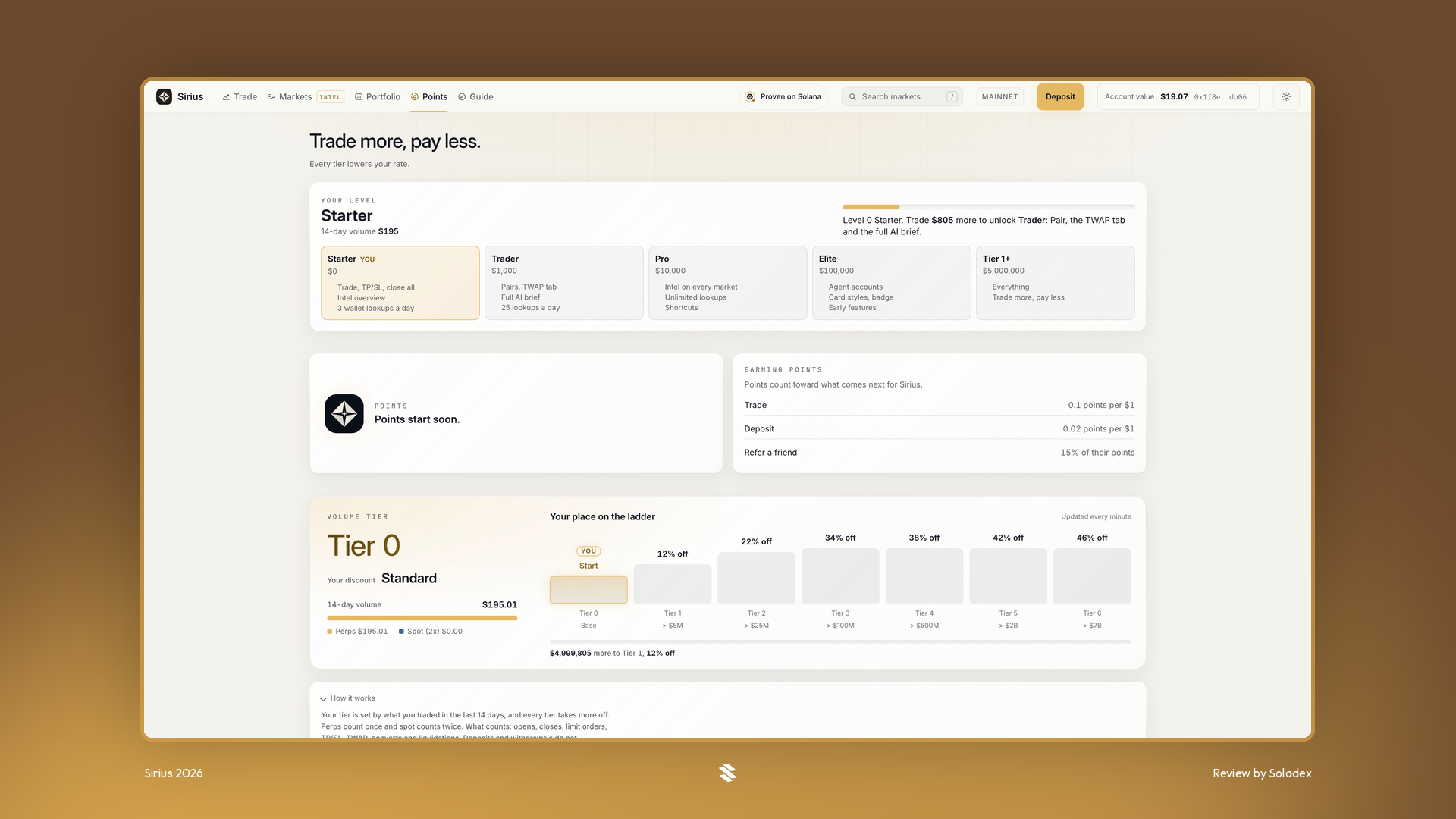
Sirius may offer points or rewards programs as it expands, but users should only rely on officially announced terms. Any points, rewards, or future incentives can be subject to eligibility rules, changes, and availability.
Withdrawals and User Control
Users can withdraw their balance back to Solana by clicking the same Deposit button. In the action demonstrated below, the default address is your Sirius wallet (the app covers the needed SOL for rent and token transfers). This is where my deposit goes once I click withdraw. Additionally, you can input a non-custodial wallet you own and can access with a seed phrase. Do not withdraw to a CEX wallet.

Private Transfers and Balances
Sirius allows users to hold private USDC-backed balances and send value to other accounts on Sirius privately. Users can move funds between accounts or simply keep a balance within the Sirius app without making the balance publicly visible. Even though your transfers are private here, they are not fully unlinkable. The platform operator can still see the connection between sender and recipient accounts, meaning it should not be viewed as a mixer or anonymity tool.

Private Payments for Agents
Sirius supports private payments through x402, an open payment standard designed for internet-native payments. This feature allows agents or applications to pay for services while keeping payment amounts off the public ledger. For example, an AI agent could pay for an API request, data service, or digital product using a private Sirius balance. The payment can still be verified and settled, but the amount paid is not publicly displayed onchain.
Agent Accounts on Sirius
Sirius includes account controls for autonomous agents. An agent can have its own spending account, while the account owner sets limits such as a maximum payment size, daily spending budget, and permitted assets. This gives users a way to fund agents without giving them unrestricted access to a main wallet or treasury. Agent permissions can also be revoked, helping users maintain control if an agent needs to be stopped.
Risks and Considerations
Sirius is still an emerging protocol, and users should understand the risks before using it. These can include smart-contract and infrastructure risk, oracle and pricing risk, liquidity risk, and more. Private transfers are not fully anonymous, and users should not assume activity is unlinkable.
Conclusion
Sirius Protocol is building private financial infrastructure for Solana-based applications. It combines private USDC-backed balances, transfers, swaps, asset issuance, agent payments, and account controls into one system. Its focus is not on hiding activity from the system entirely, but on giving users more privacy than standard public blockchain transactions while preserving verification, asset backing, and the ability to withdraw to Solana.