What is Hubra?
Hubra is a non-custodial Solana staking platform focused on helping users earn rewards from SOL and USDC. Formerly known as SolanaHub, the platform has moved away from its broader DeFi super-app model to specialize in a simpler staking experience for Solana users. With Hubra, users retain control of their wallets and assets while Hubra handles other processes such as validator selection, compounding, liquid-staking receipts, and withdrawals.
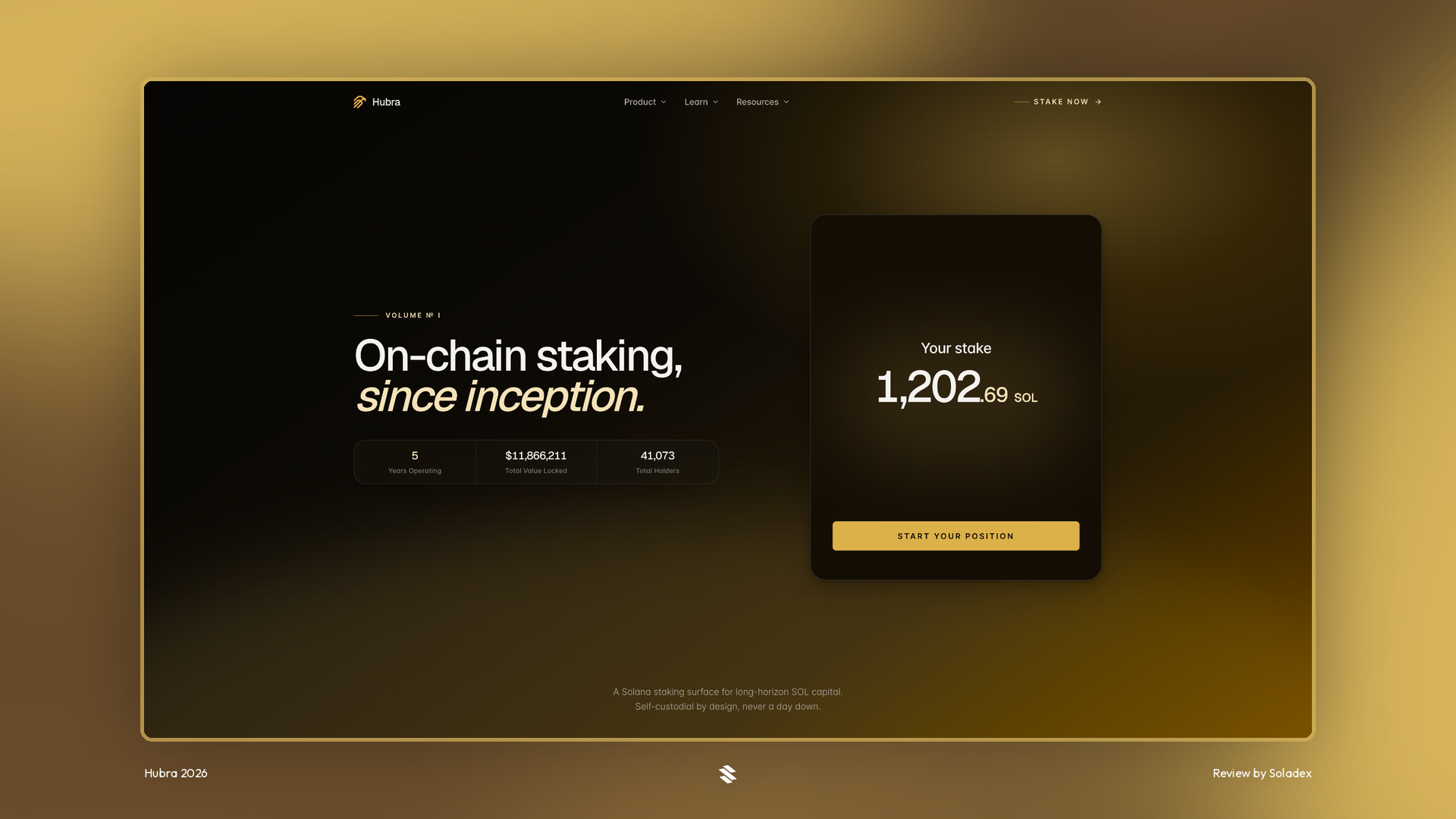
Hubra is designed for users who want to stake assets without navigating multiple protocols with differing interfaces. The platform currently focuses on two assets:
- SOL: Stake natively or through the raSOL liquid-staking token.
- Liquid Staking Tokens (jitoSOL, pSOL): Stake specific LSTs on Solana for raSOL.
Hubra is a non-custodial app, meaning that you retain your wallet keys rather than depositing funds into an account controlled by the company. Non-custodial architecture reduces centralized custody risk, but it does not remove every danger. All users remain responsible for wallet security, transaction approvals, and the protection of their recovery phrases.
Liquid Staking With raSOL
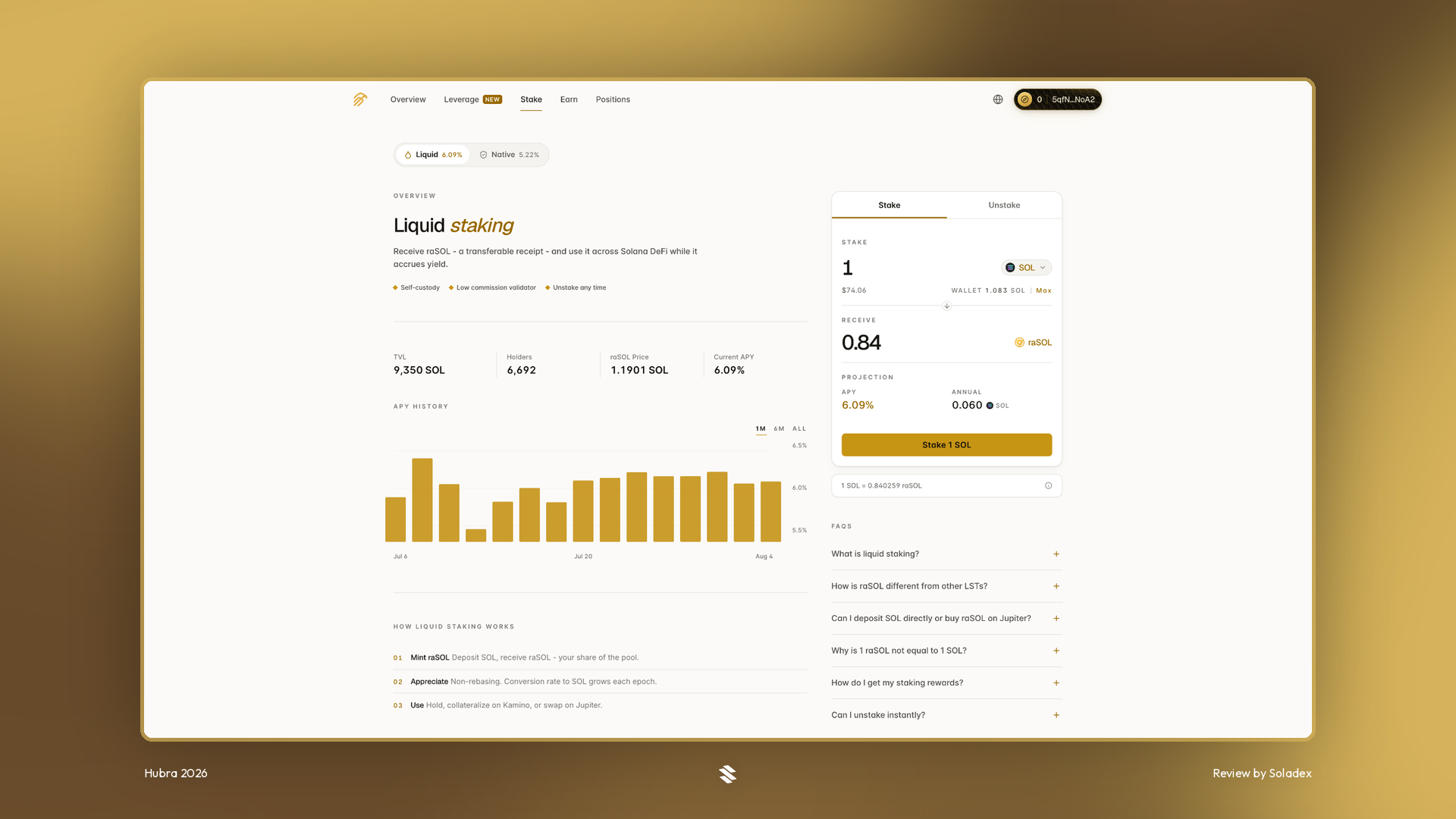
Users who choose liquid staking receive raSOL as a receipt representing their staked SOL position (or pSOL and jitoSOL). Unlike traditional native staking, raSOL remains available in your wallet. This makes the token transferable and can be usable across supported DeFi applications while the underlying SOL staked on Hubra continues to earn you staking rewards.
Partial Instant Unstaking
Hubra supports partial instant unstaking in partnership with Sanctum. Normally, withdrawing only part of a native Solana stake account can require users to split the account and wait for the standard deactivation period. Hubra’s implementation allows users to select a specific amount and receive SOL without completely closing the original stake position.
Using the Hubra App
The Hubra app is simple to use. This section demonstrates how to navigate the interface of the Solana protocol.

Leverage
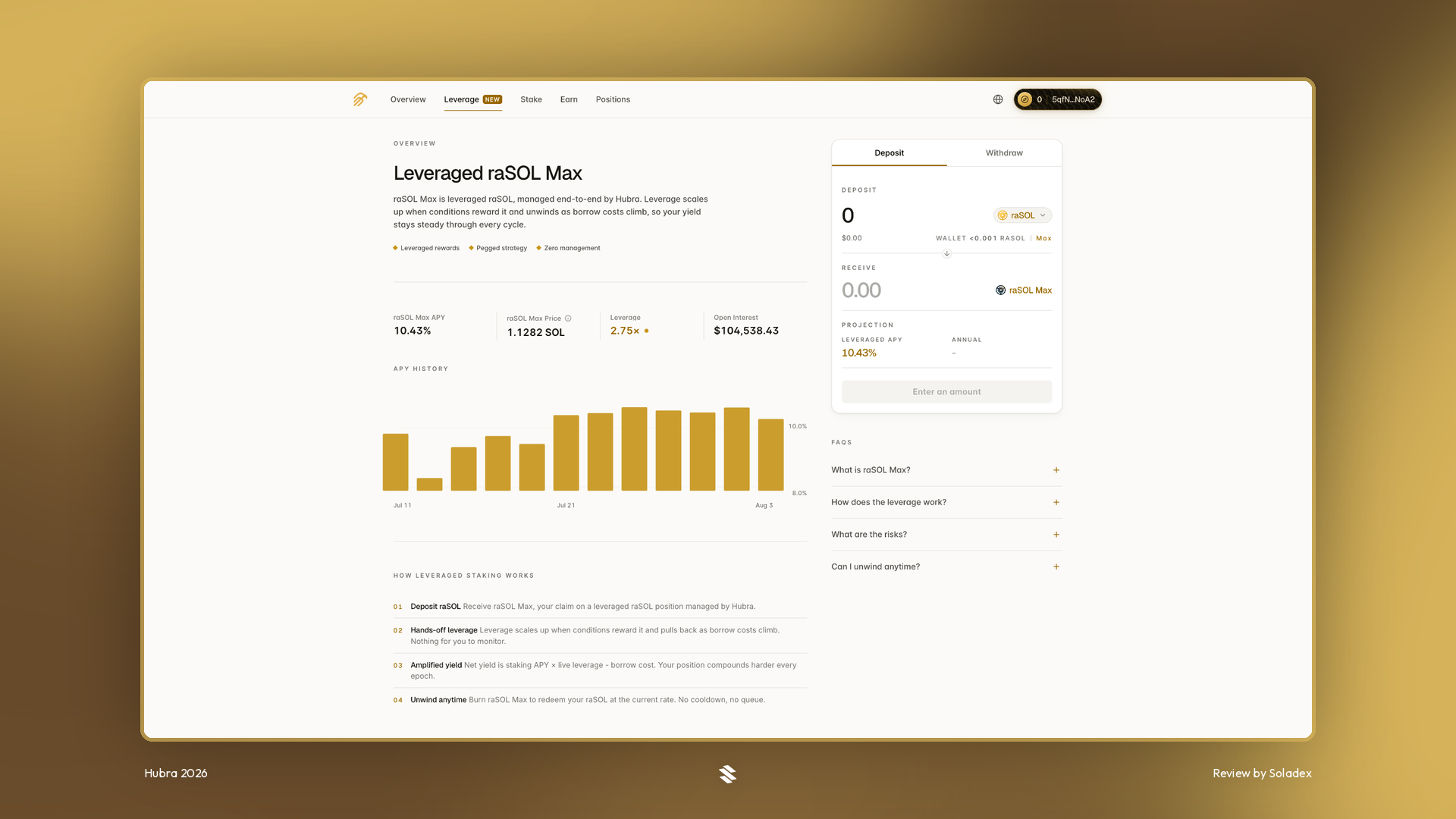
The Hubra raSOL Max is a leveraged-staking strategy designed to amplify raSOL yield. Deposited raSOL is used as collateral to obtain and restake additional raSOL while maintaining target leverage. Users can withdraw at the current exchange rate without a cooldown, but leverage introduces additional risk. This is a new feature still in beta.
How to Stake SOL on Hubra
Visit Hubra.app, connect your Solana wallet, and select SOL. Choose native or liquid staking, enter an amount, review the terms, and approve the transaction. Liquid stakers receive raSOL, while native stakers retain a delegated on-chain stake account.
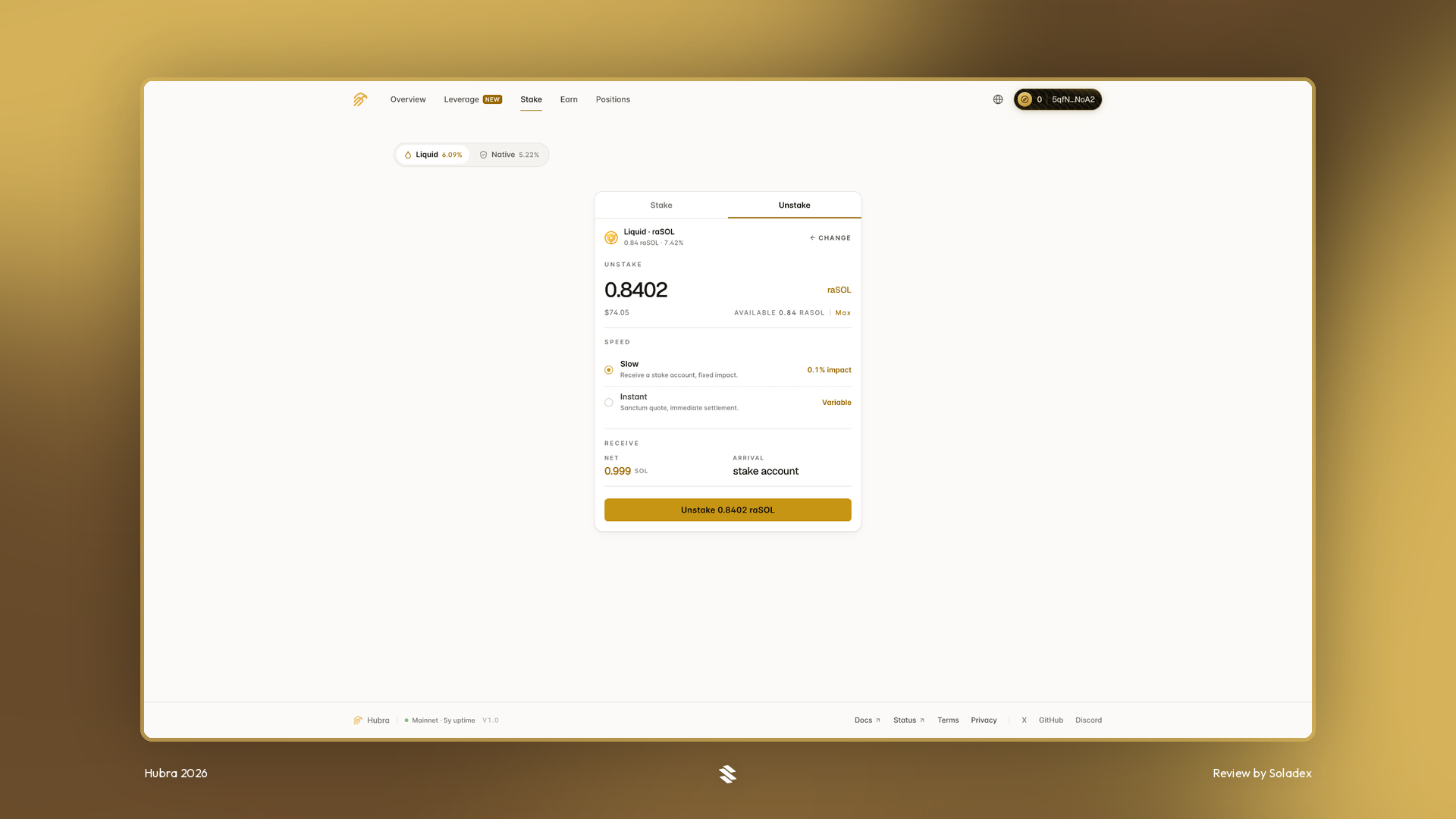
How to Unstake
Connect your wallet, open the unstaking section, and select the position and amount to withdraw. Choose standard or instant unstaking, review the rate and fees, then confirm. Instant unstaking provides immediate SOL but may cost more than waiting through the standard cooldown.
Native SOL Staking on Hubra
Native staking allows you to delegate SOL to Hubra’s validator while keeping the position within your wallet. The delegated SOL helps secure the Solana network and earns staking rewards over time. This approach may suit you as a long-term holder who wants to earn rewards without exchanging SOL for another token. However, native stake accounts are generally less flexible than liquid-staking positions.

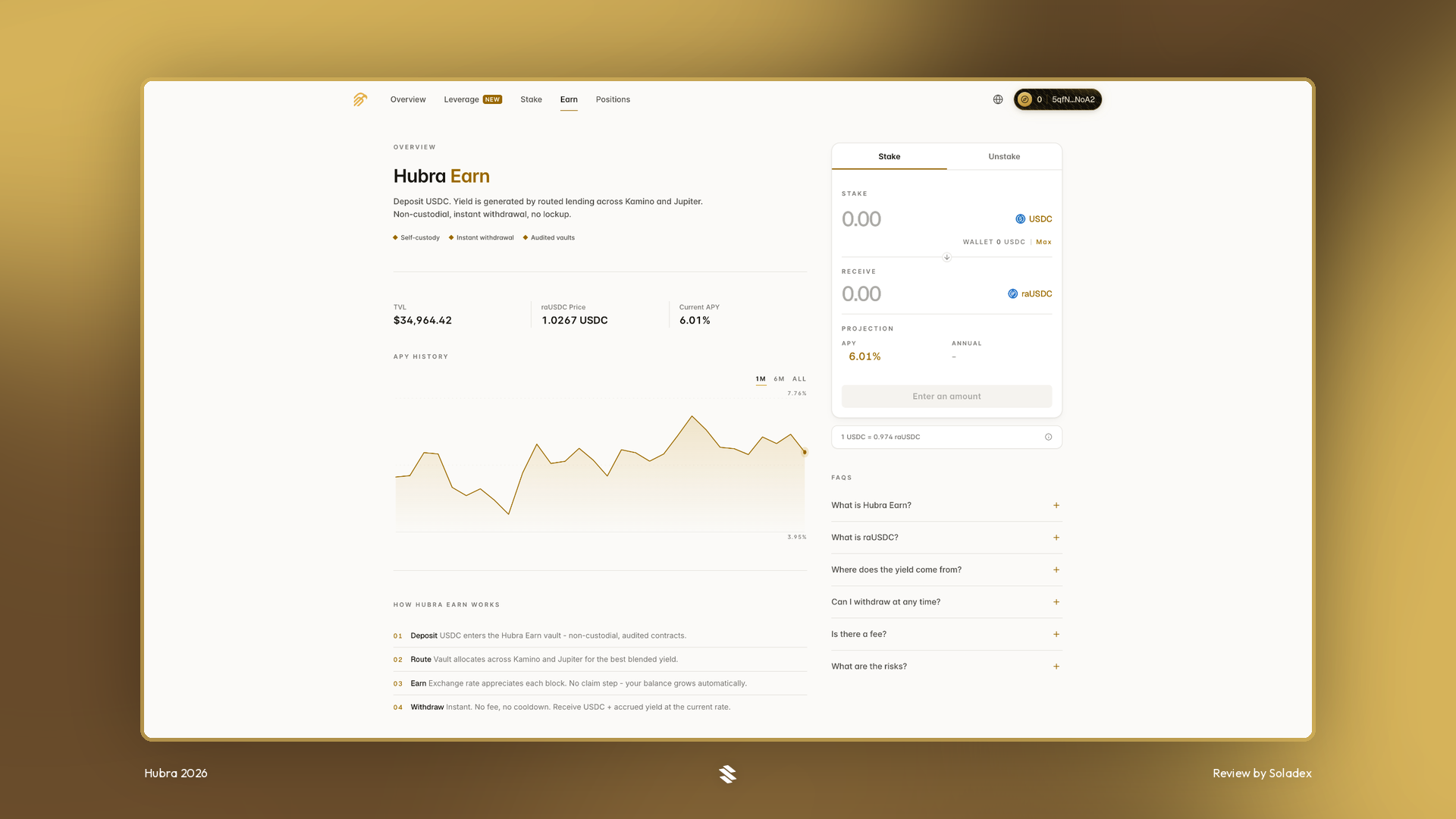
Earn
Hubra Earn is a non-custodial USDC vault that automatically allocates deposits across lending markets on Kamino and Jupiter to seek a competitive blended yield. When users deposit USDC, they receive raUSDC, a non-rebasing vault token representing their share. The raUSDC balance remains unchanged, but its value in USDC increases as borrowers pay interest and the vault earns yield. Rewards accrue automatically, so there is no separate claiming process.
Positions
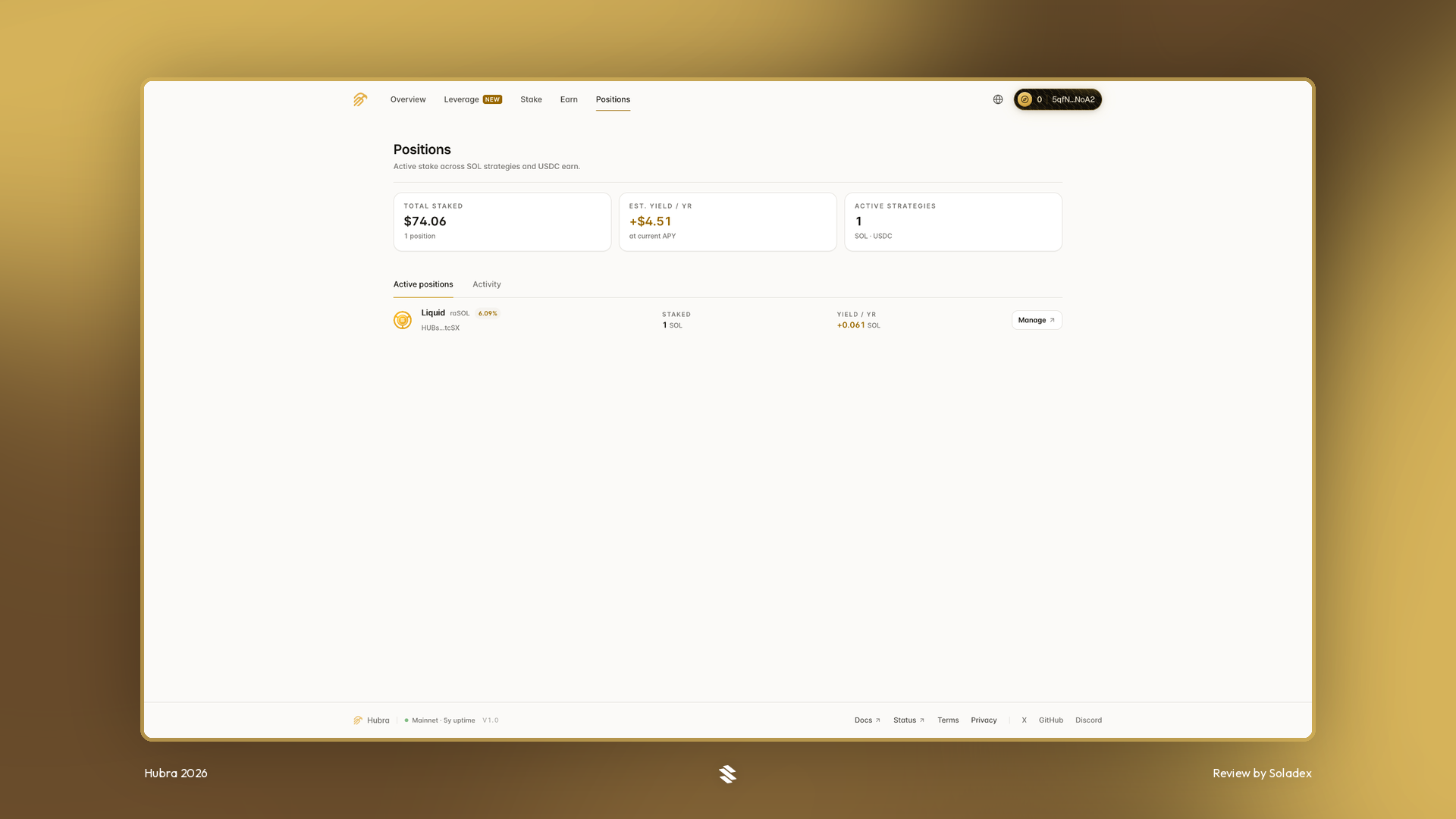
The Positions dashboard lets users track their SOL stakes, raSOL, raUSDC, and accrued returns in one place. It provides a clear overview of all active holdings and makes managing or withdrawing positions straightforward by selecting “Manage.”
Platforms
Hubra is available on both the web and the Seeker Dapp Store. Solana users can access the web version with the URL above. Those with a Solana Seeker device can search for “Hubra” on the Dapp Store to install the application. The steps in this tutorial works for the mobile app also.
Risks to Consider
Staking and on-chain yield products are not risk-free. Some factors to consider are SOL price volatility, smart-contract vulnerabilities, and raSOL liquidity and the risk of it depegging. Returns advertised are variable and should not be treated as guaranteed savings income.
Conclusion
Hubra’s transition from a broad DeFi application to a staking specialist has provided the Solana ecosystem with a native and liquid SOL staking, raSOL receipts, partial instant unstaking, and non-custodial USDC yield through a single Solana interface. The platform provides a more straightforward way to put SOL or other liquid staking tokens to work. However, users should understand how each product generates returns and examine its fees, liquidity, and risks before depositing funds.