What is Lavarage?
Lavarage is a spot margin trading platform on Solana. It allows users to use margin to open positions larger than their wallet balance, including long positions, short positions, and direct borrows. Traders provide collateral while lenders supply additional liquidity through the Lavarage vaults. Borrowed funds, through available leverage, increase a trader's market exposure. Lavarage is self-custodial and does not hold user funds.
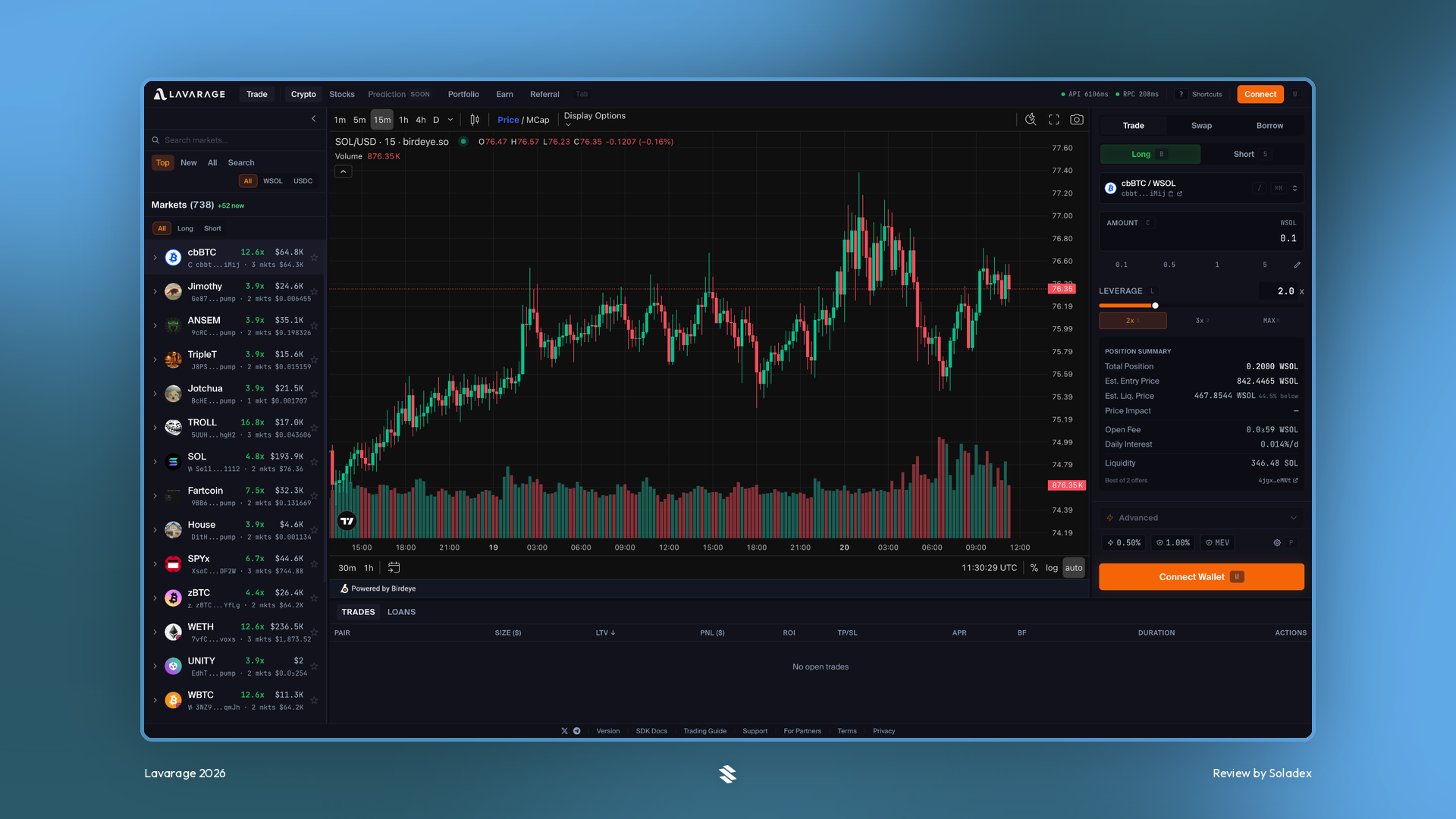
How Leveraged Positions Work
When a leveraged position is open, Lavarage combines the collateral supplied with assets borrowed from on-chain lending vaults.
For a 3x SOL long using 1 SOL in collateral:
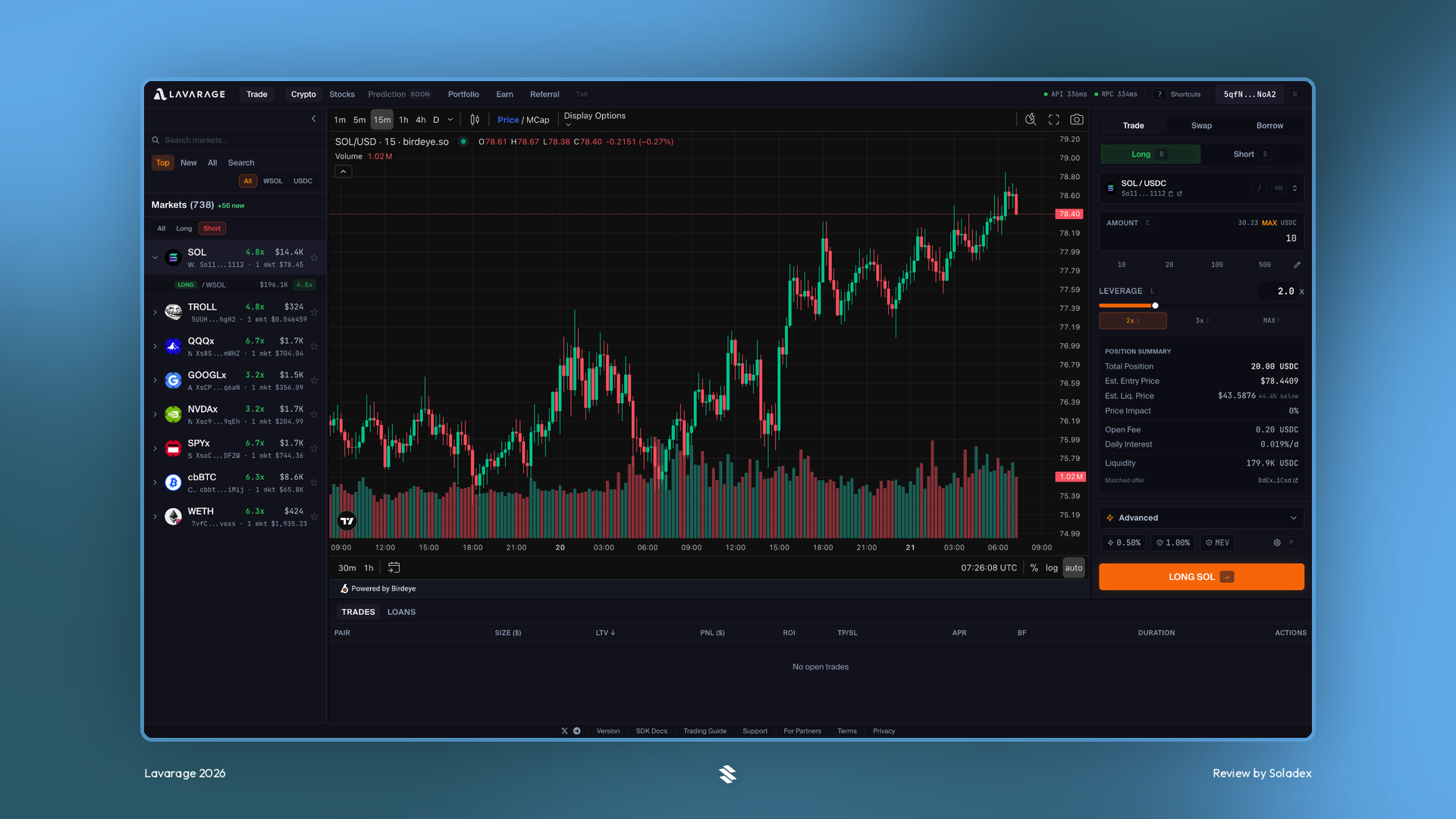
- The trader deposits 1 SOL.
- Lavarage borrows an additional 2 SOL from a lending vault.
- The assets are routed through Jupiter to create the position.
- The resulting spot-margin position provides approximately 3 SOL of exposure.
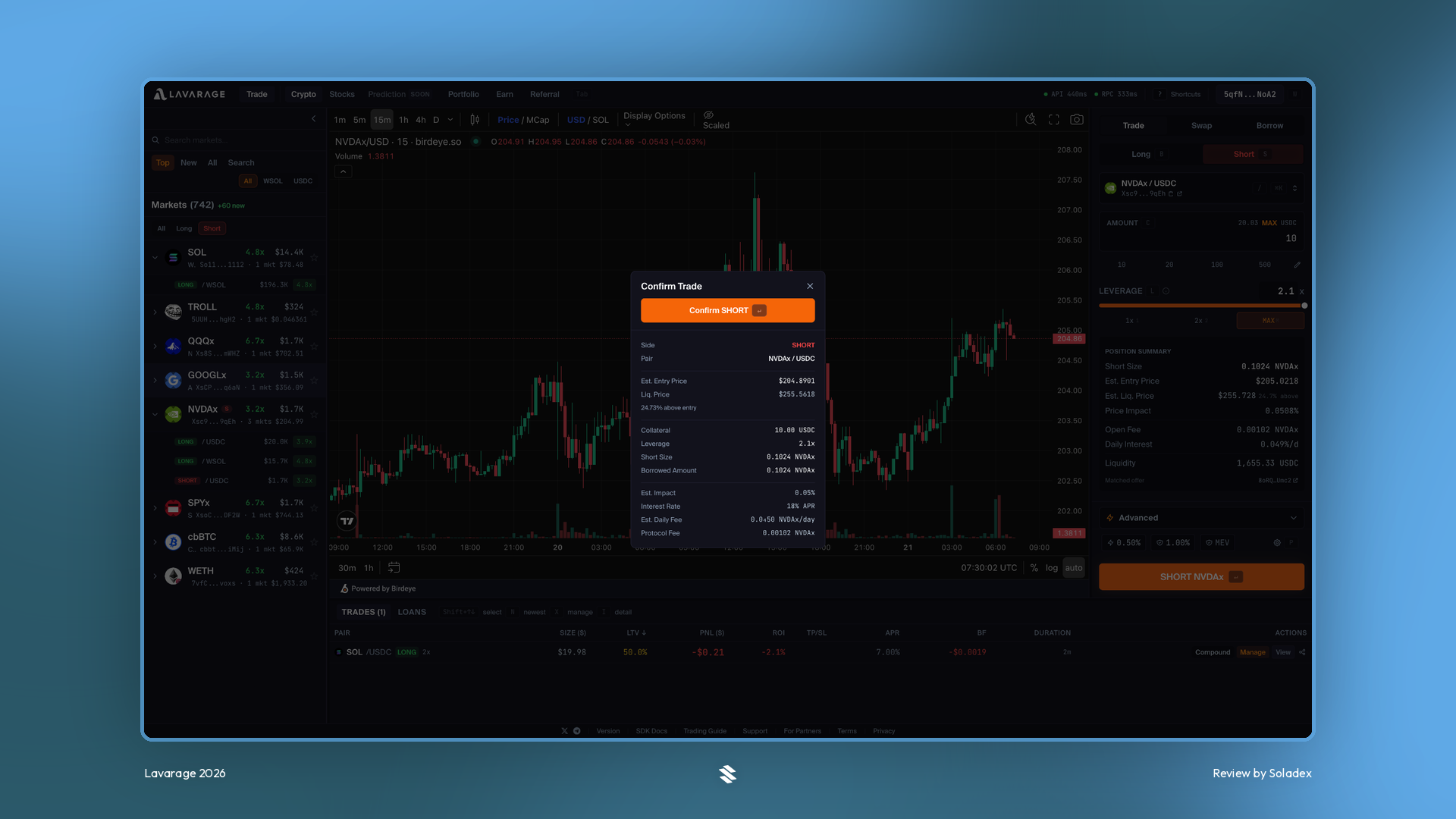
Ensure the details are correct, then click “Confirm Long” to initiate the trade.
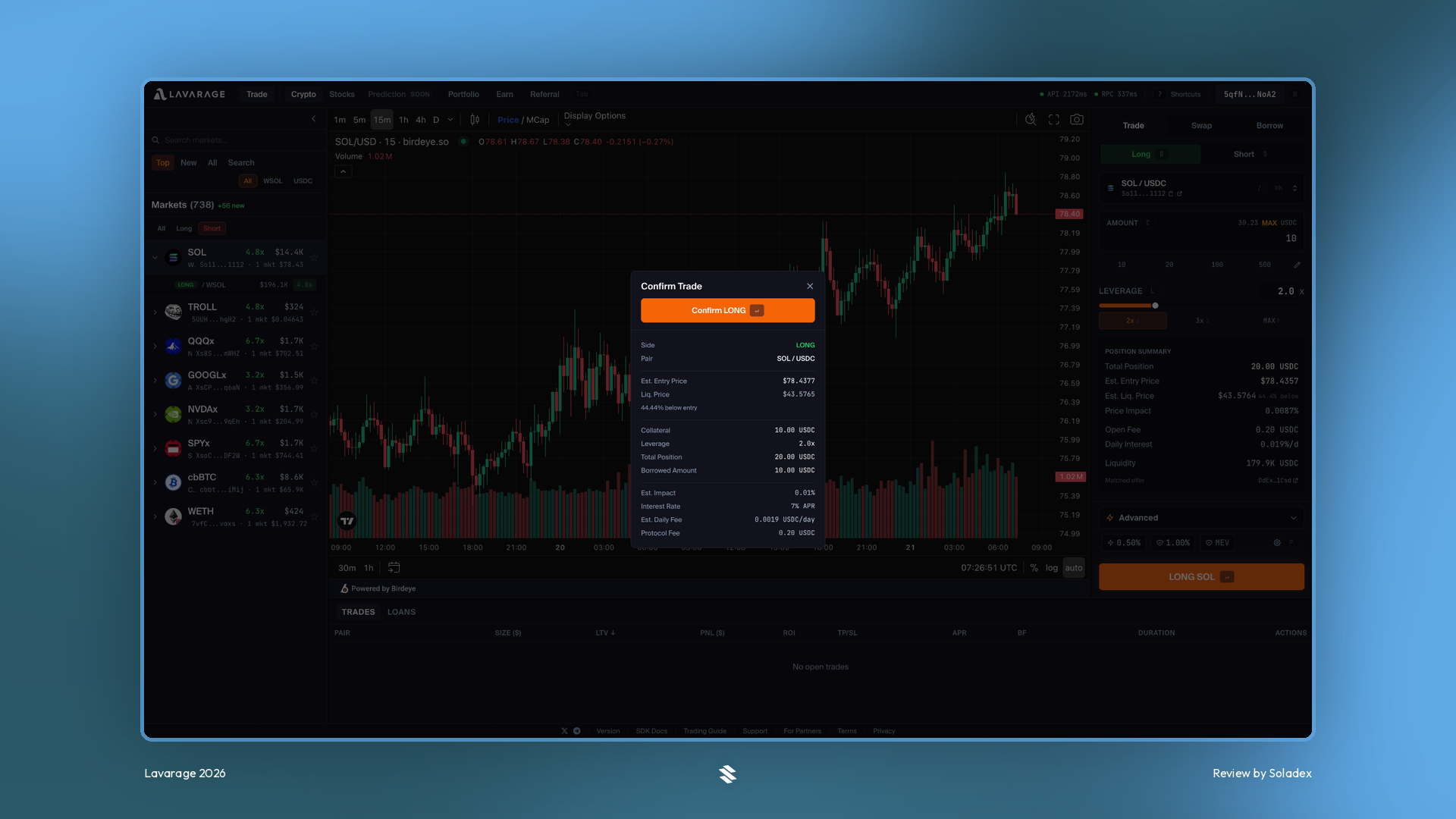
When the position closes, position assets are swapped back through Jupiter, borrowed funds and accrued interest are repaid, closing fees are deducted, and any remaining balance is returned to the trader.
How to Trade on Lavarage
To get started with Lavarage, sign in with an email or a social account to create a self-custodial Privy wallet, then fund it with SOL to cover transaction fees.
To open a trade:
- Connect and fund your wallet.
- Select a market and choose a long or short position.
- Set your margin, leverage, and slippage tolerance.
- When Lavarage shows a confirmation prompt, review the expected position size, entry price, fees, and liquidation details.
- Sign the transaction to open the position on-chain.
By applying the steps above, I opened a short position on the NVDAx stock with $10 using 2.1x leverage. Click on any of the tokens in the market, either regular cryptocurrencies or stocks, to long, short, or swap.
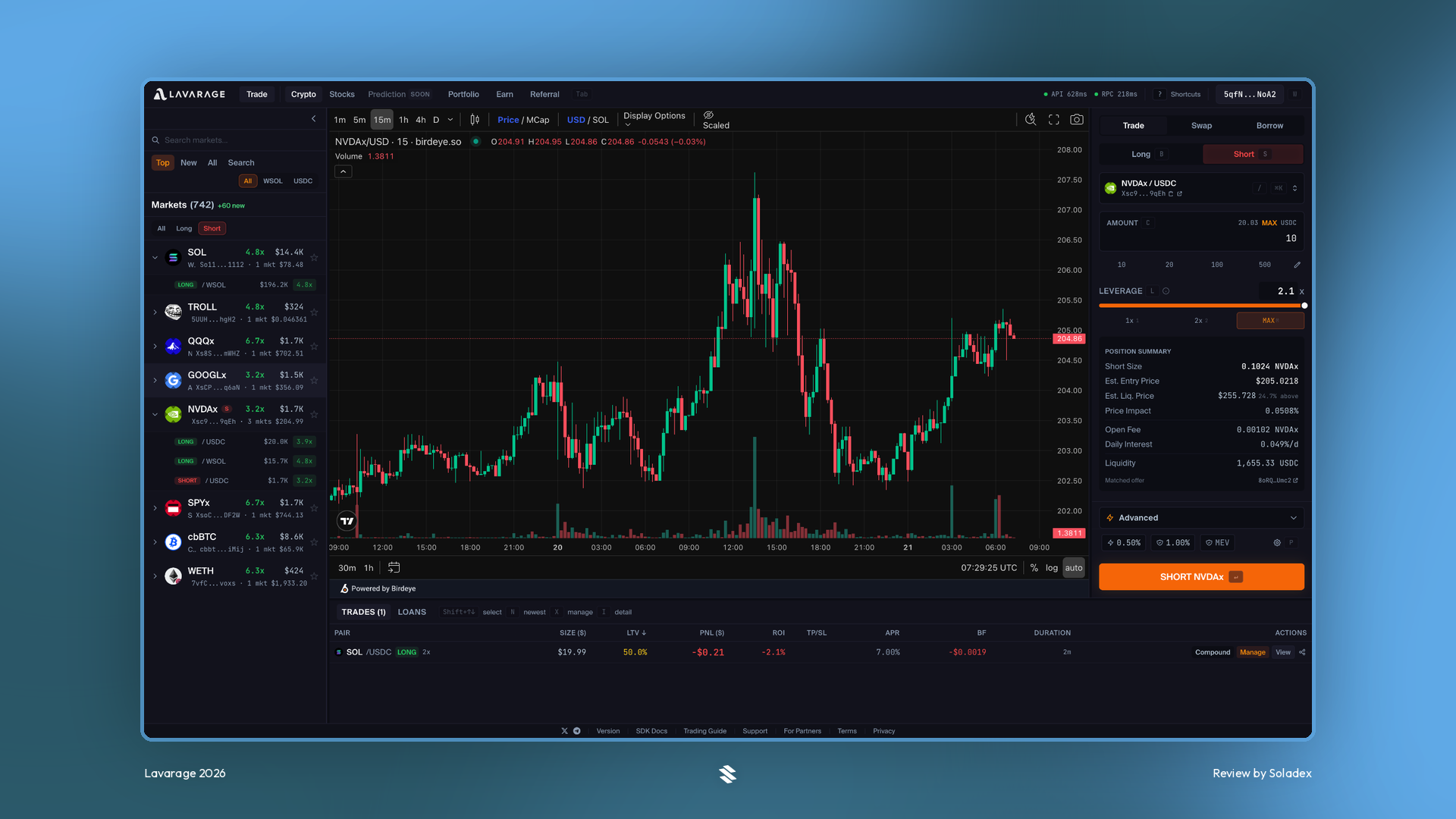
Before approving the trade, confirm the quotes, liquidation price and other important market details.
Staking Vaults
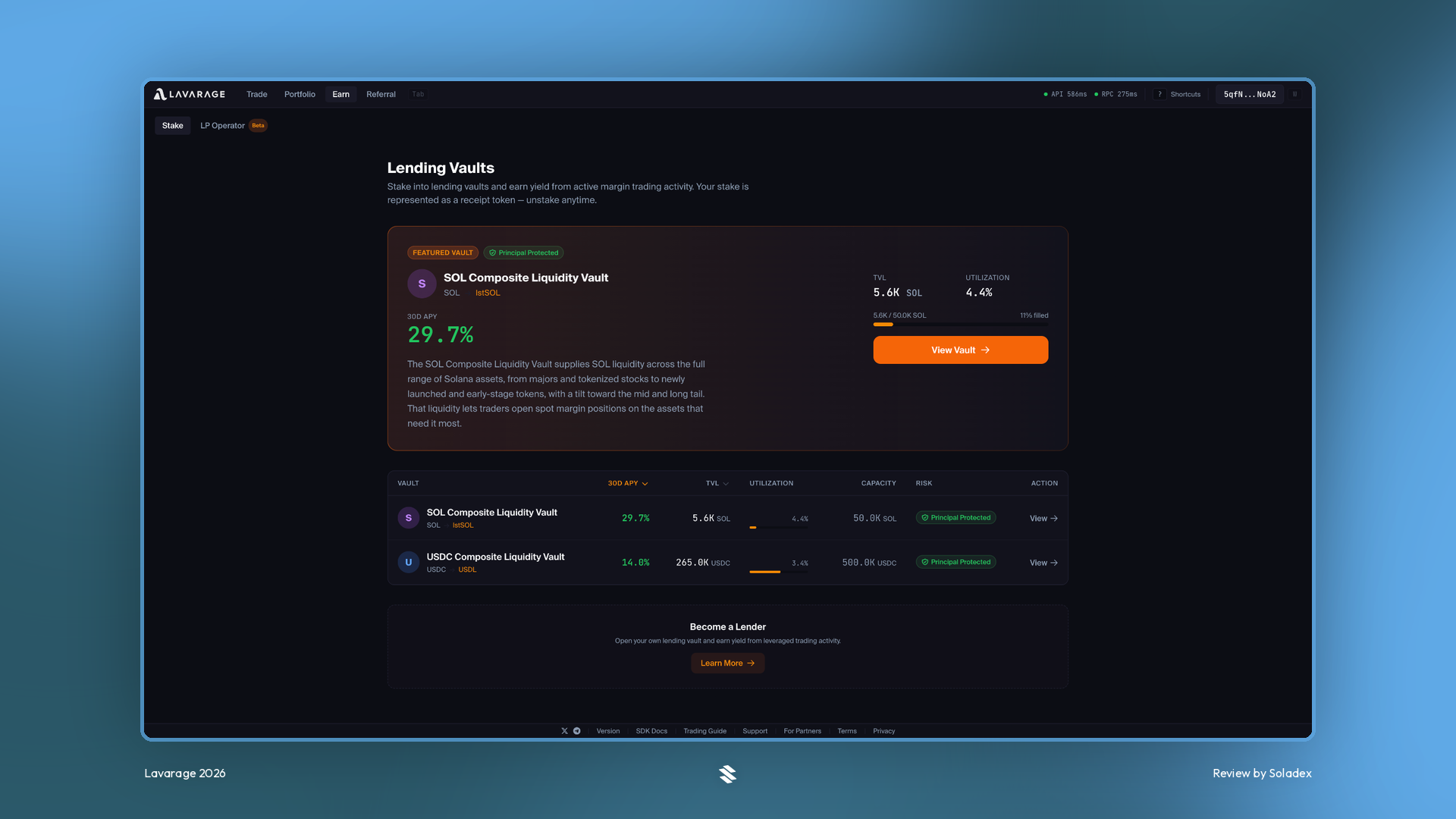
Lavarage offers SOL and USDC staking vaults. Deposited assets are used as lending liquidity for leveraged positions. In return, stakers receive the USDL liquid staking token, representing their share of a vault. These vaults help provide the borrowable liquidity that supports trading activity on Lavarage.
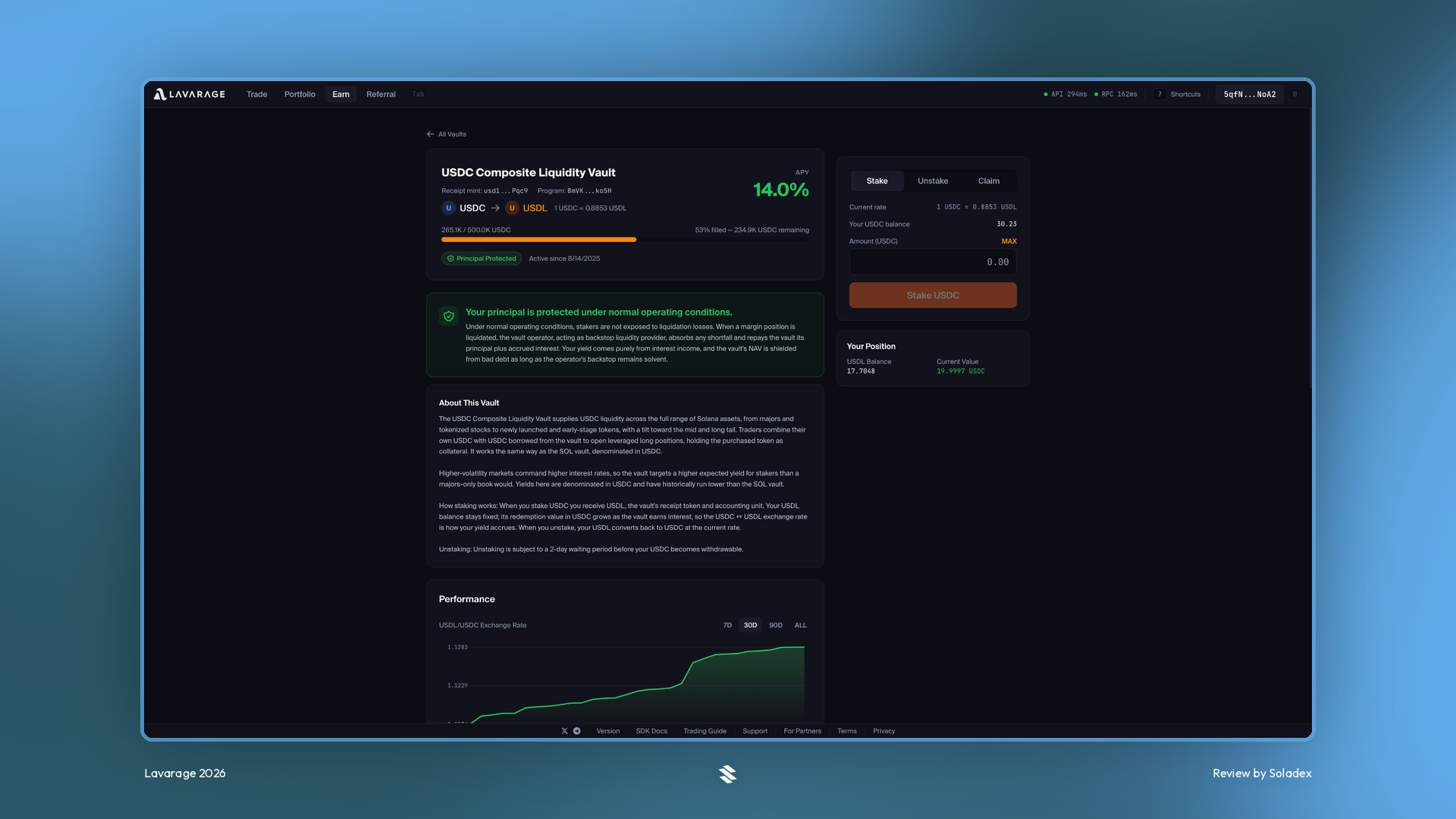
I deposited $20 into the vault and was given its worth in the protocol’s LST, USDL. Please note that the claim period after depositing is about 5 days.
Portfolio
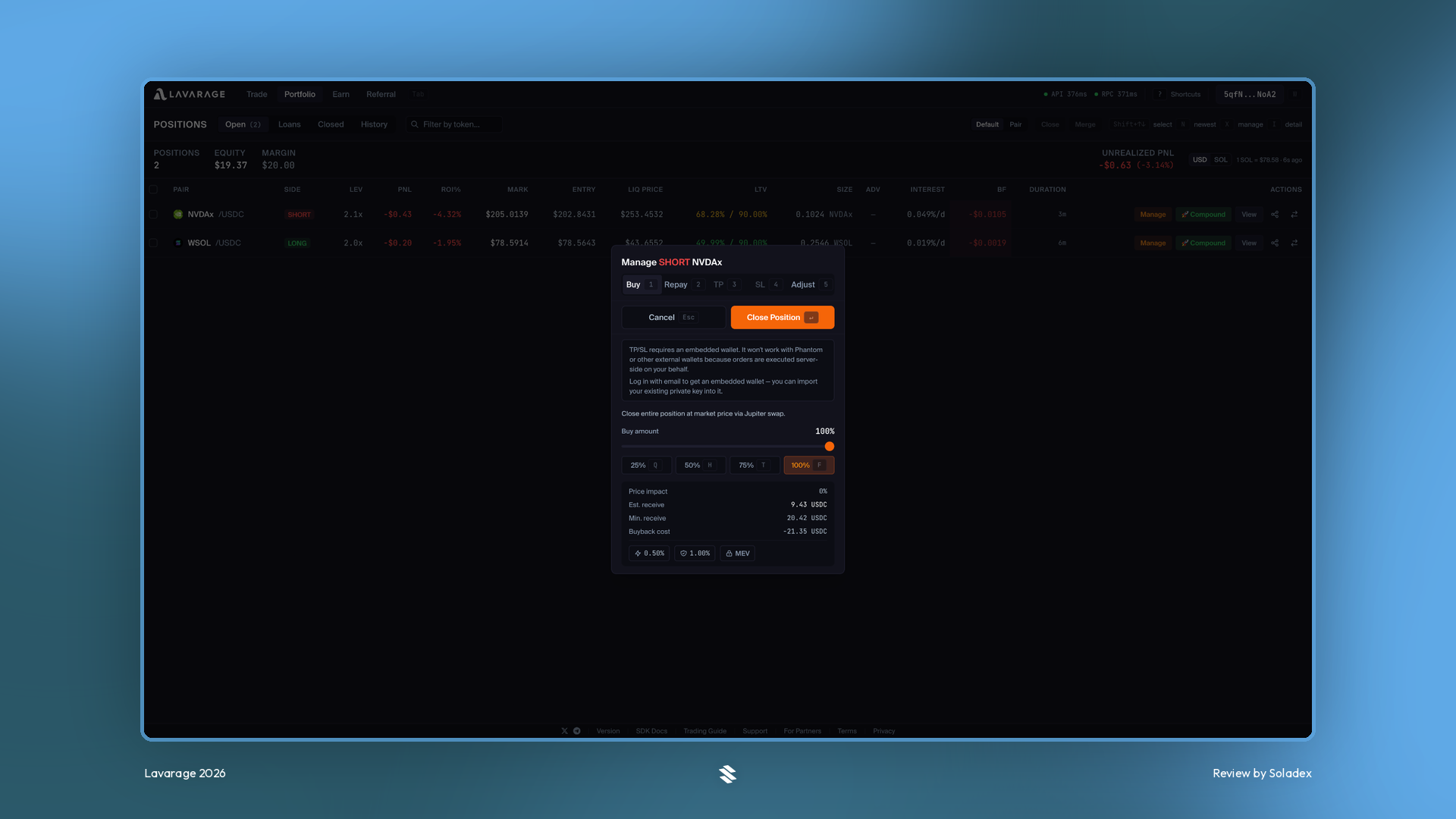
The Portfolio section gives you a clear overview of all open and closed positions on Lavarage. Each position displays details including the entry price, mark price, liquidation price, leverage, current PnL, collateral, and position value.

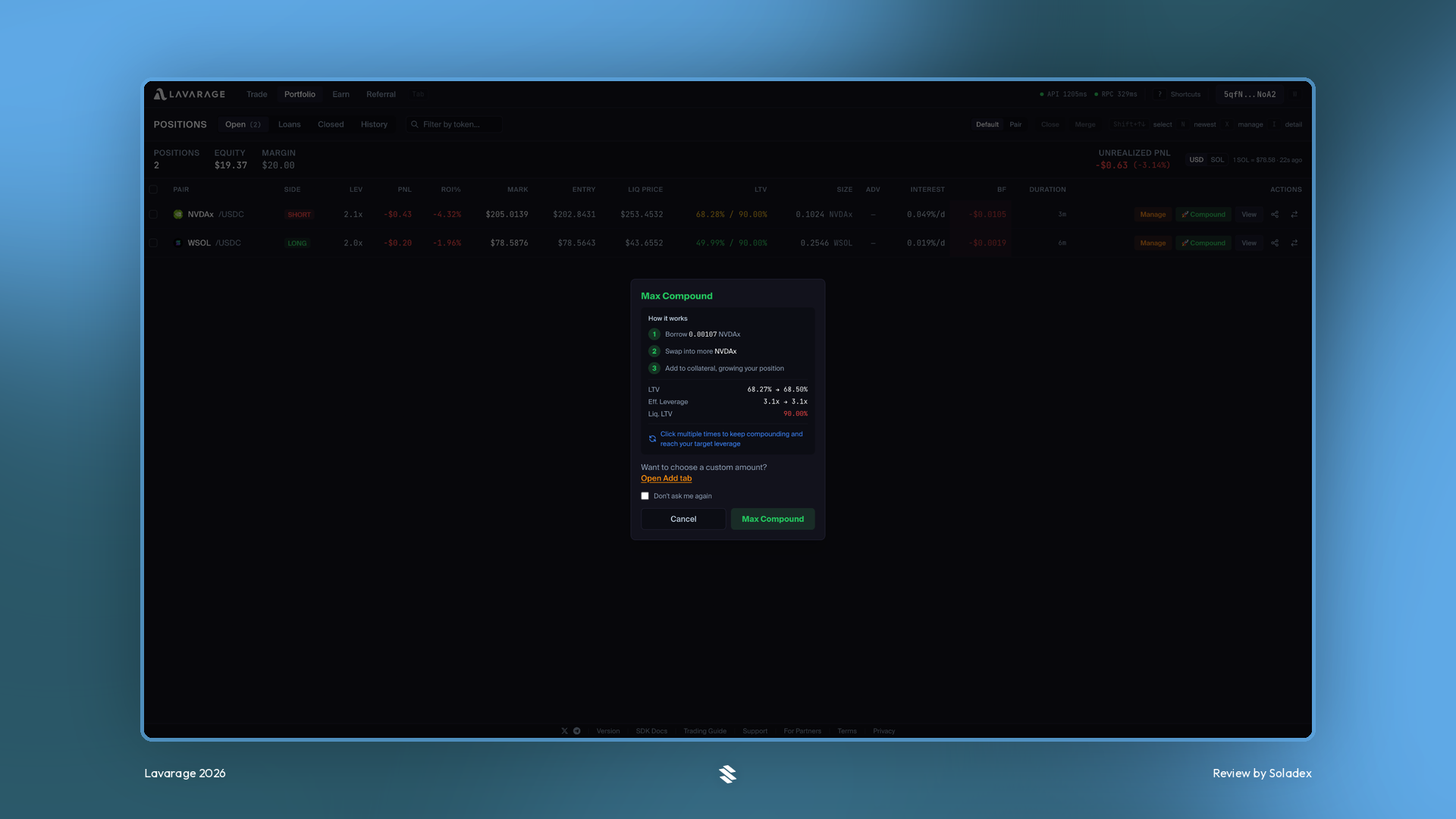
Use Manage to add or withdraw collateral, partially repay debt, or adjust your position; use View for full on-chain position details; and use Compound to reinvest available margin into additional exposure. Monitor your liquidation price and PnL regularly, especially when trading with higher leverage.
Compounding an NVIDIA Position
If you open a 2x NVIDIA long with $10 collateral, you have about $20 of NVIDIA exposure. If NVIDIA goes up, your position gains value. Compounding uses some of that profit as extra collateral to borrow more and increase your NVIDIA position without adding new money from your wallet. This can increase gains if NVIDIA keeps rising, but it also increases losses and liquidation risk if the price falls.
Risks involved with Lavarage
Leverage on Lavarage magnifies both gains and losses, so you should carefully manage position size, leverage, liquidity conditions, fees, and borrow interest. Higher leverage brings the liquidation price closer to the entry price. If a position approaches liquidation, adding collateral or repaying part of the borrowed amount can lower loan-to-value and provide more room for market movement.
Conclusion
Lavarage brings self-custodial margin trading, borrowing, and lending vaults to Solana. Traders can open leveraged long or short positions using on-chain liquidity, while SOL and USDC vault participants supply capital and receive LSTs. Leveraged trading is high risk, so start conservatively and review quotes before signing.