What is Margin?
Margin is a decentralized exchange on Solana focused on perpetual futures trading. Built by Solayer, the platform uses a central limit order book (CLOB) model to provide a trading experience for users who prefer order-book markets. Margin is designed for traders who want access to perpetual contracts while remaining in control of their own wallets and assets on-chain.
How Does Margin Trade Work?
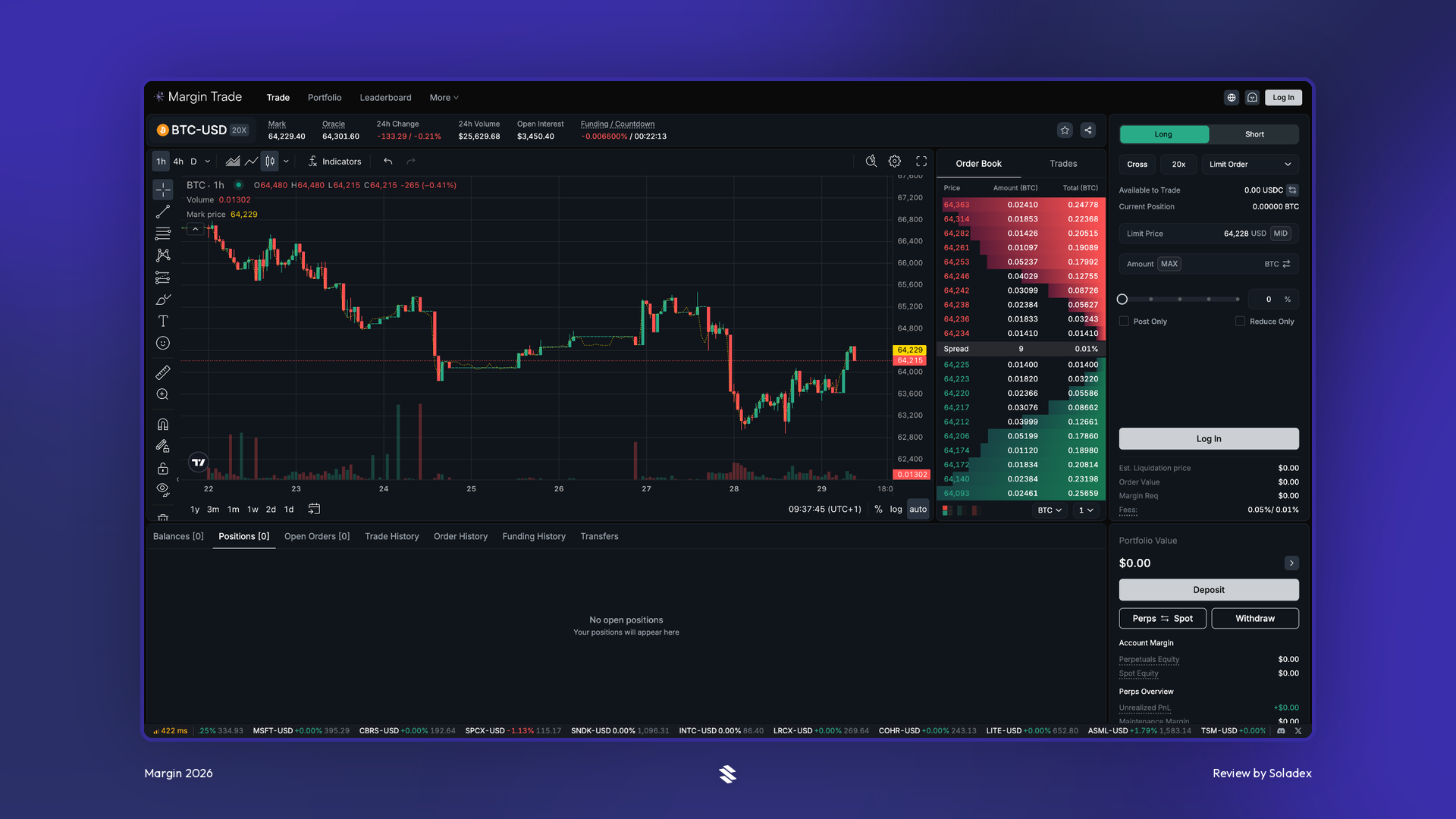
Margin Trade is a self-custodial trading platform on Solana where users can trade perpetual futures through an on-chain or hybrid order-book interface. Perpetual futures, commonly called perps, are derivatives that let traders take long or short exposure to an asset without an expiry date. Unlike spot trading, you do not need to own the underlying token to trade its price movement.
Margin’s CLOB
The dapp’s CLOB structure is intended to support more precise order placement and provide greater market depth visibility than swap-based trading interfaces. A central limit order book records open buy and sell orders at different prices. Traders can either take liquidity by placing a market order or add liquidity by placing a limit order.
For example, a trader placing a market buy accepts the best available sell prices, and a trader placing a limit buy chooses the maximum price they are willing to pay. These two cases also work similarly to the market sell and limit sell options.
An order book can make it easier to assess available liquidity, spreads, and the likely price impact of an order before you execute the trade.
Tradeable Assets on Margin
To view all available markets to trade on the Margin app, click the first market, BTC-USD, and a list of all assets drops down. It comprises cryptocurrencies, commodities and stocks that are tradable on-chain.

Perpetual Futures and Margin Trading
Margin Trade is centred on perpetual contracts, meaning traders can open positions based on whether they expect a token’s price to rise or fall. A long position benefits if the market price increases, while a short position benefits if it falls.
Before trading perps, users should understand several core parts of the protocol:
- Collateral: Assets you have deposited to support a position.
- Leverage: Borrowed exposure applied to a trade.
- Liquidation: A forced closure of a position when collateral is insufficient.
- Funding rate: Periodic payments between long and short traders that help keep perpetual prices close to the spot market.
- Mark price: A reference price often used for liquidation calculations rather than the most recent trade alone.
These mechanics can make perpetual markets useful for hedging or directional trading, but they are generally more complex than spot purchases.
Depositing Funds
Fund your wallet on-chain by clicking the Deposit button. The wallet provided by Margin is non-custodial and linked to the main wallet you used to connect to the trading app. I deposited $20 to kick-start my account.
Opening a Long Trade
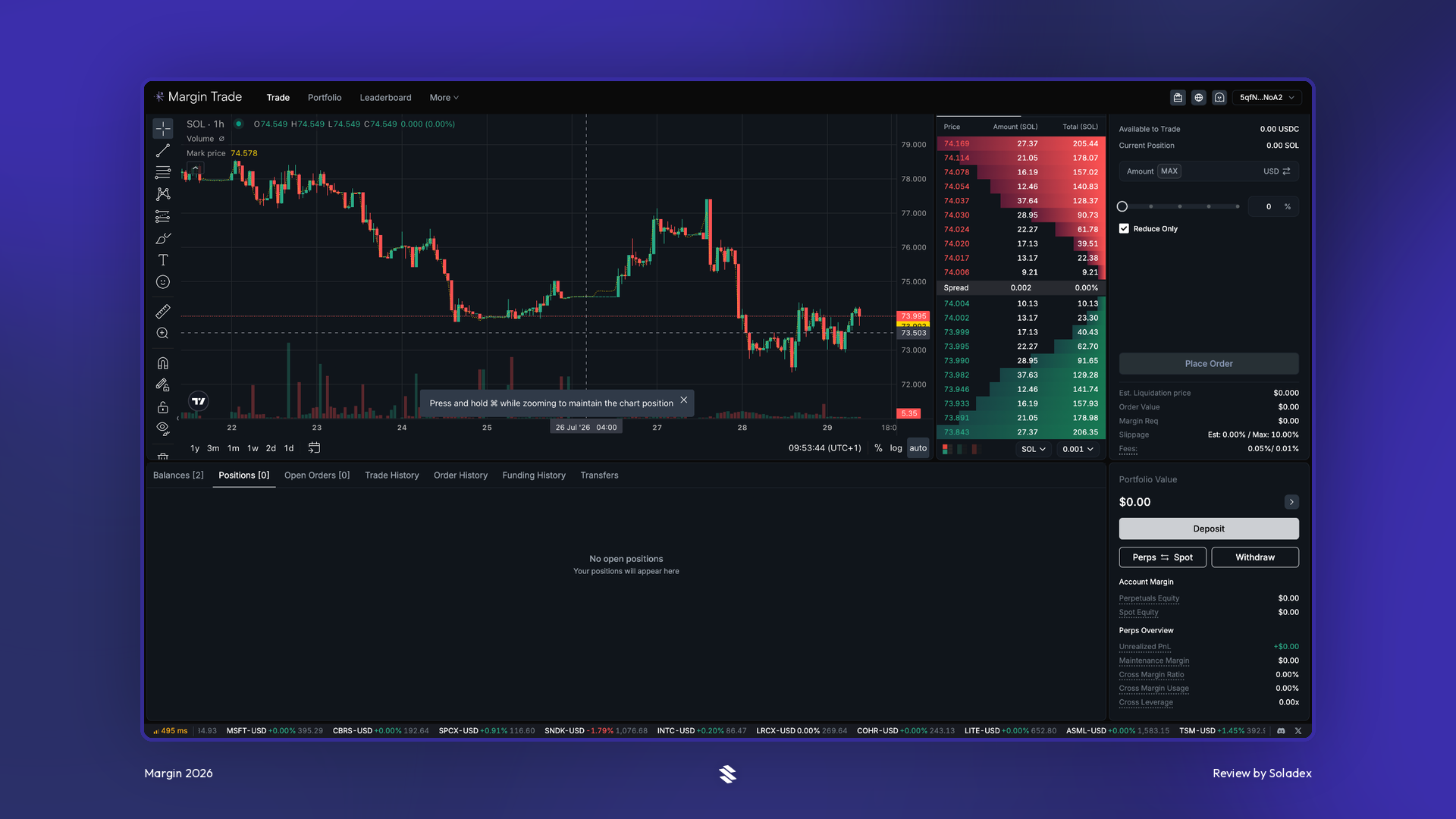
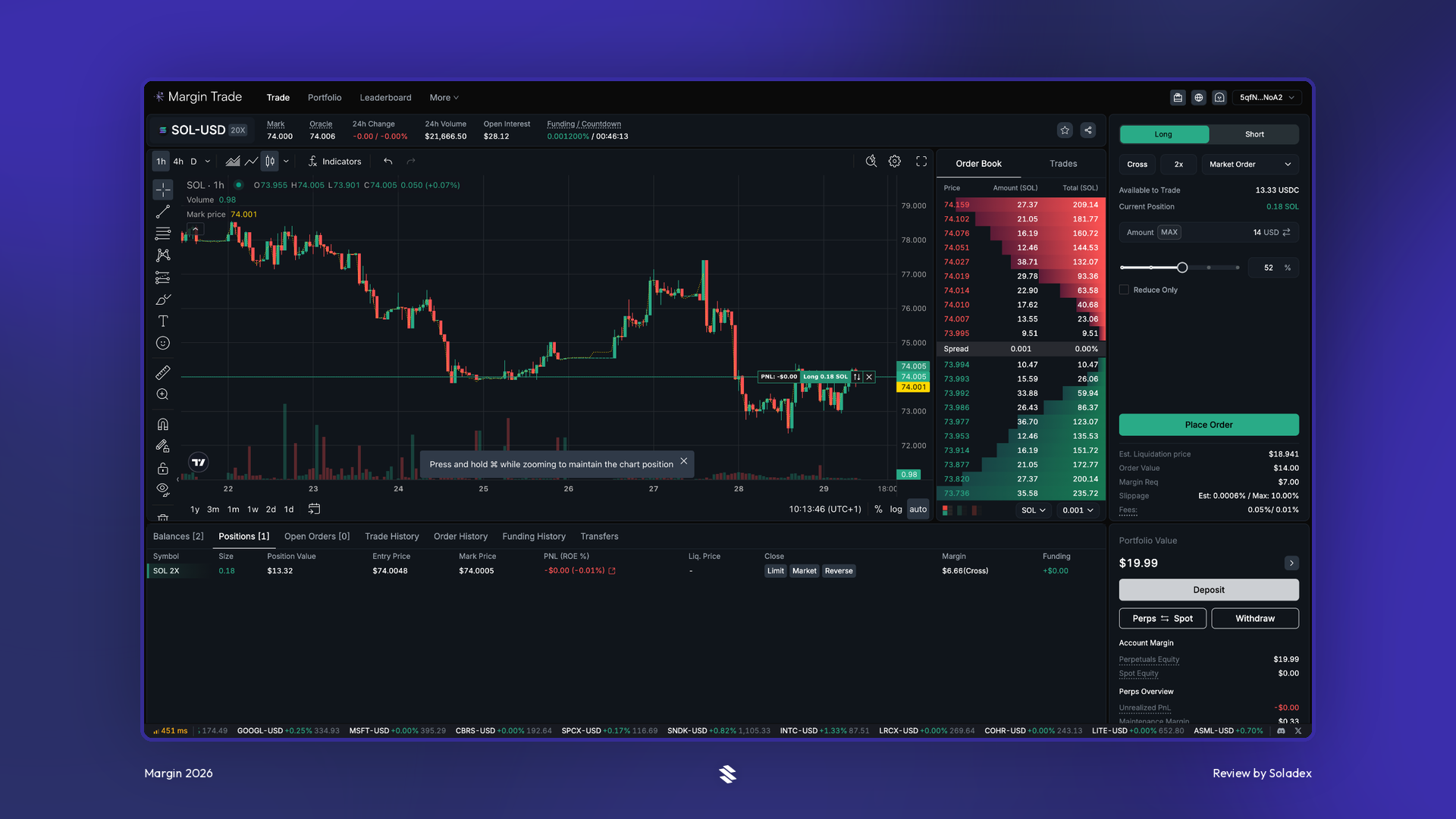
In the example below, I opened a long trade in the SOL perps market. The current maximum leverage for this asset is 2x, and only cross margin is available for now.
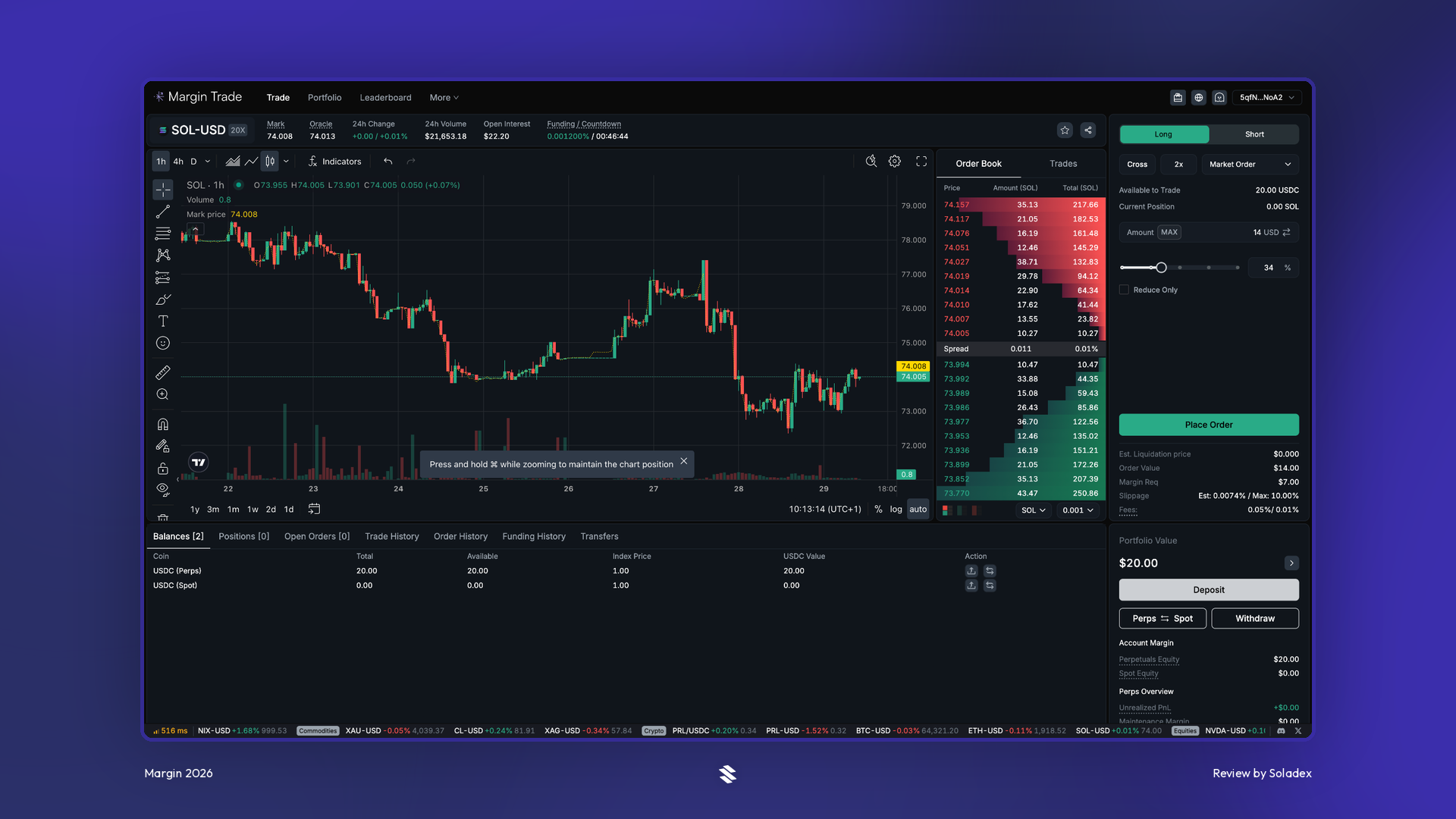
Once the position is open, Margin loads all active trades into the Positions section. The entry price, position value, and current PnL of the trade are displayed here.
Opening a Short Trade
I also opened a short SOL trade, and the features work the same way as demonstrated above. Enter your leverage and the order type, review all the quotes and proceed.
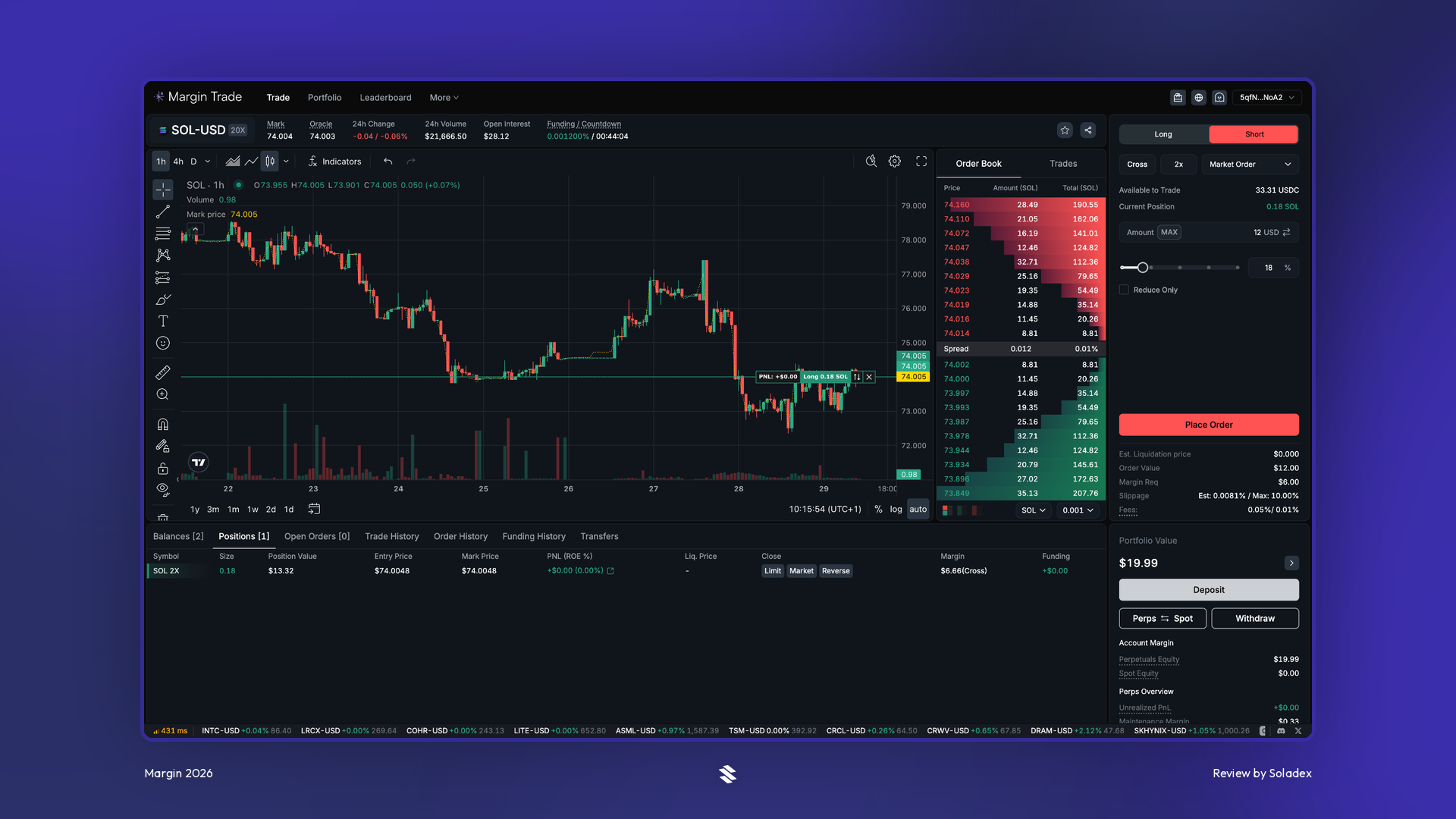
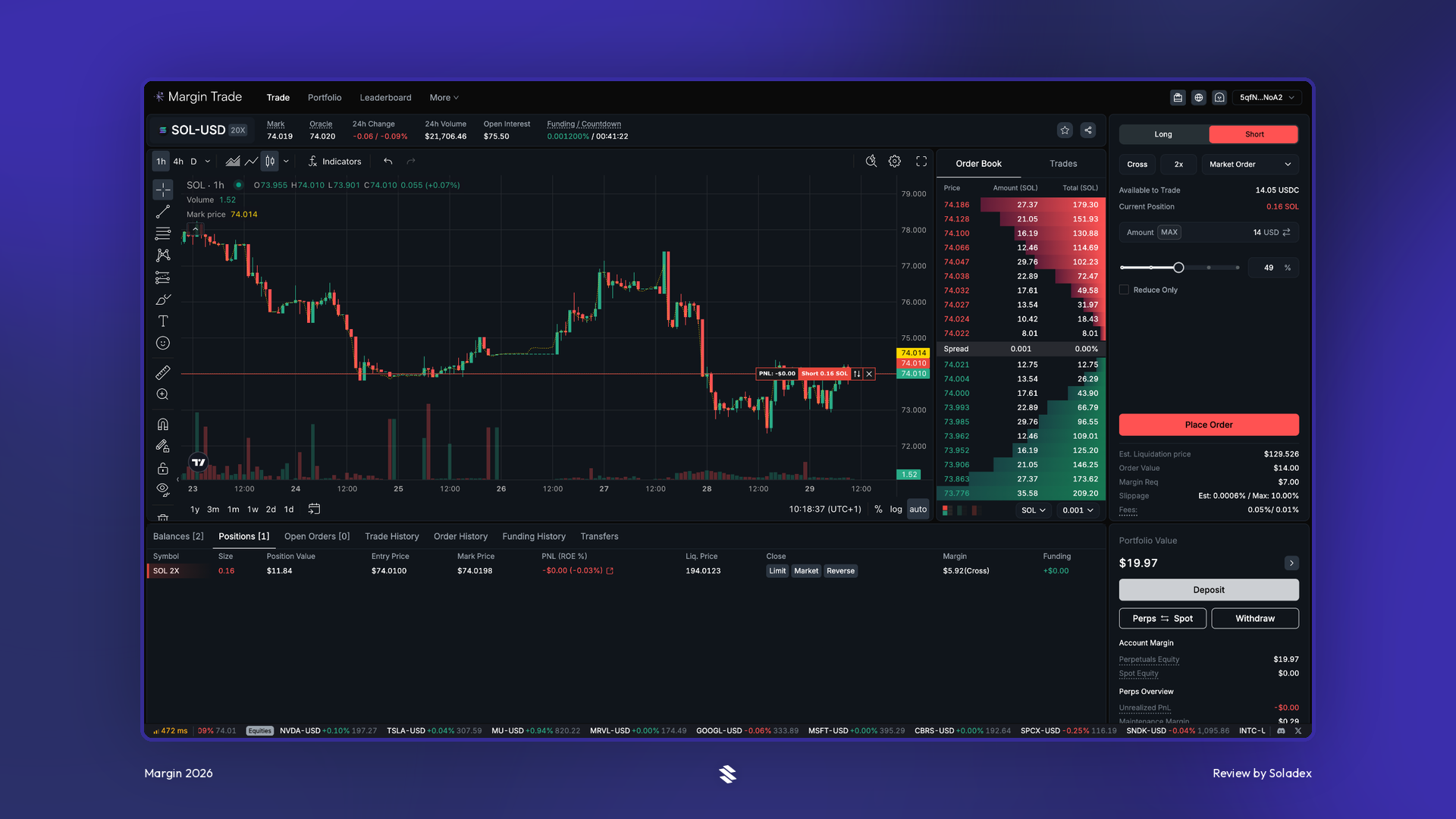
Margin creates the short position, and all that is left is to monitor it. This is where the PnL and collateral must be watched closely to avoid liquidation.
Closing Positions
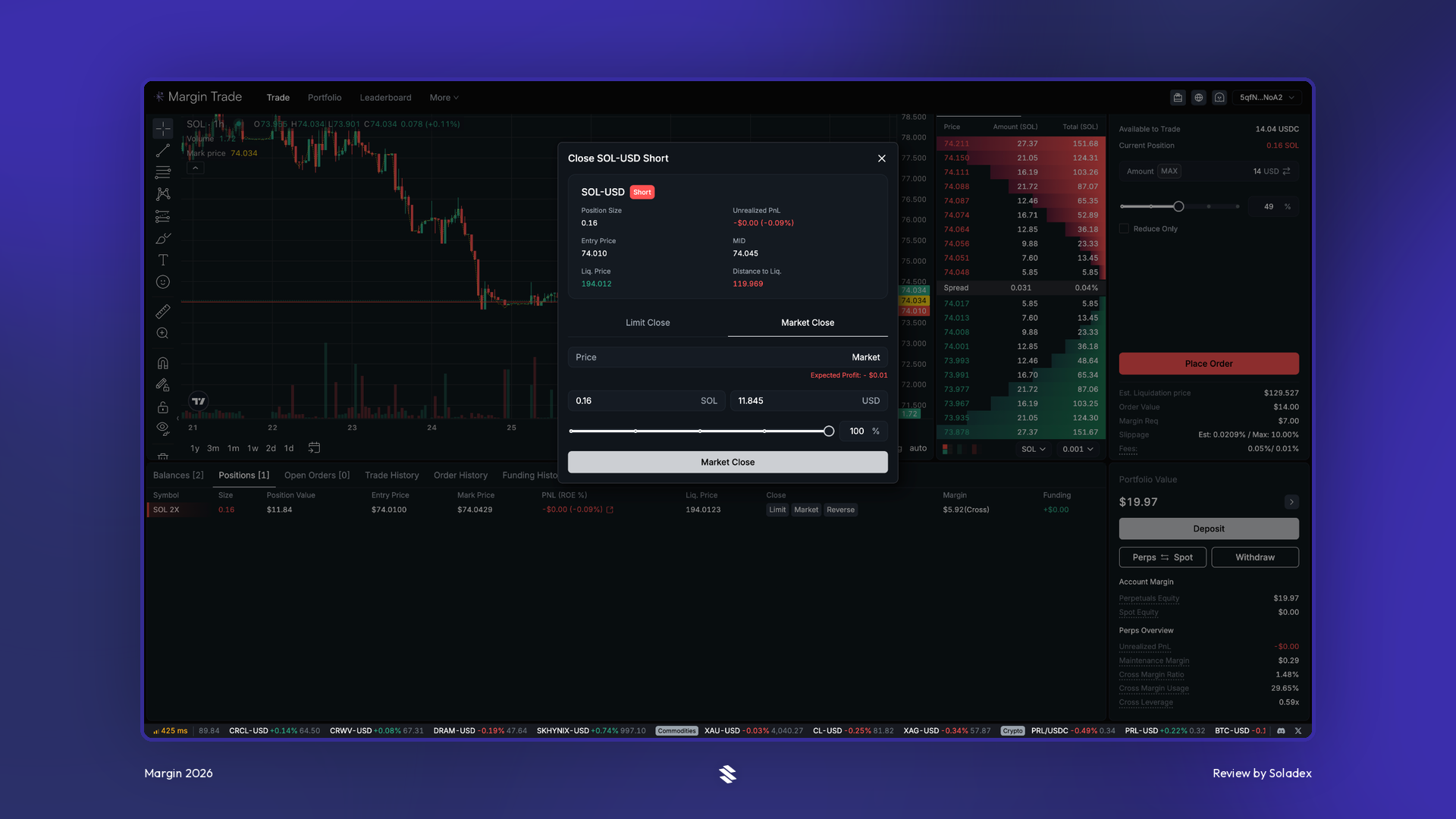
To close any open position on Margin, click the Limit or Market button, and the prompt below will appear. A market close exits the trade instantly at the best available price, while a limit close lets you set the price at which you want to exit.
Portfolio
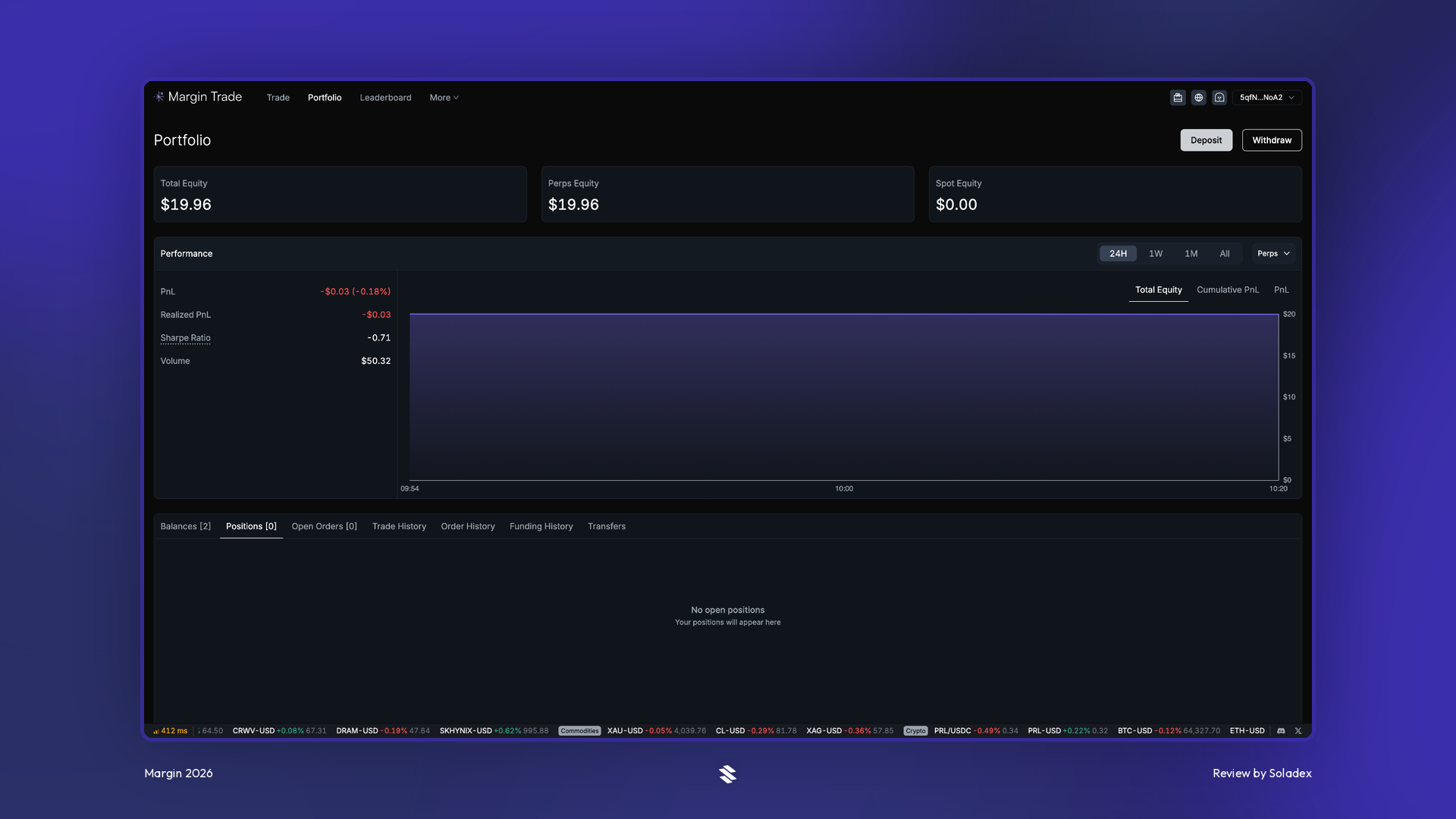
The Portfolio section gives traders an overview of their trading activity and account holdings. As shown below, it typically includes key performance metrics such as total trading volume, profit and loss (PnL), and the Sharpe ratio, which helps measure risk-adjusted returns.
Leaderboard
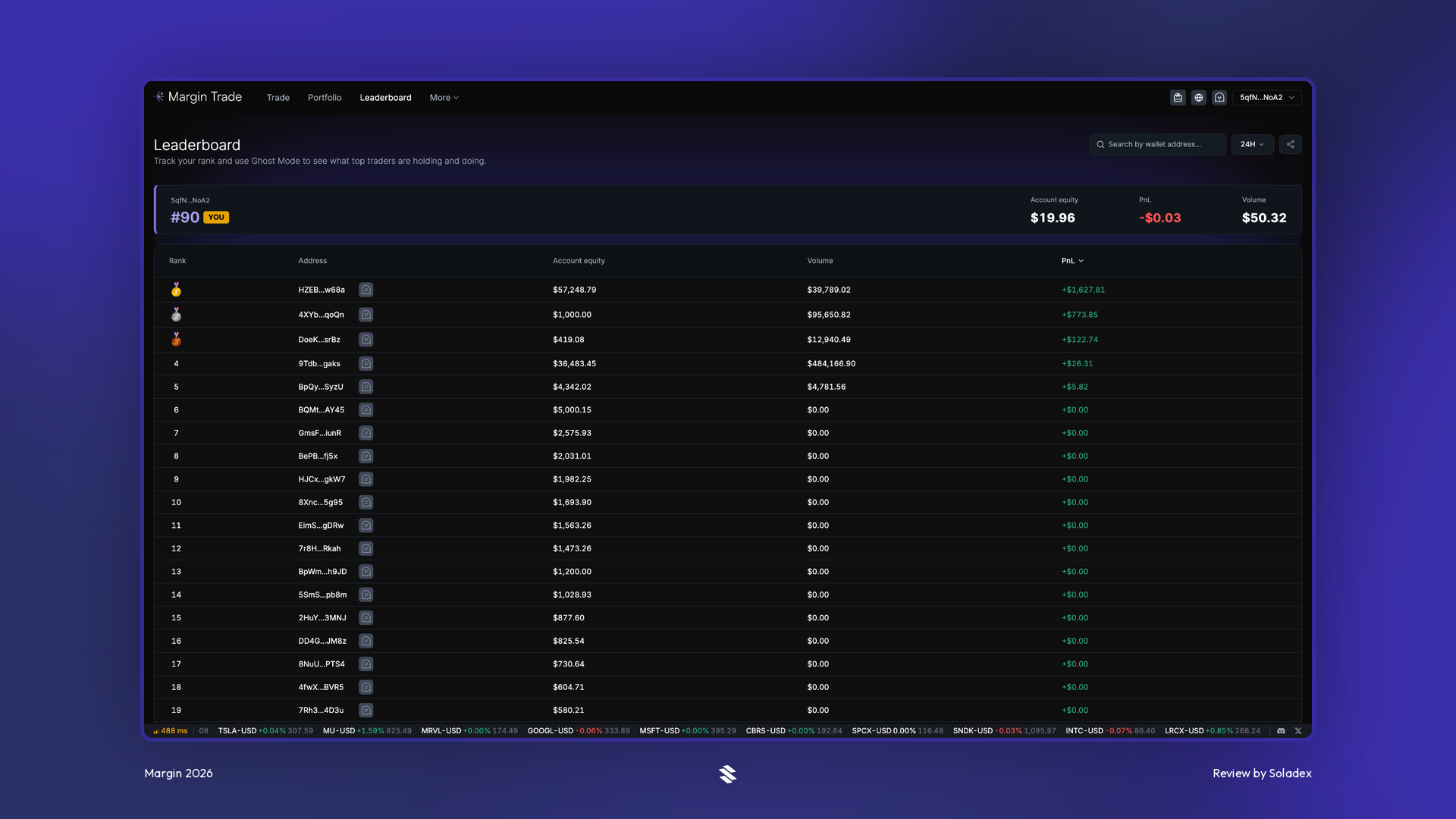
Top traders on Margin are ranked by trading volume and profitability. It highlights the platform’s most active and successful traders, allowing users to compare performance and track leading accounts over time.
Conclusion
Margin Trade is a Solana perpetual futures DEX from Solayer that uses a CLOB model to offer a more order-book-driven trading experience. Its focus on perps and visible market depth gives users access to both direct token trading and leveraged directional exposure. As with any derivatives platform, liquidity, fees, leverage limits, funding, and liquidation risk should always be considered.