


What is MetaDAO?
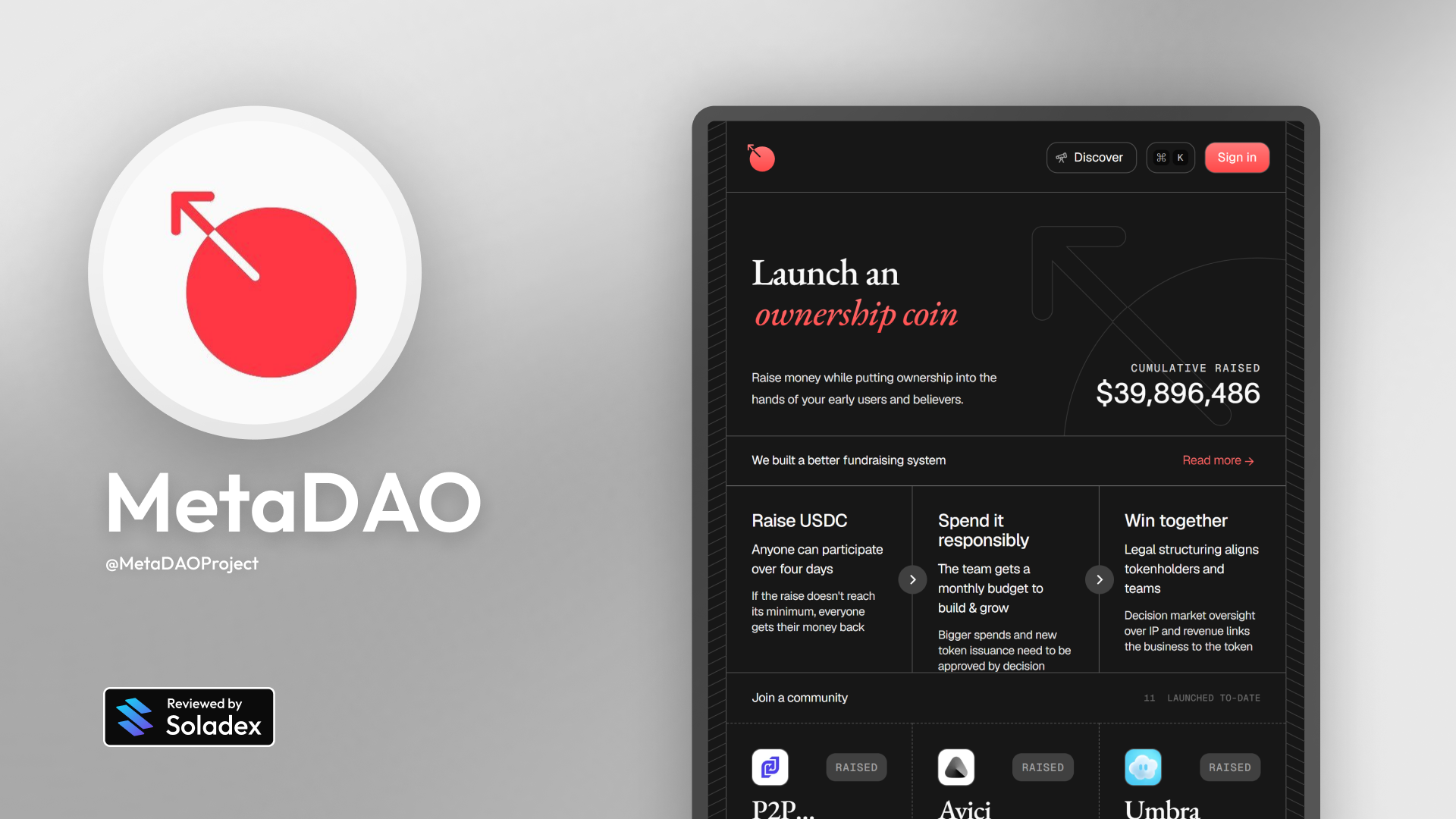
MetaDAO is a decentralized governance project on Solana that uses futarchy to make decisions. Most DAOs are governed by allowing token holders to vote collectively on the future of a protocol. In practice, many end up with low voter turnout, rushed decisions, whale-dominated votes, and bad proposals that pass because they only sound good. At its core, MetaDAO is a DAO governed by futarchy, and it is also a protocol that brings futarchy to other protocols.
What is Futarchy?
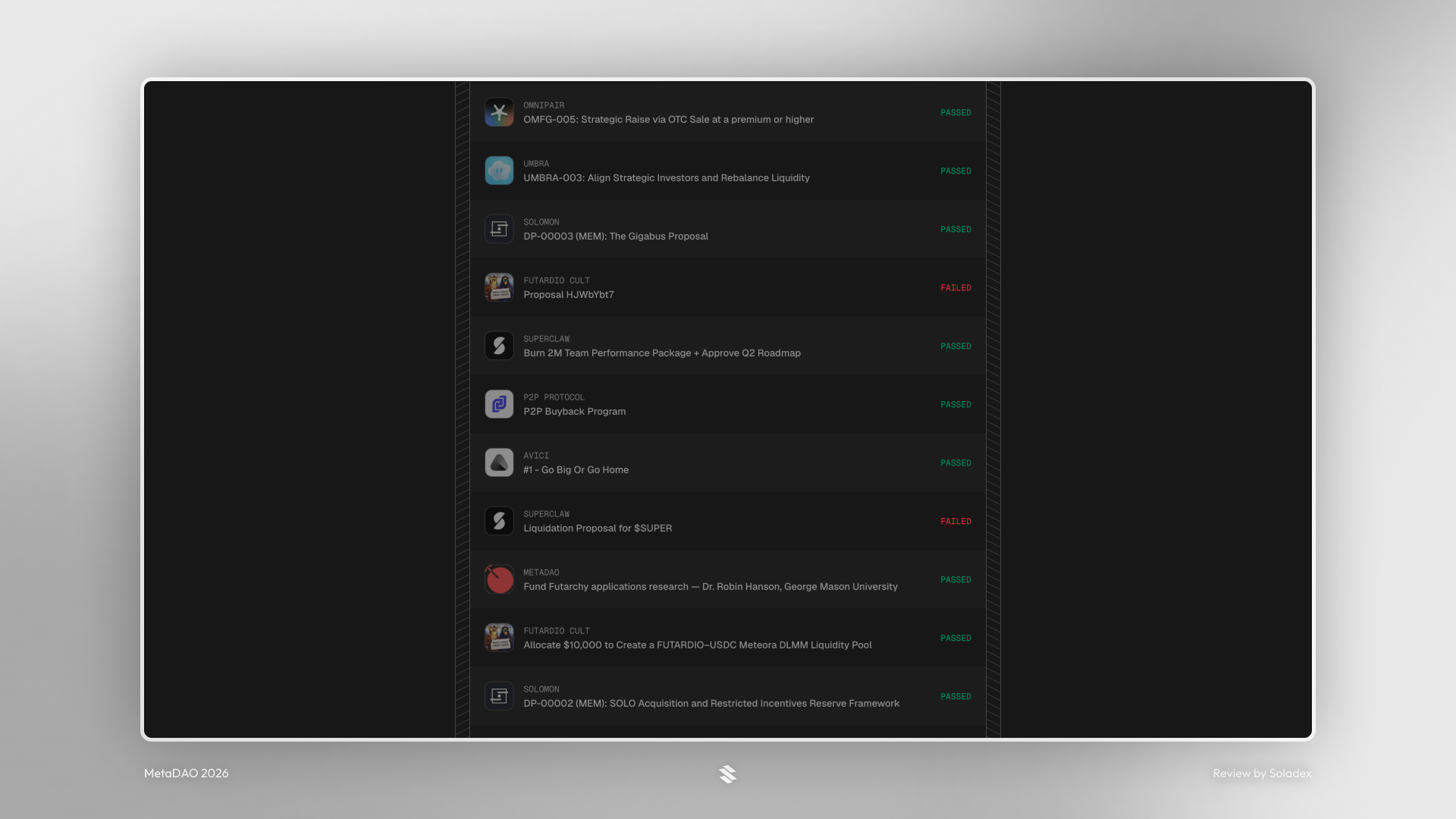
People vote on decisions in MetaDAO by buying and selling tokens in conditional prediction markets, a system known as "futarchy". Participants "vote" with their wallets, betting on whether a proposal will positively or negatively impact their DAO.
How Does Futarchy Work?
The model works as follows:
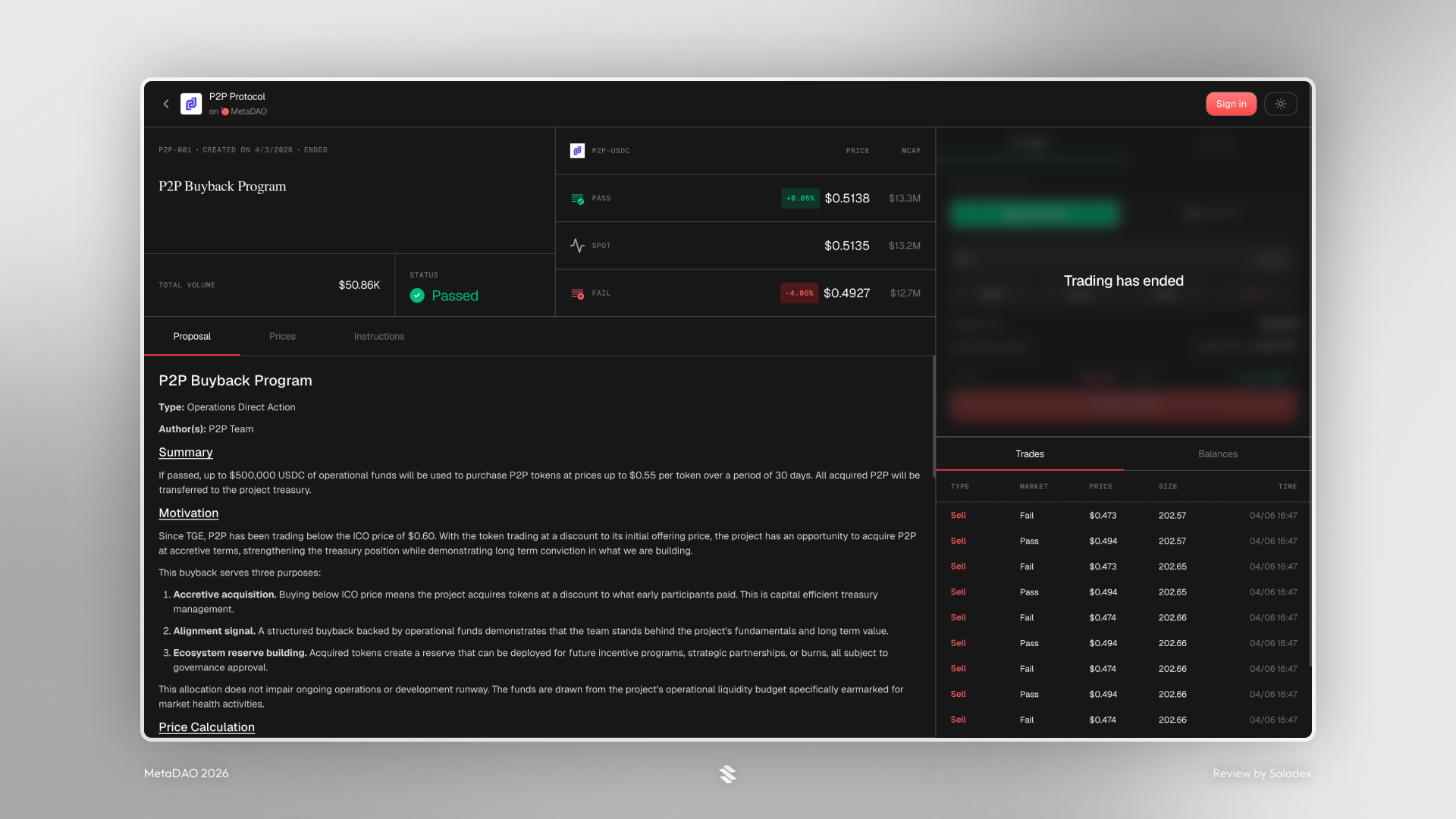
- When a proposal is made, MetaDAO creates two parallel prediction markets: one for "Pass", where the proposal is approved, and one for "Fail", where the proposal is rejected.
- Users buy or sell these conditional outcome tokens based on whether they believe passing or failing the proposal will increase the DAO's overall value. If the community believes the proposal is good, the price of the "Pass" tokens will rise. If it is bad, the "Fail" token price will increase.
- Once the market evaluation period ends, the decision with the higher market value is selected.
If you buy a Pass token, you are saying: “I only want to own this token if the proposal passes.” If the proposal passes, your Pass token becomes redeemable for the real token. If the proposal fails, your Pass token becomes worthless.
If you buy a Fail token, you are saying: “I only want to own this token if the proposal fails.” If the proposal fails, your Fail token becomes redeemable for the real token. If the proposal passes, your Fail token becomes worthless.
Imagine a project wants to raise $500,000 by selling tokens to investors.
The proposal with a Futarchy-governed DAO might say:
Participate in the sale of 2% of the token supply for $500,000, with funds used for protocol development and liquidity incentives.
MetaDAO-style futarchy would then ask:
- What will the DAO token be worth if this deal passes?
- What will the DAO token be worth if this deal fails?
If traders believe the investor brings strong value and the dilution is reasonable, the pass market should trade higher. If traders believe the investor adds little, the fail market should trade higher.
Fundraising with MetaDAO
For entrepreneurs and founders who want to raise money for their businesses and startups, MetaDAO can be used for token sales and liquidity bootstrapping. A DAO using the futarchy model powered by MetaDAO can decide whether to sell tokens to investors, contributors, market makers, or ecosystem partners.
A DAO may propose selling part of its native token treasury for USDC, SOL, or other assets. Futarchy can help determine whether the market thinks diversification improves the DAO’s value.
Past Fundraising on MetaDAO
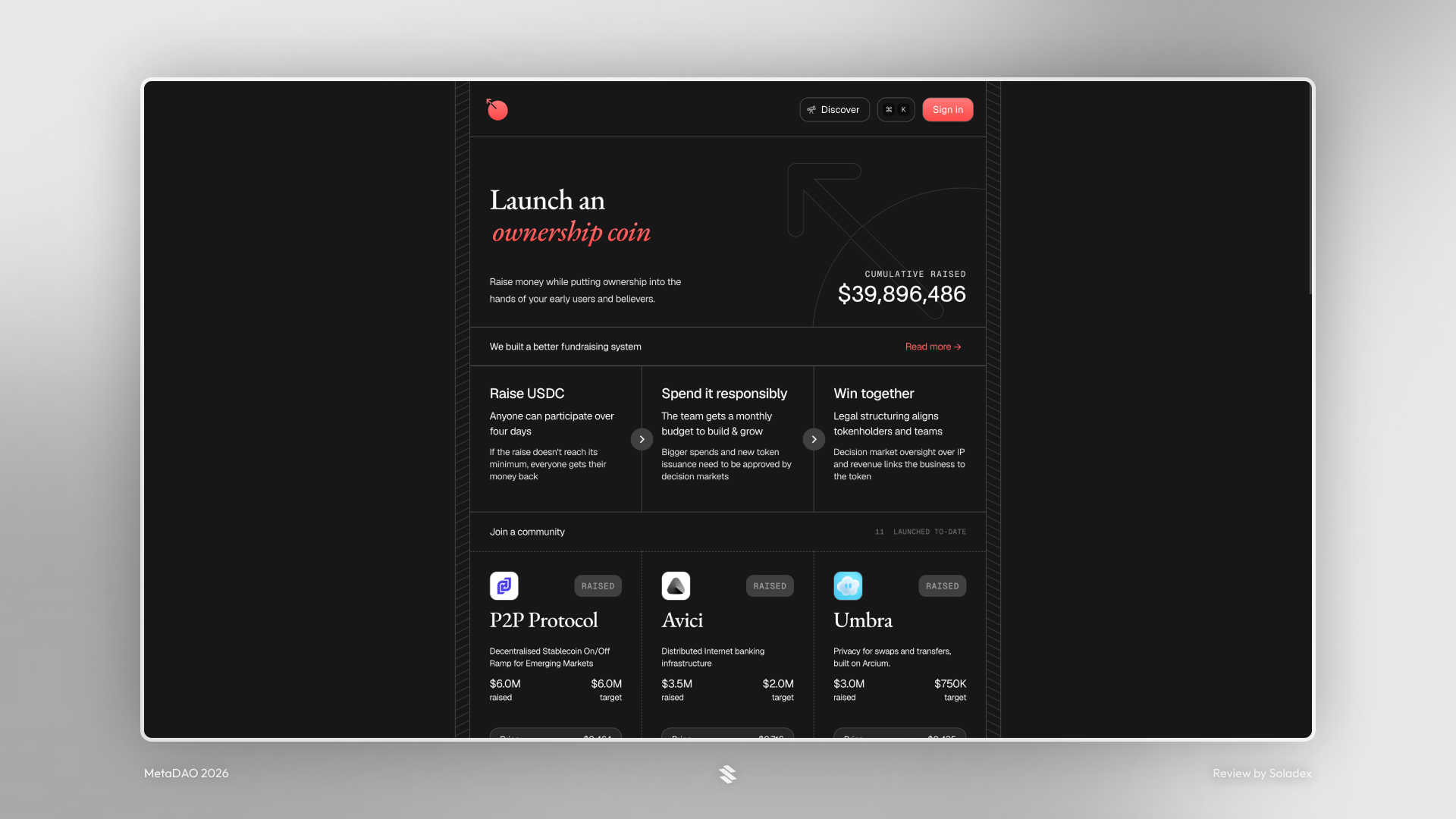
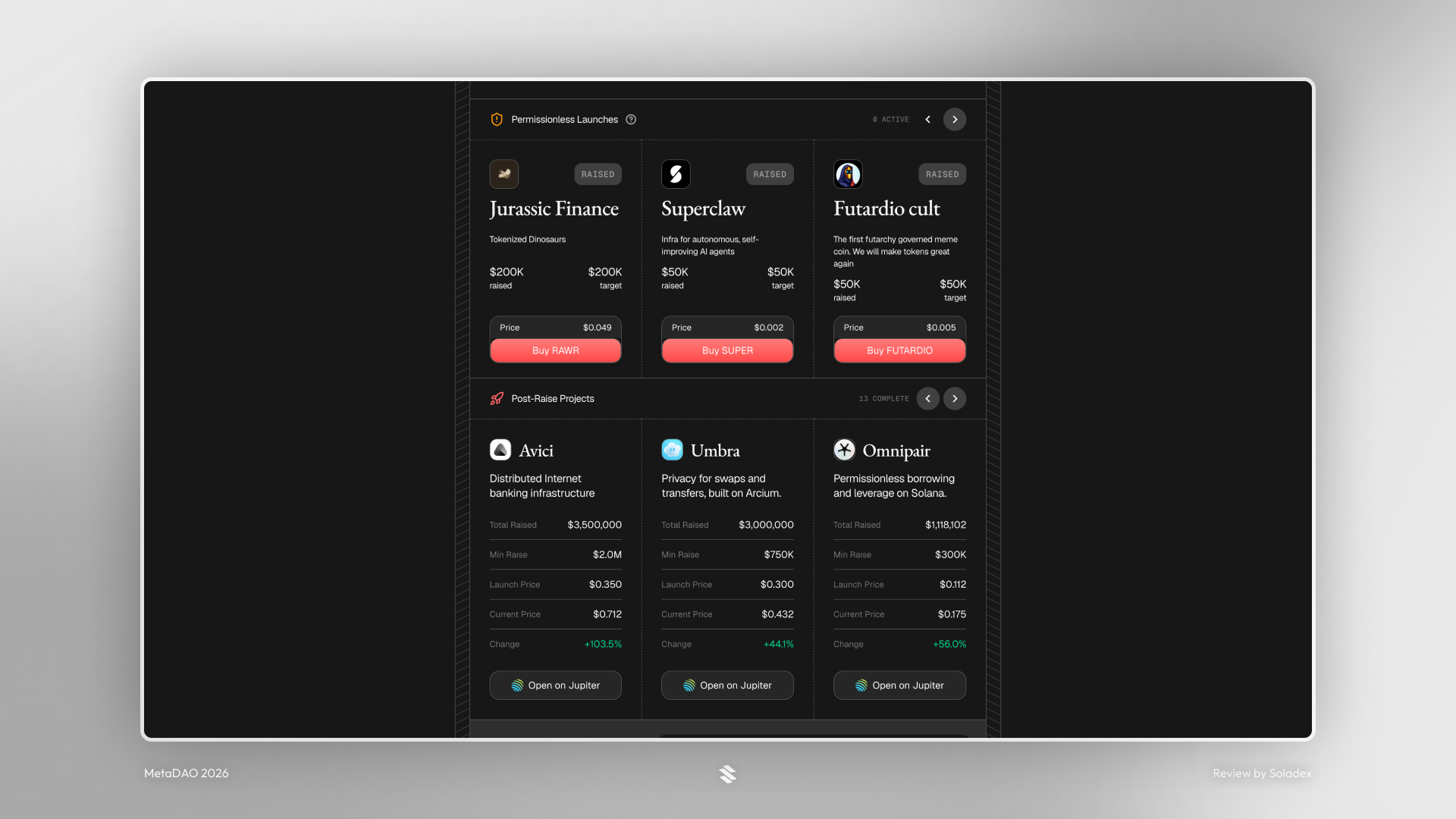
Using its futarchy-based model, MetaDAO has helped facilitate funding for 13 Solana projects, with more than $39 million raised in total. Some of the projects launched through MetaDAO are:
- Avici: a self-custodial digital banking platform that allows users to fund accounts with crypto and spend it using Visa cards. Through MetaDAO, Avici raised $3,500,000 after an oversubscribed funding round.
- P2P Protocol: A decentralised stablecoin On/Off Ramp for Emerging Markets. P2P Protocol raised $6,000,000 through MetaDAO.
MetaDAO Benefits
The following are some of the challenges which MetaDAO wants to fix in the ecosystem:
Voter apathy
Most token holders do not want to spend their time reading every proposal. As DAOs grow, governance becomes more complex, and participation often drops. Futarchy reduces the need for every token holder to vote on every issue. Instead, informed traders can participate where they have conviction.
Poor decision quality
Traditional votes can be influenced by branding, social pressure, and short-term sentiment. Futarchy asks markets to forecast outcomes. That does not guarantee perfect decisions, but it gives the system a stronger mechanism for aggregating information.
Misaligned incentives
In normal governance, someone can vote for a bad proposal without bearing a clear cost if they are wrong. In futarchy, traders who push incorrect market prices risk losing money. This helps align incentives toward accuracy.
Governance capture
Whales can dominate token voting. Futarchy does not fully remove capital influence, but it changes the game. A wealthy participant who tries to manipulate markets can be counter-traded by others if the price becomes irrational.
Inability to Raise Capital in a Fair Launch
Many projects have raised funds in the past through rough means that constrain their long-term growth, with much of the focus placed on legal and marketing demands. Often, the tokens end up in the hands of people who do not actually care about the success of the protocol. With MetaDAO, every “passed” proposal signifies the conviction of the majority of those willing to invest in the founder’s success. This creates a community of high-quality holders who are willing to work toward the business's success, all without the troubles of traditional ICO fundraising or the degen culture of Pump.fun token traders or even VCs that would not actively contribute to the success of the protocol after deploying money.
Conclusion
By bringing futarchy to Solana, MetaDAO tests whether prediction markets can help DAOs make better decisions and whether protocols can get funded under better conditions. Its model is also solving some of the biggest problems in DAO governance, such as voter apathy and low-quality decisions.