

What is SolGov?
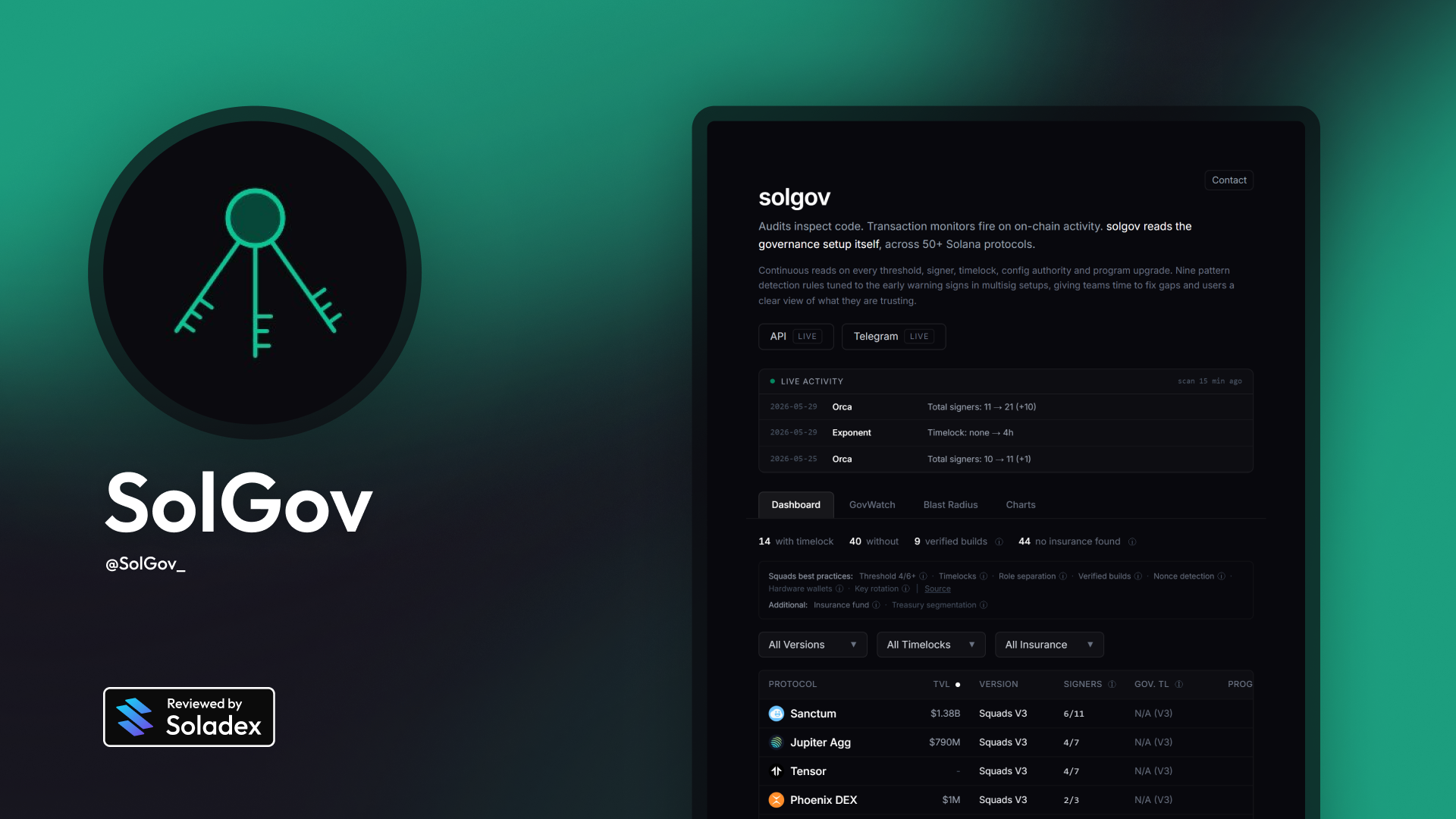
SolGov is a tool focused on how governance is configured across Solana protocols. It looks directly at the on-chain setup behind each protocol, such as signer thresholds, multisig structure, timelocks, upgrade authorities, and other related controls. SolGov tracks over 50 protocols and continuously checks for patterns that can signal governance risk, especially in multisig setups.
Why Is SolGov Important?
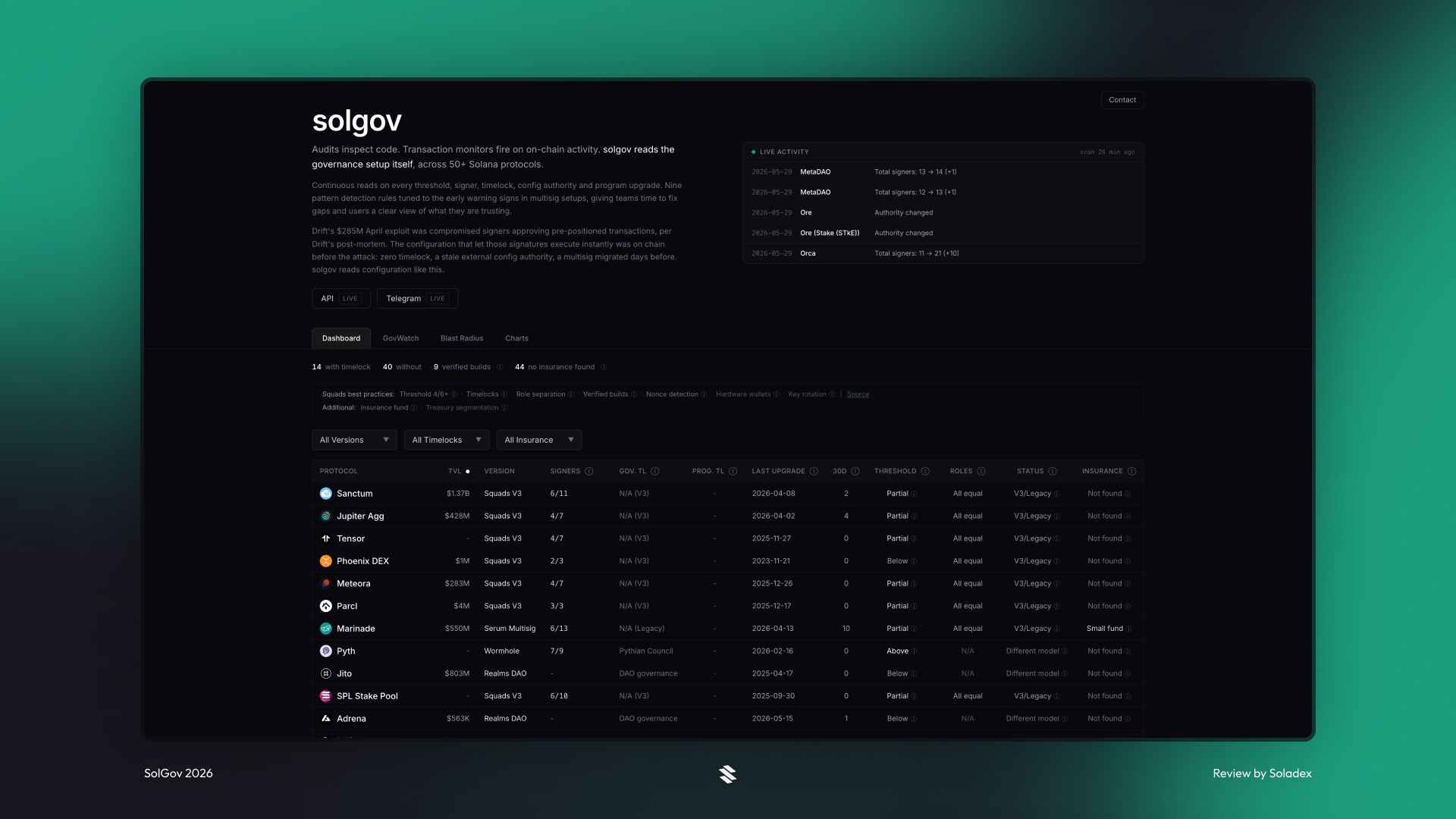
A protocol can have audited code and still be exposed if its governance setup is weak. Things like zero timelocks, overly concentrated signer control, or outdated configuration authorities can create conditions where a malicious or compromised signer can cause havoc. SolGov focuses on reading those signals directly from the configuration on-chain so that users can gain transparent data on the apps they use often.
SolGov Dashboard
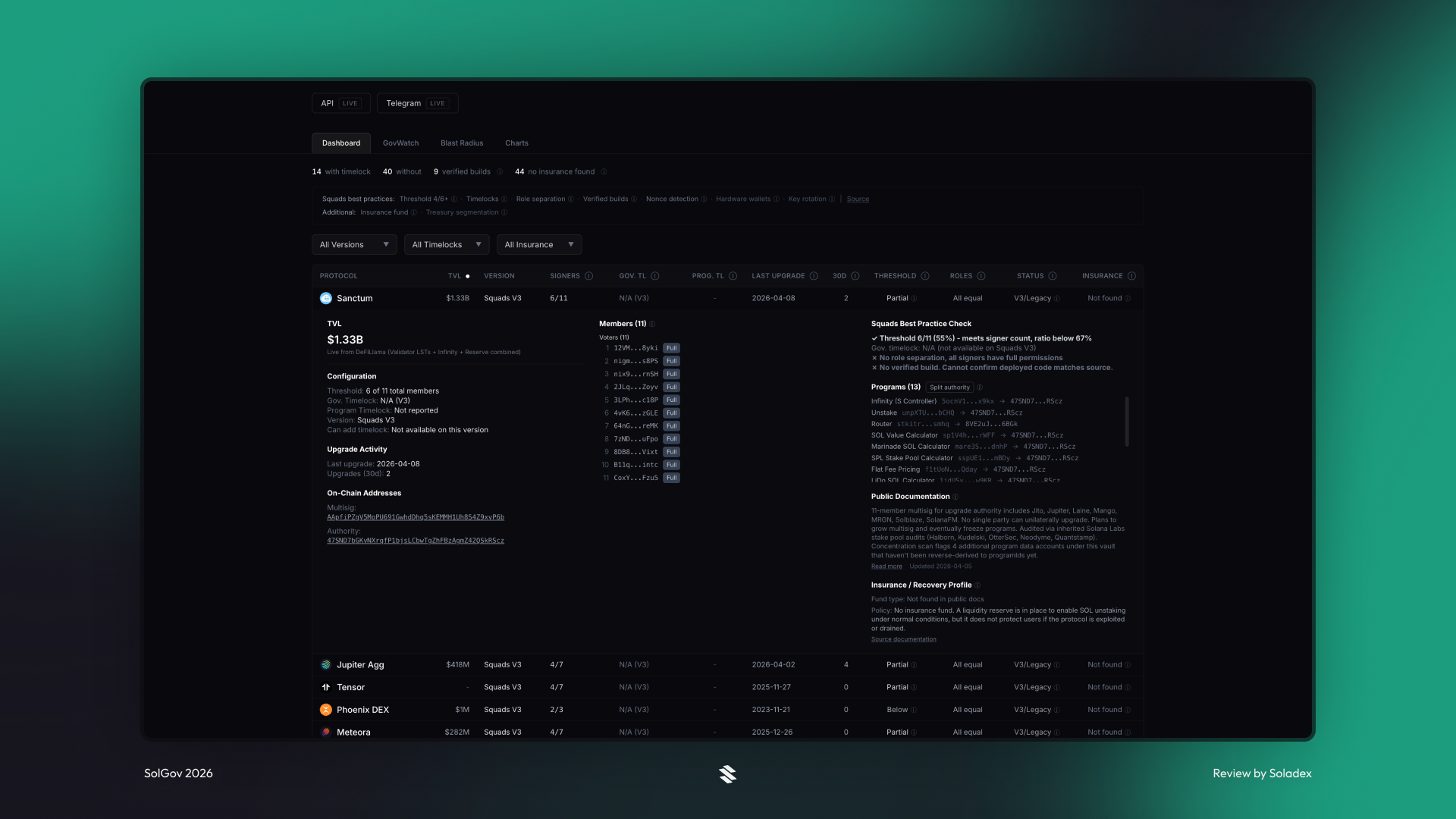
The dashboard gives a breakdown of each tracked protocol. Selecting a protocol like Jupiter or Sanctum reveals a mix of financial and governance data. You’ll see metrics such as total value locked (TVL), alongside details about the governance setup. This includes the multisig threshold (for example, 4 out of 7 signers), whether a governance or program timelock exists, and the version of the multisig standard being used.
The Dashboard also shows upgrade activity, including when the last upgrade happened and how frequently upgrades occur. On-chain addresses for the multisig and authority accounts are listed, along with the set of members involved. Beyond raw data, SolGov runs checks against common best practices.
Governance Setups and Variations
Protocols on Solana use different governance frameworks such as Squads (V3 and V4), Serum multisig, Realms DAO, single-signer setups, and others like Wormhole.
These setups differ in what they support. For example, newer versions of Squads introduce features like timelocks and role separation, while older versions may lack them. Some protocols implement delays before transactions execute, while others allow immediate execution. Insurance coverage and recovery processes also vary widely, and in many cases are not publicly documented. SolGov puts these differences side by side so users can understand how each protocol is structured.
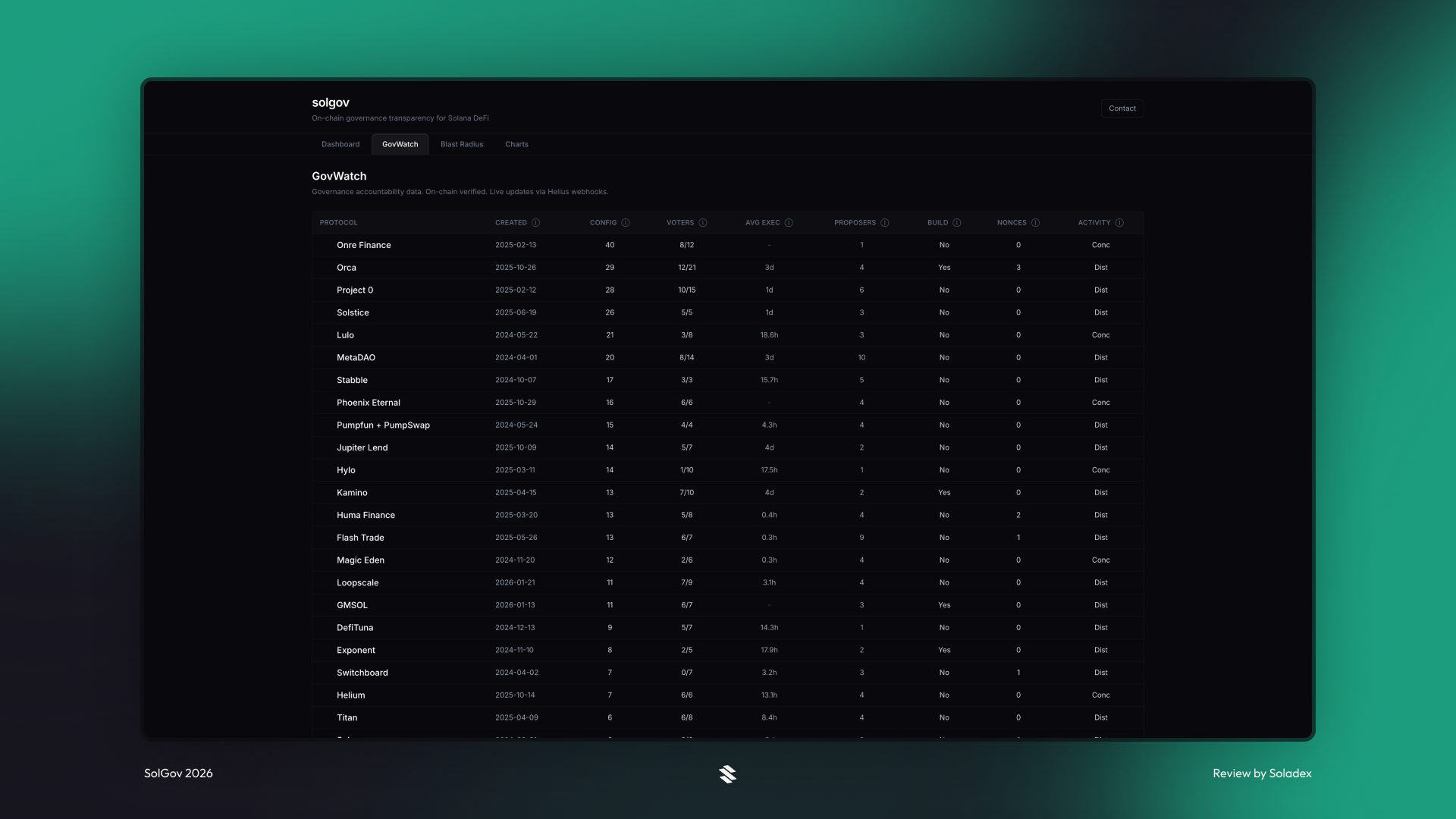
GovWatch
The GovWatch section focuses on how governance is used over time. It tracks proposer, approver, and executor activity to show whether responsibilities are distributed or concentrated across administrators. For example, it can reveal if the same signer is both proposing and executing actions, how many unique participants are active, and whether some members never sign at all. It also tracks approval and rejection rates, as well as how often spending limits are used. Other signals here include gas usage concentration, signing patterns across time zones, and whether transaction activity clusters around specific windows.
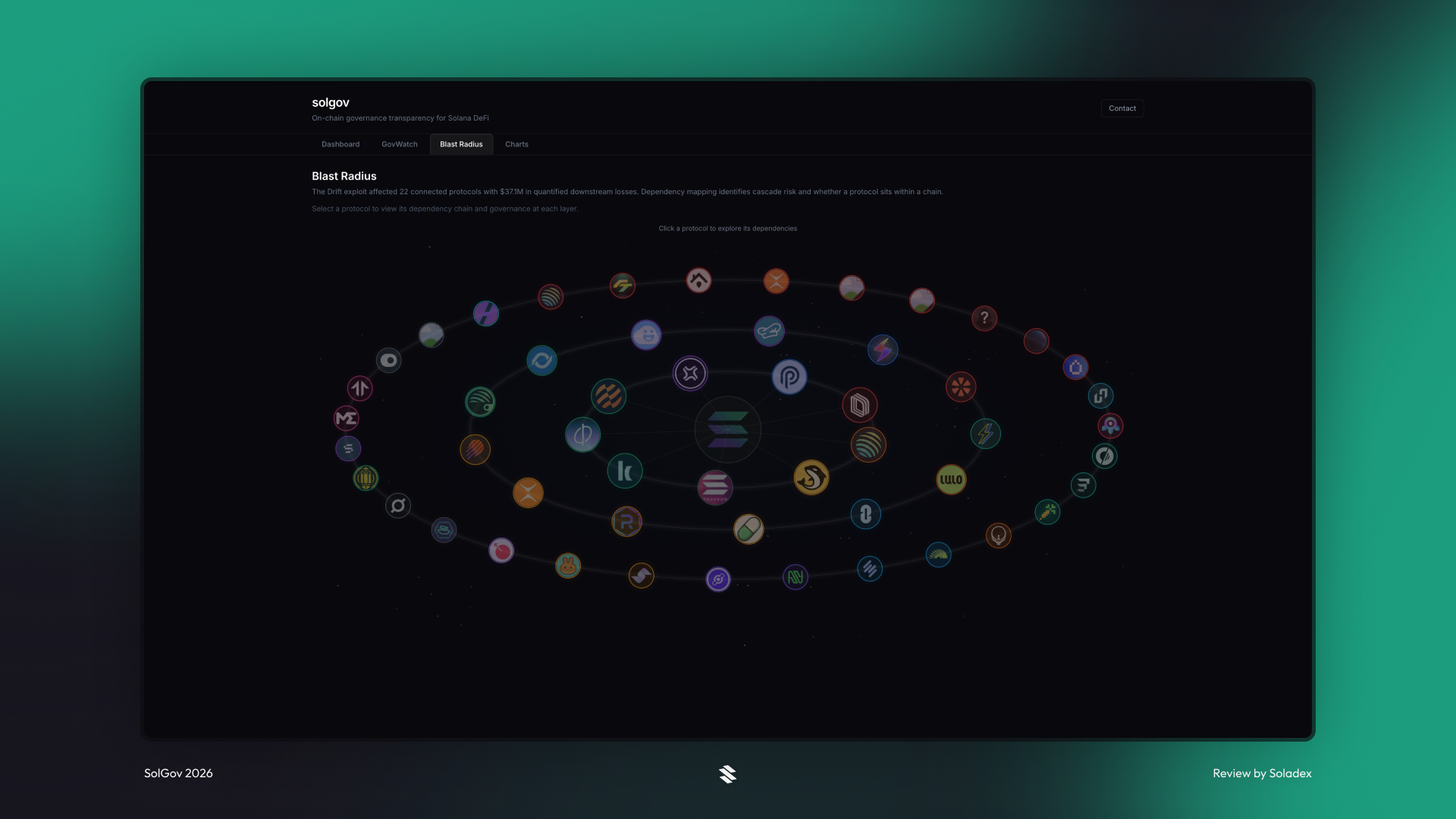
Blast Radius on SolGov
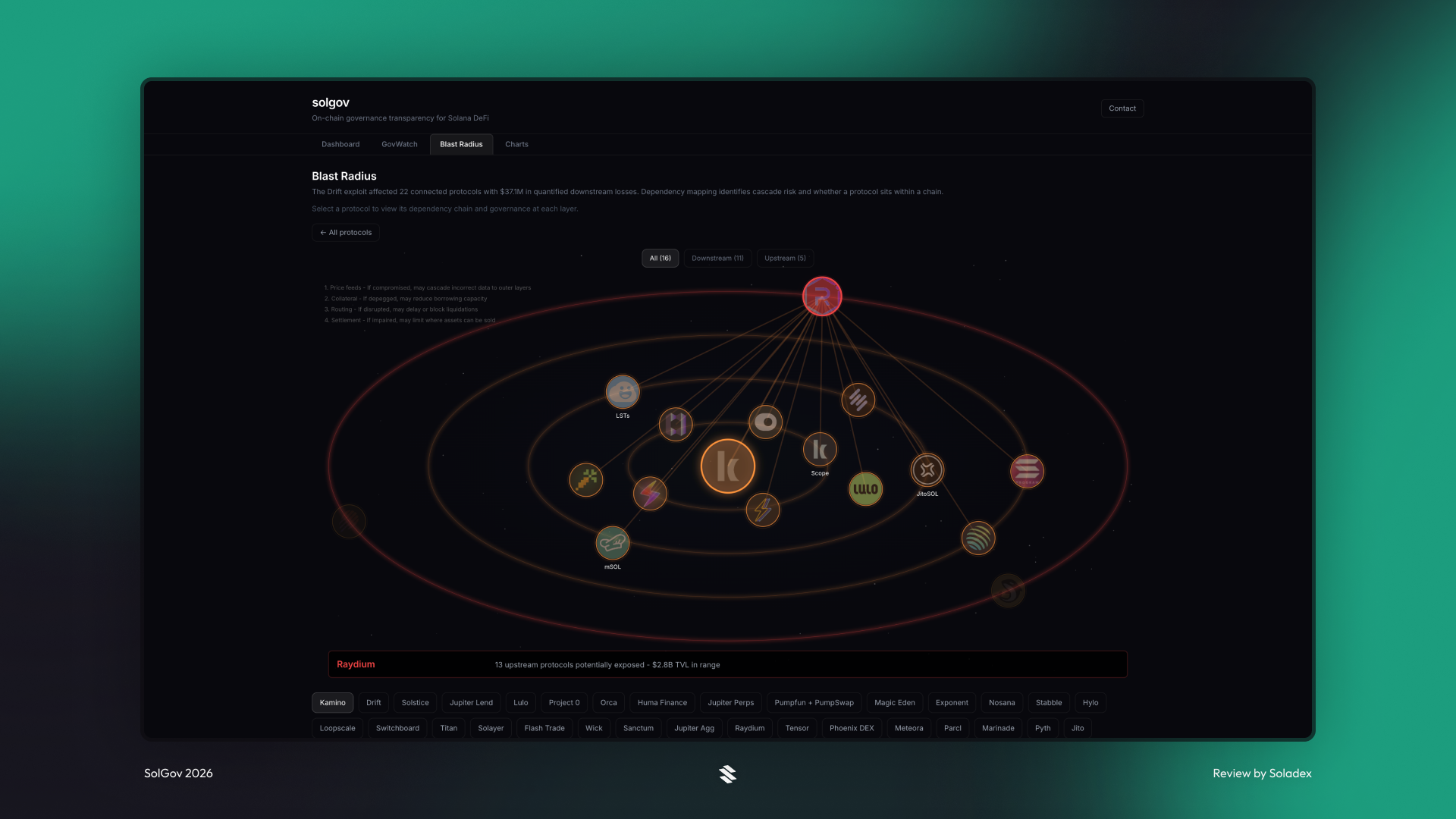
SolGov also looks at how protocols are connected. When an issue happens in one protocol, the effects can spread to others that depend on it. The blast radius view maps these dependencies to show how risk can cascade across the ecosystem. Instead of looking at protocols in isolation, SolGov highlights how they sit within the network and what could be affected if one platform fails.
If an event affects Raydium, SolGov shows which other protocols it impacts on Solana, limited to what SolGov tracks. This type of contagion happened recently when Drift was exploited, affecting 22 other protocols during the event.
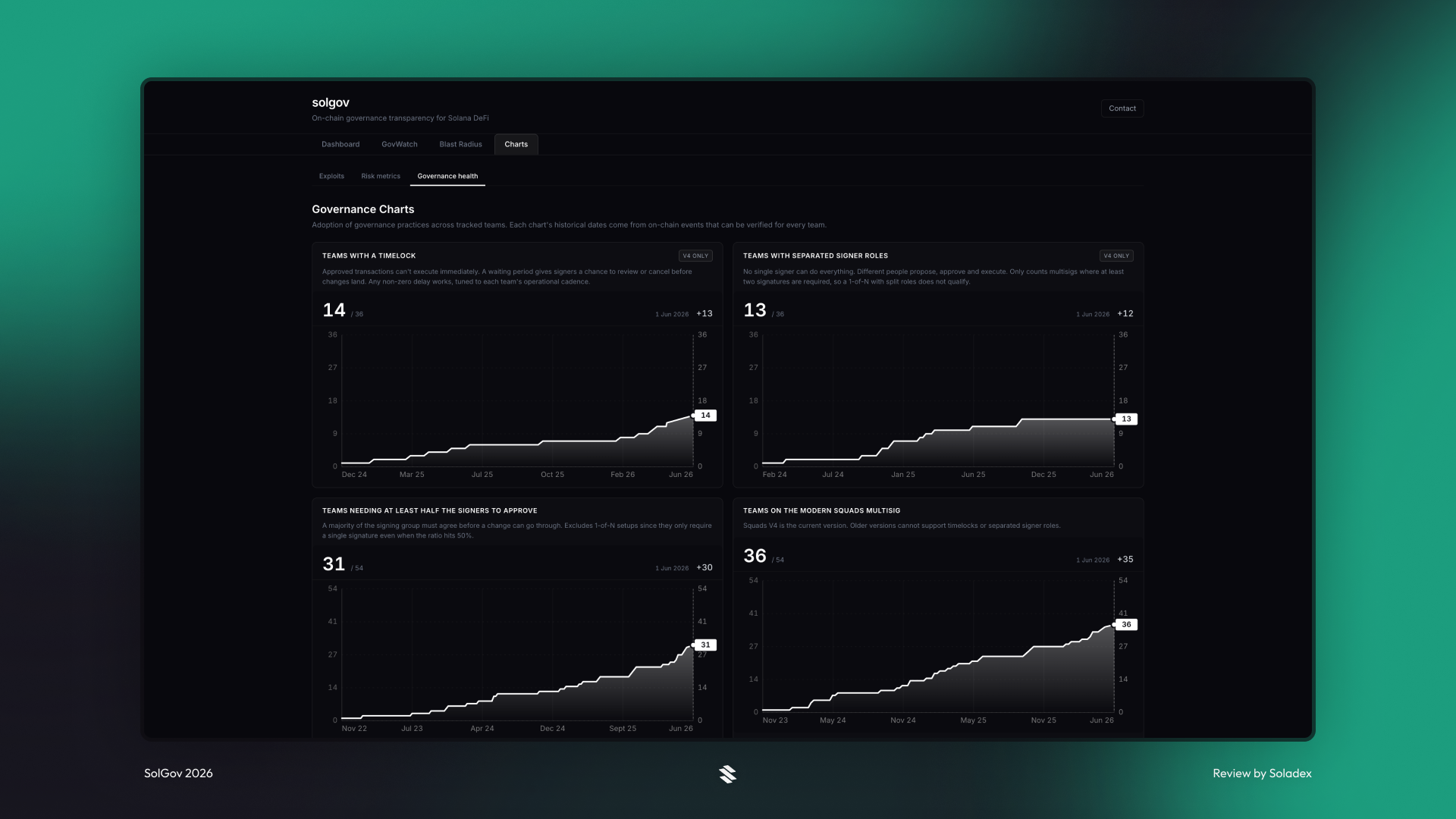
Governance Trends and Charts
SolGov includes charts that track the adoption of governance practices across teams on Solana. These cover things like how many protocols use timelocks and how many separate signer roles. Each data point is tied to verifiable on-chain events that provide a historical view of how governance is done across the ecosystem. The charts provide information about previous security events where protocols have been exploited because of an admin’s key compromise.
SolGov Telegram Alerts
SolGov provides a public Telegram bot that sends real-time alerts on governance changes across monitored protocols. These updates include changes to signer thresholds, governing members, timelocks, and other key configuration shifts. There is also a personal version of the bot that can be customized, allowing users to choose the types of events they want to track and how sensitive the alerts should be based on the severity of changes within a protocol.
SolGov GitHub
For developers interested in how SolGov works internally, including its bots, the SolGov GitHub (link above) provides a detailed view of the project. It includes build instructions, an overview of the system architecture, and documentation on how the governance monitoring setup functions. The repository also contains guidance for using the free API, which can be integrated by protocols that want to make use of SolGov’s data.
Conclusion
SolGov focuses on how protocols are controlled on-chain. By reading governance configurations directly from the blockchain and tracking how they are used over time, it highlights risks that might otherwise go unnoticed by teams and end users alike. For users, it provides a clearer picture of what sits behind a protocol. For teams, it shows gaps that can be addressed before they become actual problems.