What Is Fermi?
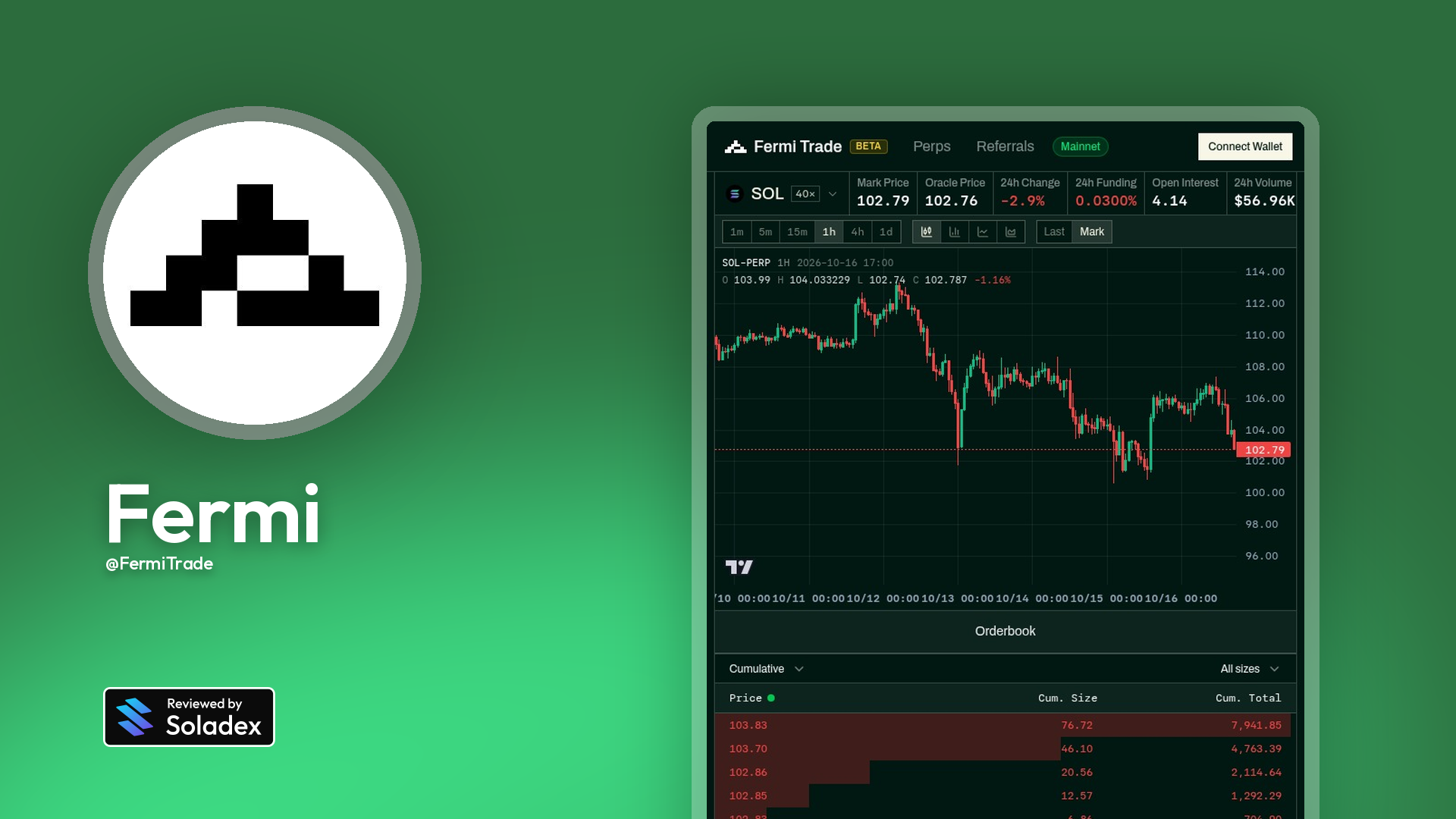
Fermi is a non-custodial perpetual futures exchange built on Solana. It lets traders open long and short positions on supported markets without handing their funds to a centralized exchange. Order matching, margin checks, funding payments, liquidations, and settlements are handled through an onchain program with high trading speed that can rival a CEX.

What Are Perpetual Futures?
For readers new to cryptocurrency trading, perpetual futures, commonly called perps, are contracts that let traders speculate on whether an asset’s price will rise or fall.
A trader can:
- Go long if they expect an asset’s price to rise.
- Go short if they expect its price to fall.
- Use leverage, depending on the platform’s limits and collateral rules.
Unlike normal futures contracts, perpetual futures do not have an expiration date. Instead, they use a funding system to help keep the contract price close to the spot market price. Perpetual futures are high-risk products because leverage can increase potential gains, but it can also increase losses and lead to liquidation.
How Does Fermi Work?
Fermi uses an onchain order book. This means orders are handled through the protocol’s trading system on Solana instead of being matched privately by an exchange operator.
When a user places an order, they sign it with their wallet. The order is then sequenced, committed to the blockchain, and later executed through Fermi’s onchain exchange program.
The platform also uses an optimistic display layer. This gives users fast feedback on their order status before full blockchain confirmation arrives. While the final result is still determined onchain, the experience is designed to feel closer to using a traditional exchange.
Deposit
Deposit supported collateral into your Fermi account before trading. This collateral is used to support all open positions and meet margin requirements.

Open Trade
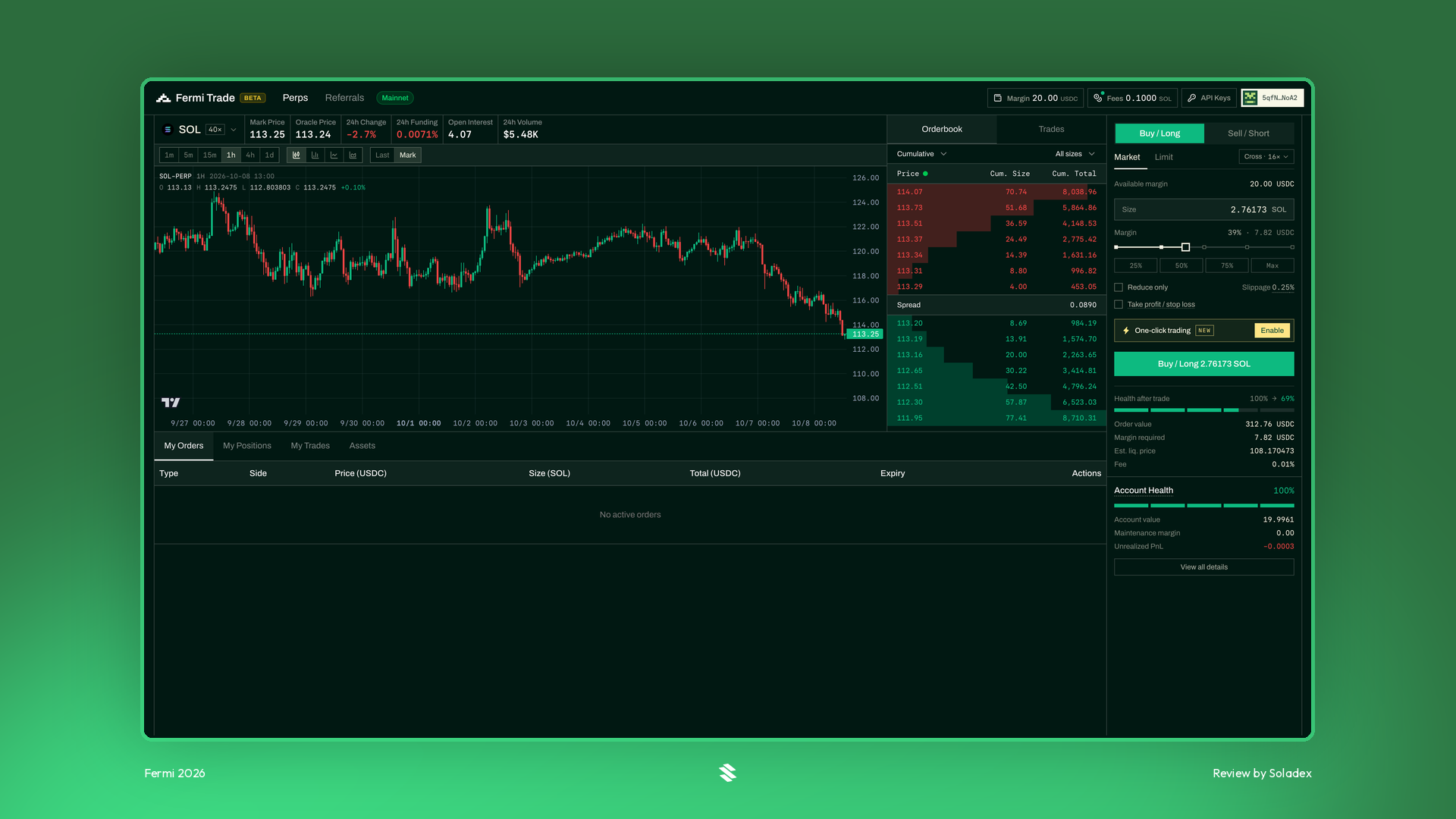
Choose a market, select long or short, enter your trade size, and review the order before confirming it. Always check your margin and liquidation risk before opening a position. I opened a long trade on the SOL token.
Close Trade
You can close a position by using the platform’s close option on the right side of the list of positions as shown below. Closing a trade realizes any profit or loss on that position. In the example used, about $2 was lost to the market.

Trade History
Trade History shows your previous orders, fills, position changes, and completed trades. It can help you track performance and review all past activity in a wallet.

Account
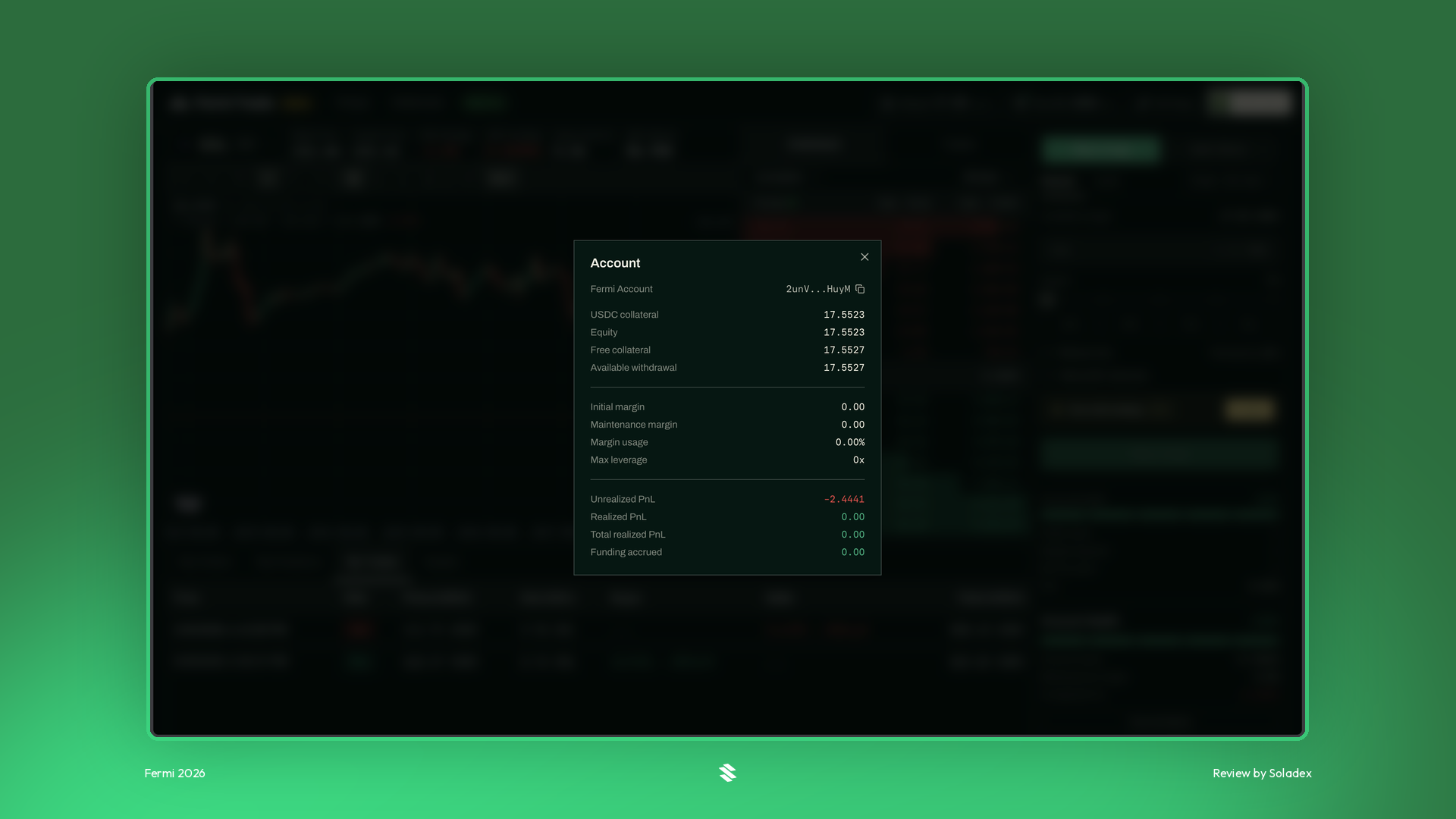
Your Account profile contains account details such as equities, total profit and loss, wallet details, and margin.
Fermi Fee Credit
Fermi Fee Credit is the balance provided by the protocol to be used to offset eligible trading fees on the platform.

API Keys
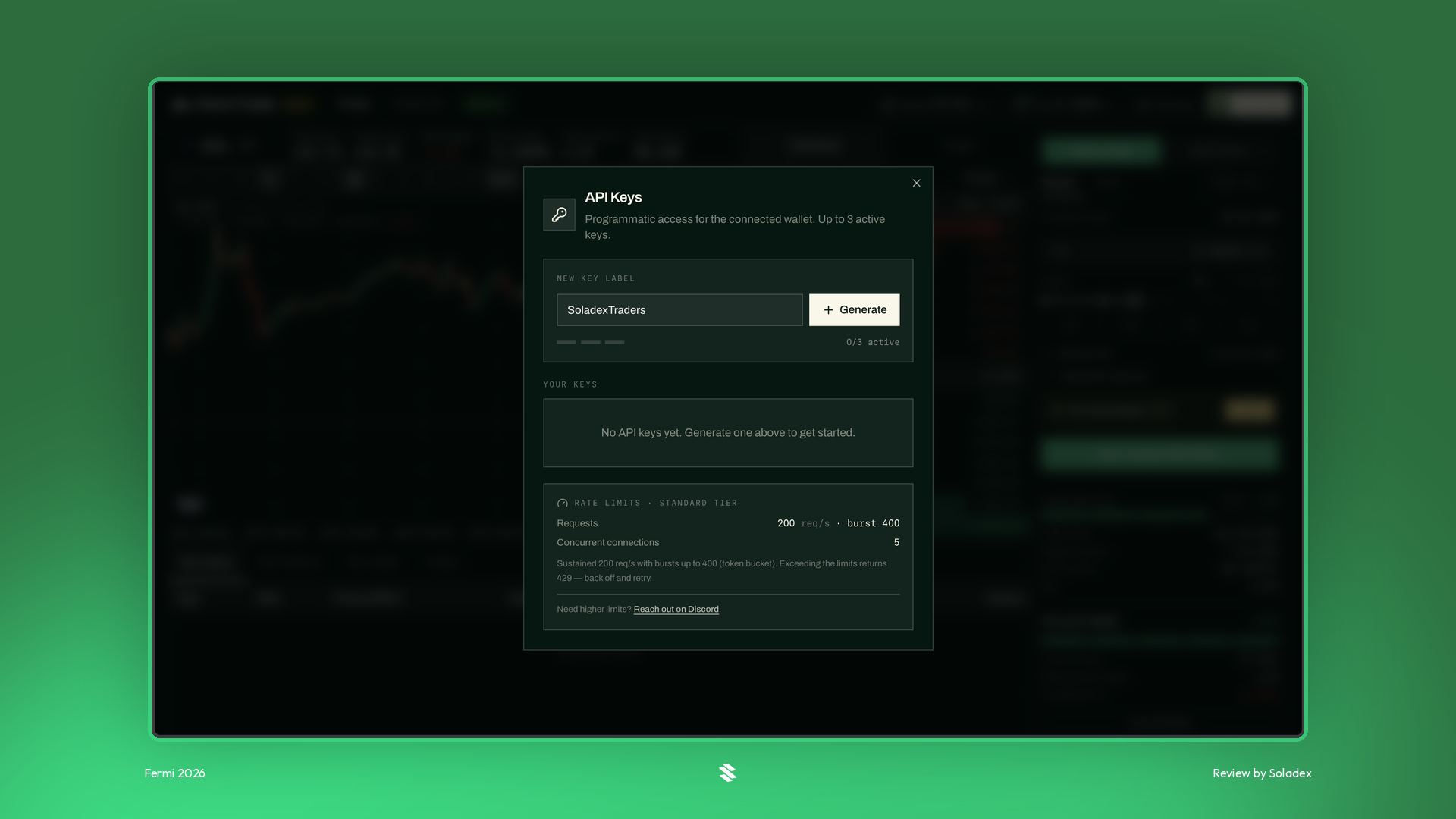
API keys allow users to connect trading bots, analytics tools, or other supported applications to their Fermi account. You do not need to create one if you don’t have automated trading setups.
Fairer Order Sequencing on Fermi
One of Fermi main ideas is making order sequencing more transparent. Orders are placed into a queue before their full details are revealed for execution. This is intended to reduce the ability for participants to see an order and jump ahead of it. Fermi aims to use first-come, first-served execution within each market.
Cross-Margin Trading
Fermi uses cross-margin accounts as seen in the example. Instead of assigning collateral separately to every market, a trader can use one account balance to support positions across multiple perpetual futures markets. This can improve capital efficiency for traders, but it also means losses in one position may affect the health of the full account. Isolated margin is coming soon.
Risks and Considerations
Perpetual futures are high-risk products, particularly when trading with leverage. Fast market moves can cause losses or liquidation, while funding payments, low liquidity, network delays, and technical issues can also affect trade execution. Only trade with funds you can afford to lose and understand how margin works before opening a position.
Conclusion
Fermi is a Solana-based perpetual futures exchange focused on self-custody, transparent execution, and faster onchain trading. Its goal is to offer a responsive trading experience while keeping key exchange functions, including matching, risk management, funding, and liquidation, onchain. Fermi is currently in beta, so available features may be limited and can change as the platform develops.