


What Is Parcl?
Parcl is a Solana-based real estate data and housing-pricing platform focused on U.S. residential markets. It provides housing indices, analytics, price feeds, and market intelligence rather than enabling users to trade housing prices directly through its app. Parcl Labs produces the data used to track housing-market activity across cities and metropolitan areas. Its indices show how residential property prices are changing in specific geographic markets.
How Parcl Works
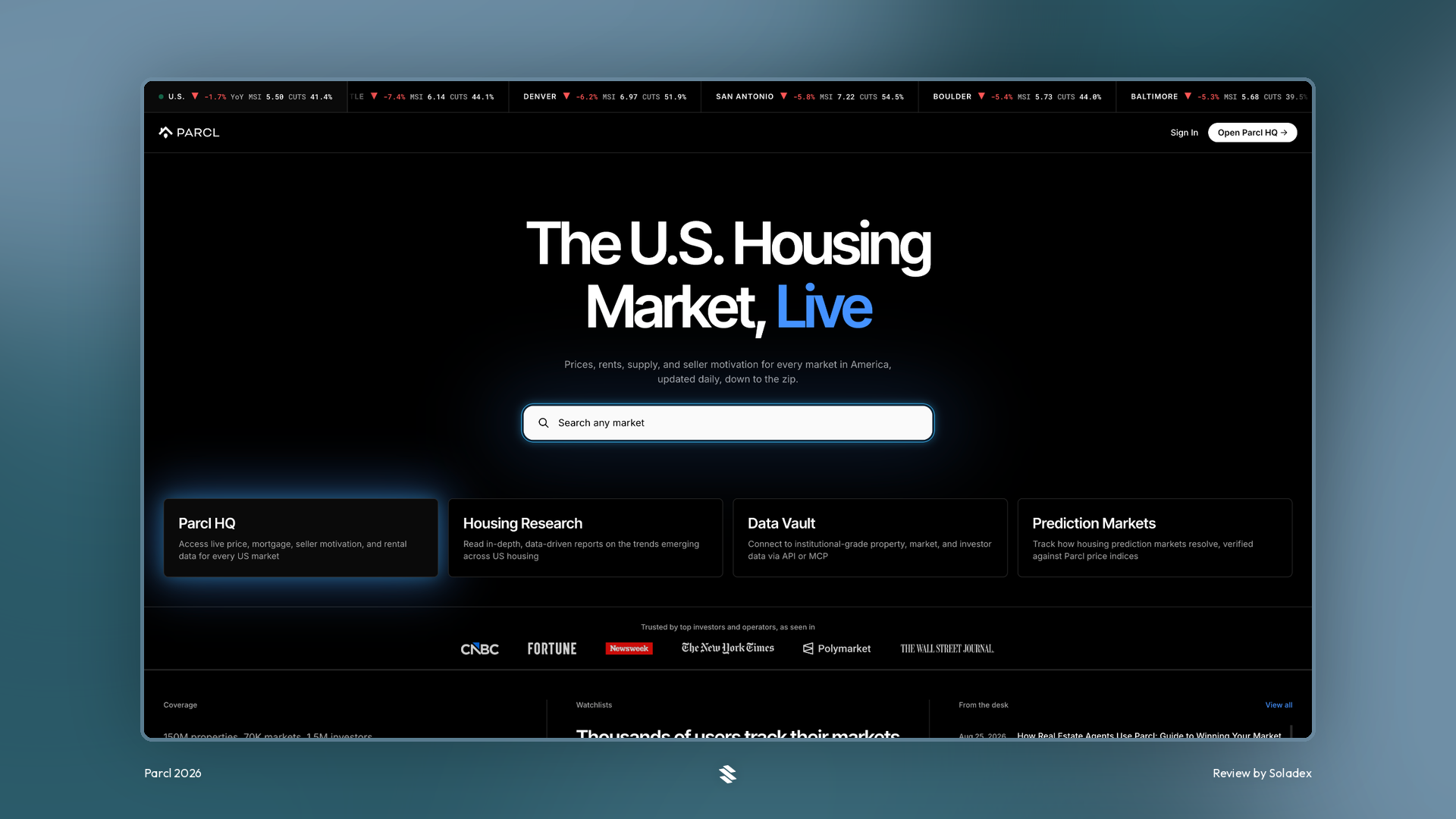
Parcl collects and processes housing-market information to create frequently updated pricing indices. These indices provide a broader view of housing conditions across selected U.S. cities, metropolitan areas, and neighbourhoods. Analysts, developers, institutions, researchers, and third-party applications may use the platform's data to understand residential real estate markets. Instead of following an individual property, Parcl’s data products are intended to represent pricing trends across a defined geographic area.
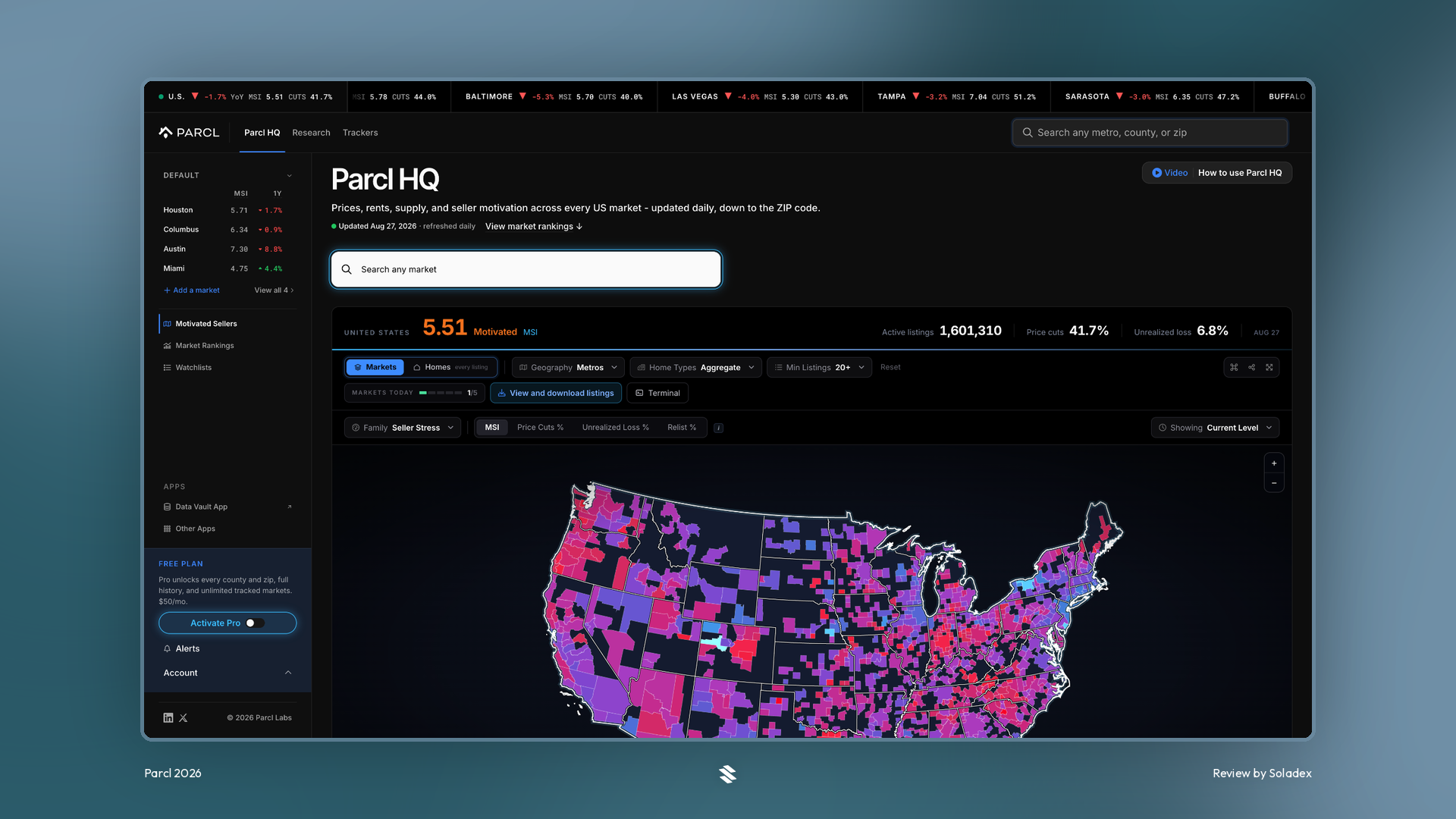
After signing up, new users can complete or skip the initial setup steps.
Parcl Labs and Housing Data
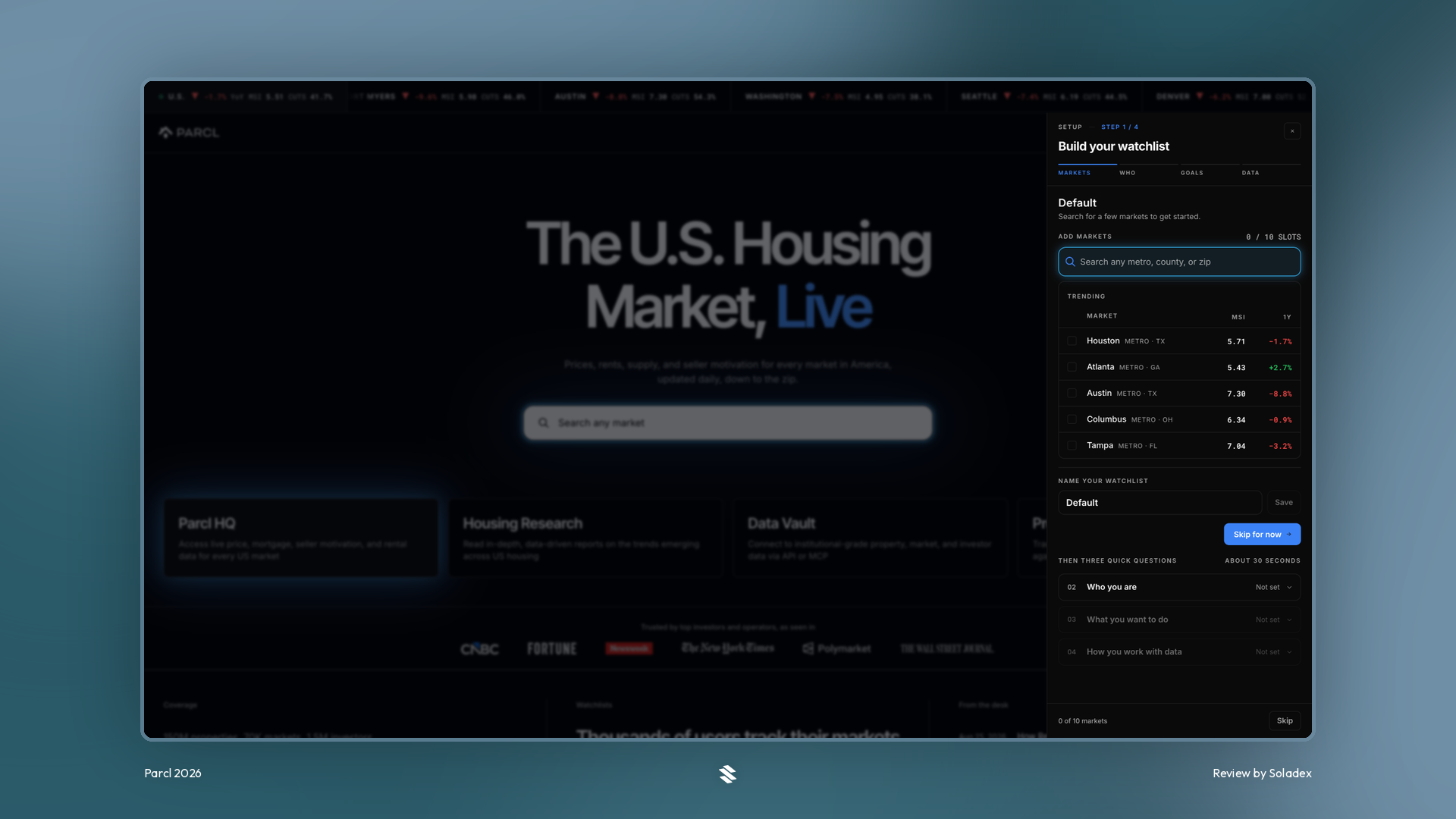
Parcl Labs provides Parcl’s data infrastructure, processing housing information into indices, analytics, price feeds, and research. Its indices track pricing trends across cities, metropolitan areas, and neighbourhoods rather than individual homes. Because properties vary in size, condition, location, and transaction timing, Parcl Labs converts fragmented data into consistent market-level reference prices. Developers, analysts, institutions, and third-party applications can then use its indices and APIs for research, monitoring, analysis, and contract settlement.
Real Estate Data as Infrastructure
Real estate data can be fragmented and difficult to compare. Parcl organizes this information into indices and data products that help users track prices, compare locations, and analyze U.S. housing trends. These products provide market insights only, not property ownership, rental income, or rights to real estate.
Earlier Perpetual Real Estate Markets
Earlier versions of Parcl offered perpetual futures tied to housing indices, using margin, funding payments, and liquidity pools. These products involved leverage, liquidation, and protocol risks. They are part of Parcl’s history and differ from its current focus on housing data, pricing, and analytics.
Parcl and Polymarket
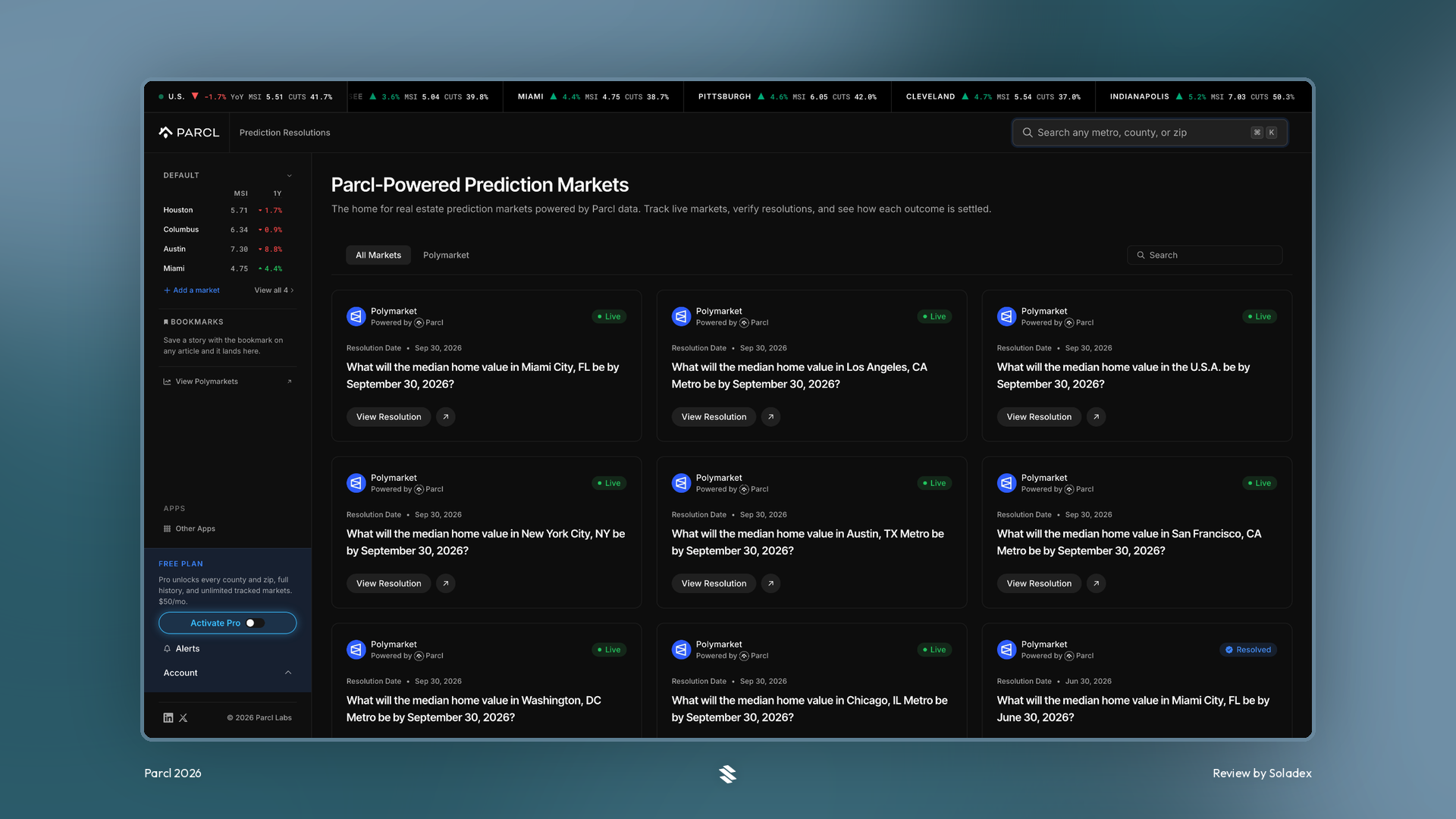
Parcl and Polymarket partnered to create housing-price prediction markets. Polymarket operates the markets, while Parcl supplies the housing indices and settlement values. Participants can forecast whether a city’s index will rise, fall, or cross a specified threshold. Parcl resolution pages provide the final index value, historical context, and methodology needed to verify outcomes transparently.
Why Housing Prediction Markets Matter
Prediction markets have traditionally focused on politics, sports, economics, and cryptocurrency. Housing introduces exposure to a much larger asset class. Real estate prices are difficult to evaluate directly because transactions are slow, properties are unique, and market data can be delayed. By providing frequently updated housing indices, Parcl offers a standardized data layer that can support forecasting, research, and third-party market applications.
The PRCL Token
PRCL is Parcl’s governance and utility token, launched in 2024. It supports governance, ecosystem incentives, and access to selected data products and APIs. PRCL is separate from Parcl’s housing indices, and its price depends on crypto-market factors rather than housing prices.
Parcl Compared With Physical Property
Physical property provides ownership of a specific asset. Owners may live in the property, rent it to others, improve it, borrow against it, or sell it. They may also benefit from rental income and long-term appreciation. Parcl’s data products do not provide these rights. They offer information and market analysis concerning broader housing trends. There are no tenants, repairs, inspections, or property taxes associated with using Parcl’s data, but there is also no deed, rental income, or legal claim over a home.
Parcl Compared With REITs
Real estate investment trusts (REITs) typically own or finance portfolios of properties. Investors purchase shares and may receive dividends generated by rent or other property income. Parcl is not a REIT and does not represent ownership in an income-producing property portfolio. REITs are generally evaluated through property ownership, rental income, dividends, debt, corporate management, and portfolio composition. Parcl’s products are instead centred on housing-market data, index methodology, pricing trends, and related analytics.
Risks and Limitations
Parcl’s products face data inaccuracies, methodology changes, uneven market coverage, and indices that may not reflect individual properties. Third-party applications also carry oracle, settlement, smart-contract, and regulatory risks. PRCL holders face volatility, liquidity constraints, and potential dilution from token unlocks.
Conclusion
Parcl has gone from synthetic real estate trading into a U.S.-focused housing data company. Through Parcl Labs, it provides indices, analytics, price feeds, and market intelligence. Its Polymarket partnership uses these indices to settle housing prediction markets transparently.