


What is GMTrade?
GMTrade is a decentralized trading platform built for Solana users. It supports DeFi primitives across token swaps, leveraged long and short trading, liquidity provisioning, staking, and many more. The platform uses its GM and GLV liquidity pools to support trading activity, and liquidity providers earn from trading fees, borrowing fees, and swaps. With GMTrade, traders can access different markets, collateral options, limit orders, take-profit orders, stop-loss orders, and leverage.
How GMTrade Works
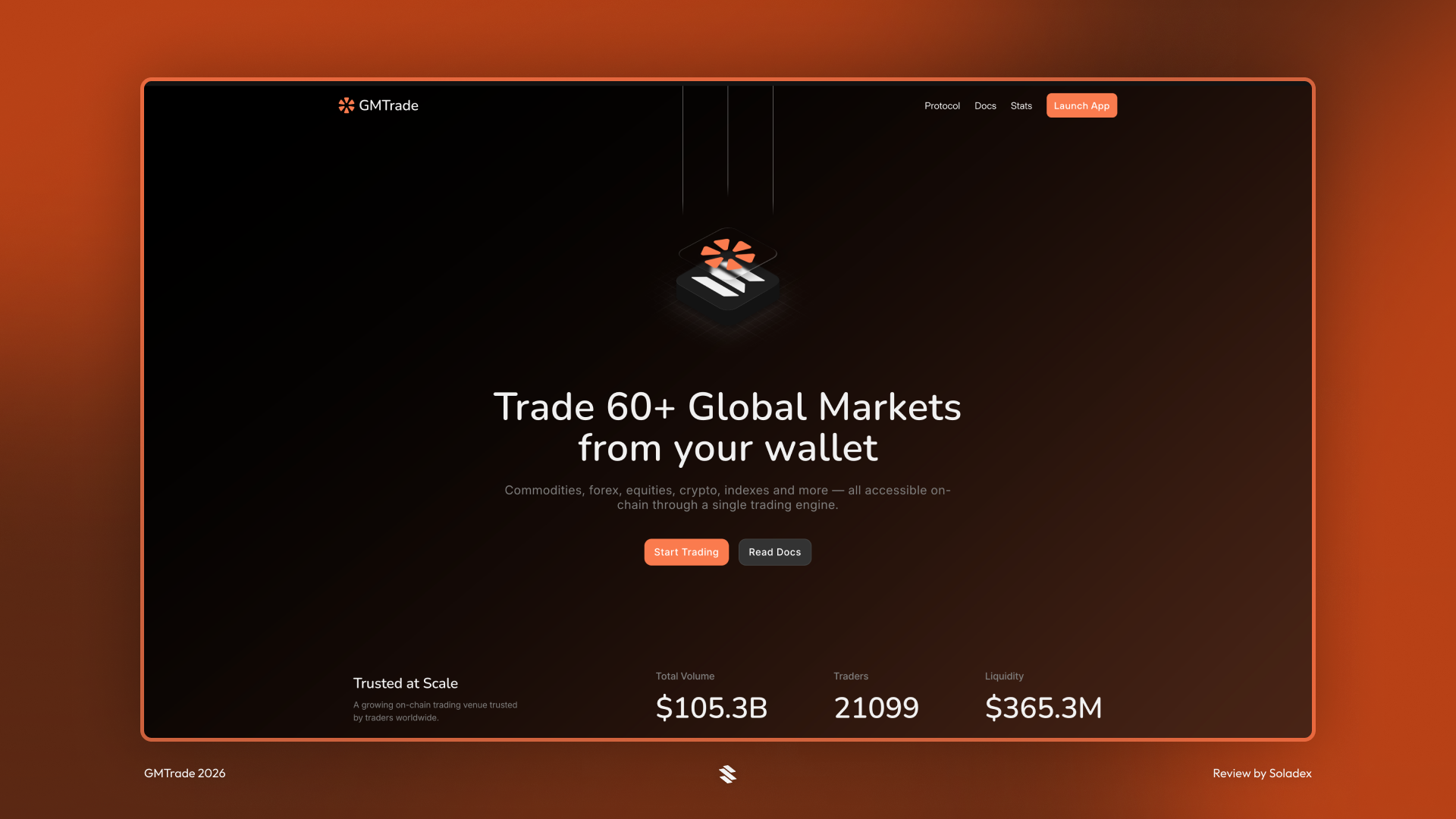
GMTrade connects traders and liquidity providers through its pool-based market structure. Traders can open long or short positions using liquidity from GM and GLV pools. A long position profits when the asset rises in price, while a short position profits when the asset falls.
Liquidity providers deposit assets into pools that act as the counterparty to traders. In return, they earn a share of platform fees. These fees are automatically reflected in the value of GM and GLV tokens to give the LPs real yield from the usage of the app.
Trading on the GMTrade App
To get started with GMTrade, connect with a Solana wallet such as Phantom or Solflare. Fund the wallet with some SOL for transaction fees and trading.
Open a Long or Short Position
To trade with leverage:
- Choose Long or Short
- Select the market
- Choose the pool
- Select collateral
- Enter position size and leverage
- Review fees, liquidation price, and price impact
- Confirm the trade
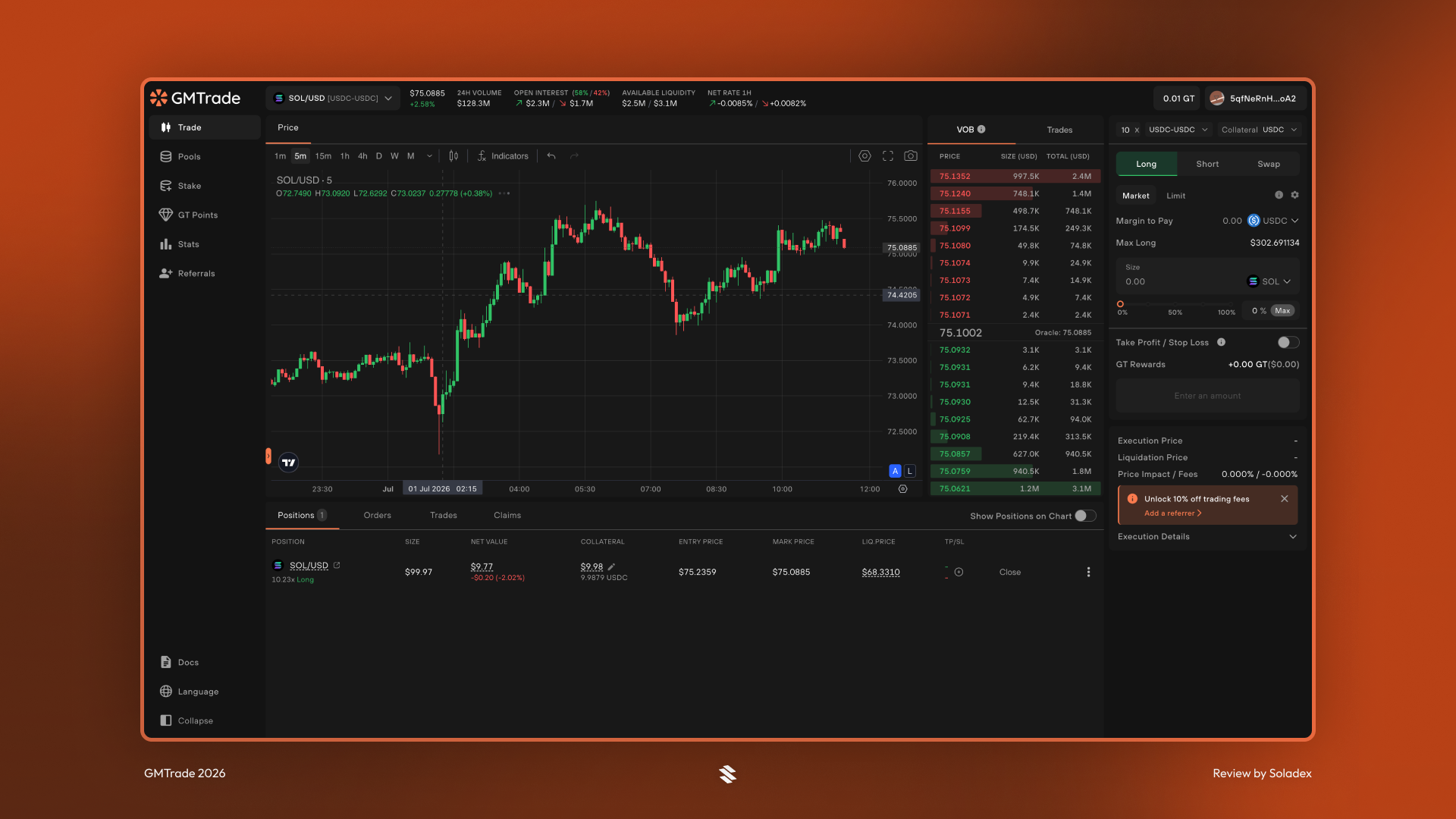
You can choose different collateral types depending on what is available for the market of interest. For example, a SOL trade may support collateral in WSOL or USDC. In the example below, I opened a long trade on SOL with a 10x using $10 as collateral. Once the trade has been executed, it appears in the Positions section where users can edit the trade, add or remove collateral, manage leverage, and monitor liquidation prices. Additionally, GMTrade supports several order types such as market orders, limit orders, take-profit orders, and stop-loss orders.
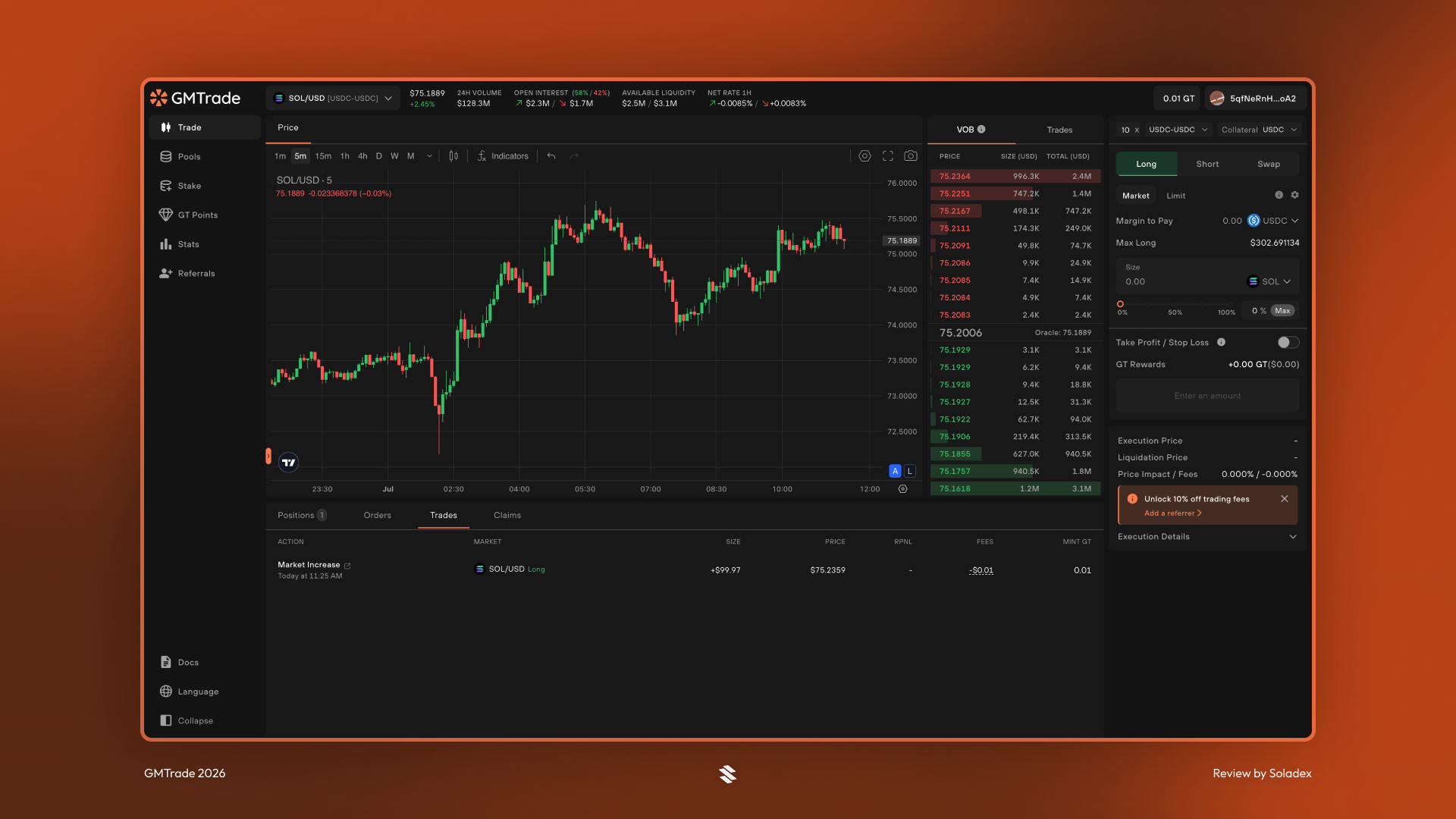
Closing a trade realizes profit or loss. Long profits are usually paid in the asset being traded, while short profits are commonly paid in the stablecoin used as collateral, though users may be able to choose another token to receive profits in.
Swap Tokens
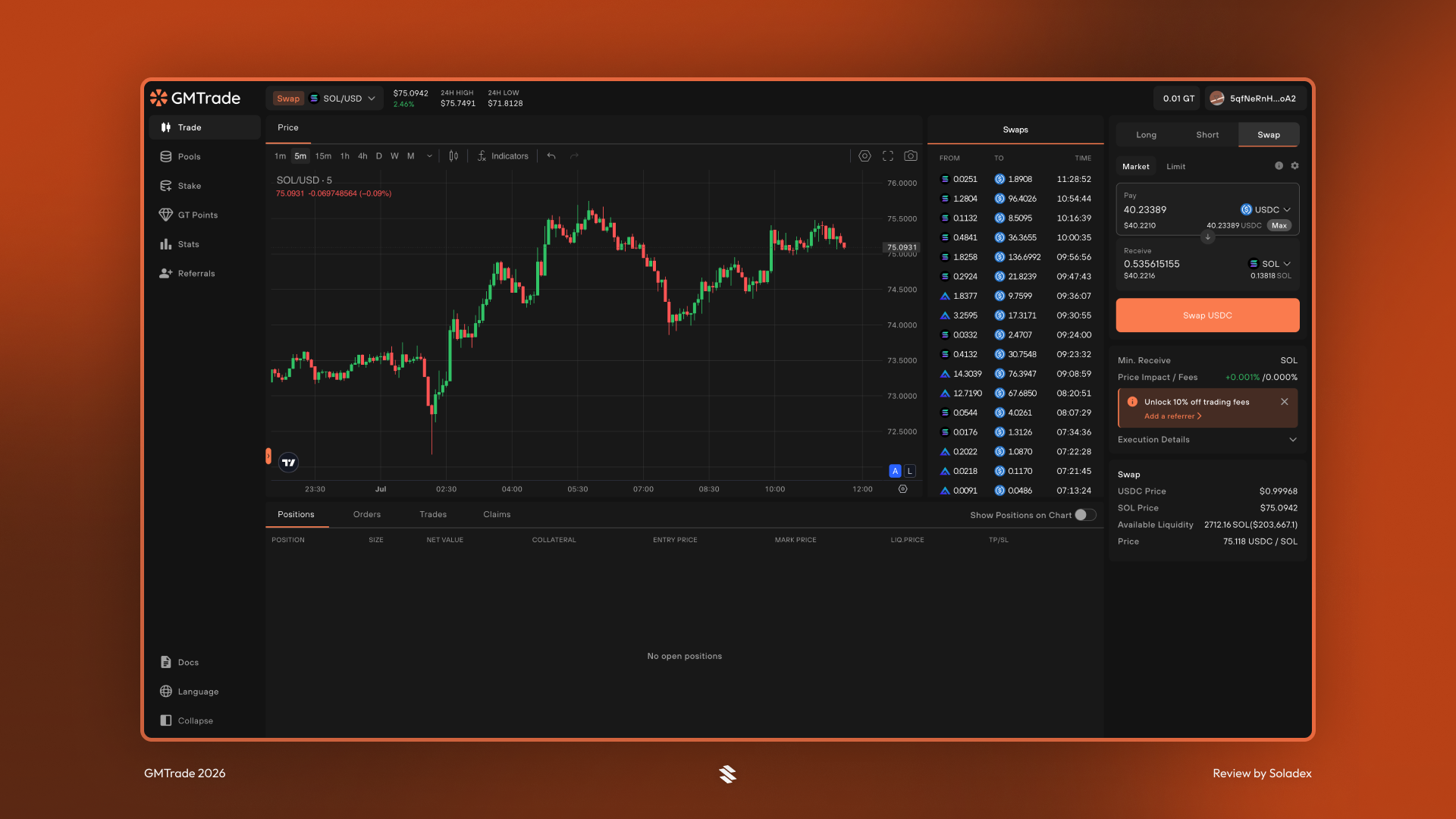
GMTrade supports token swaps from the Swap tab on the Trade page. Swap fees and price impact are shown before confirmation.
How to Provide Liquidity on GMTrade
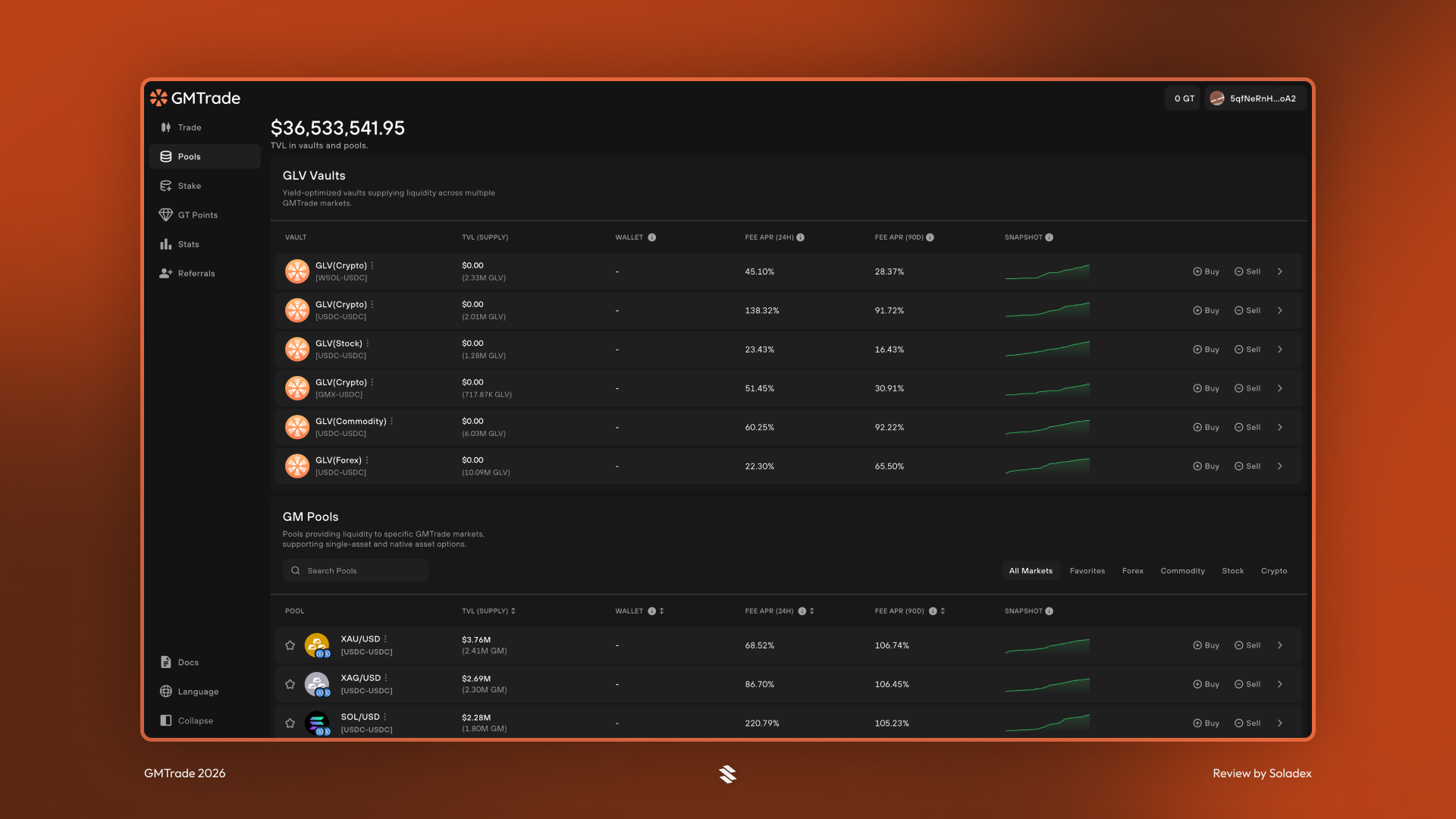
Users can provide liquidity through the Pools page by choosing either GLV Vaults or GM Pools.
GLV Pools
GLV pools are automated liquidity vaults that distribute liquidity across supported markets. A GLV pool usually includes supported markets, a long token and a short token. For example, a WSOL-USDC GLV pool uses WSOL to back long positions and USDC to back short positions.
GM Pools
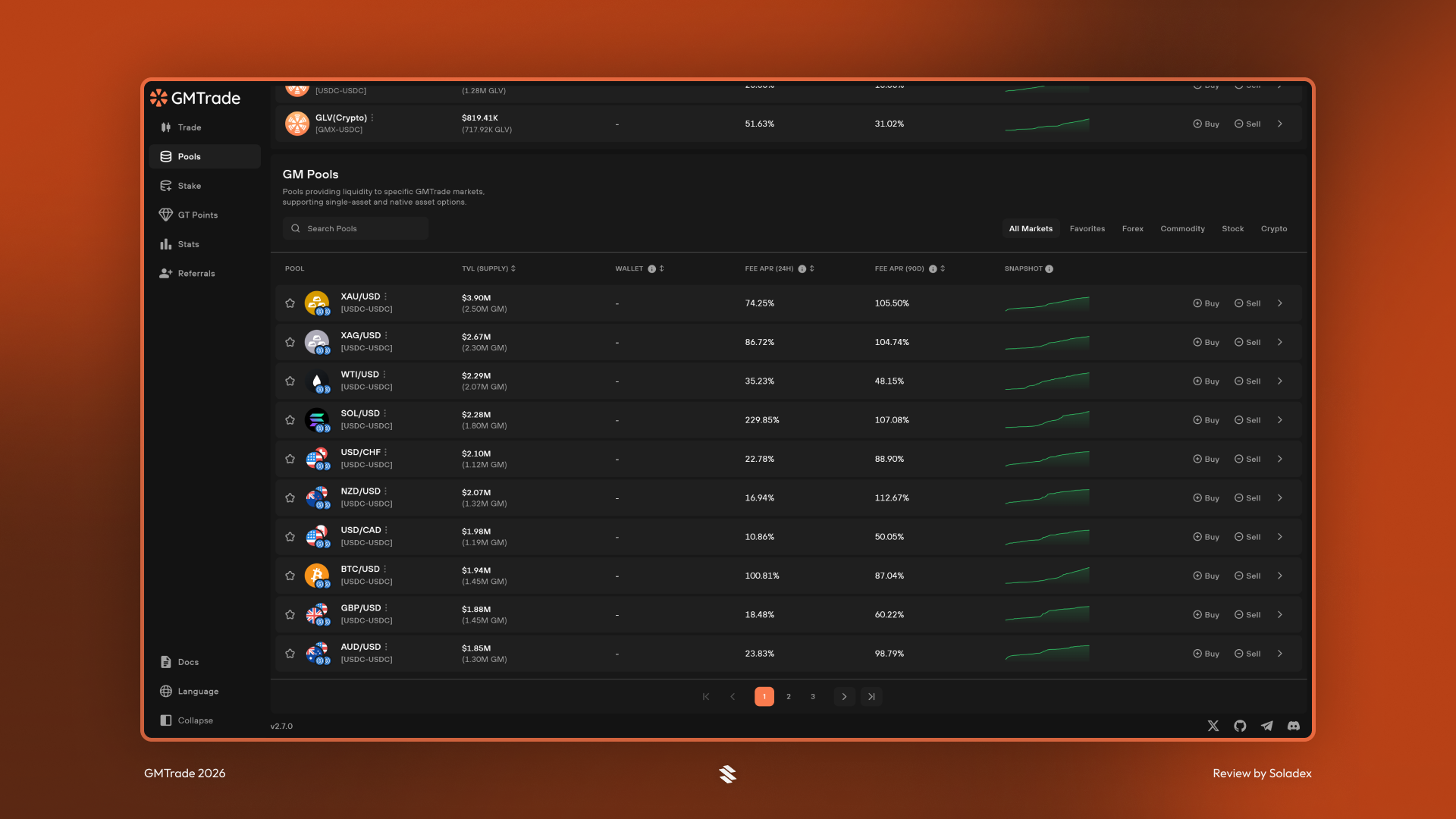
GM pools are individual market pools that are built around an index price feed, a long token, and a short token. For example, a SOL/USD market backed by WSOL-USDC uses the SOL/USD price feed, WSOL for long exposure, and USDC for short exposure.
Staking
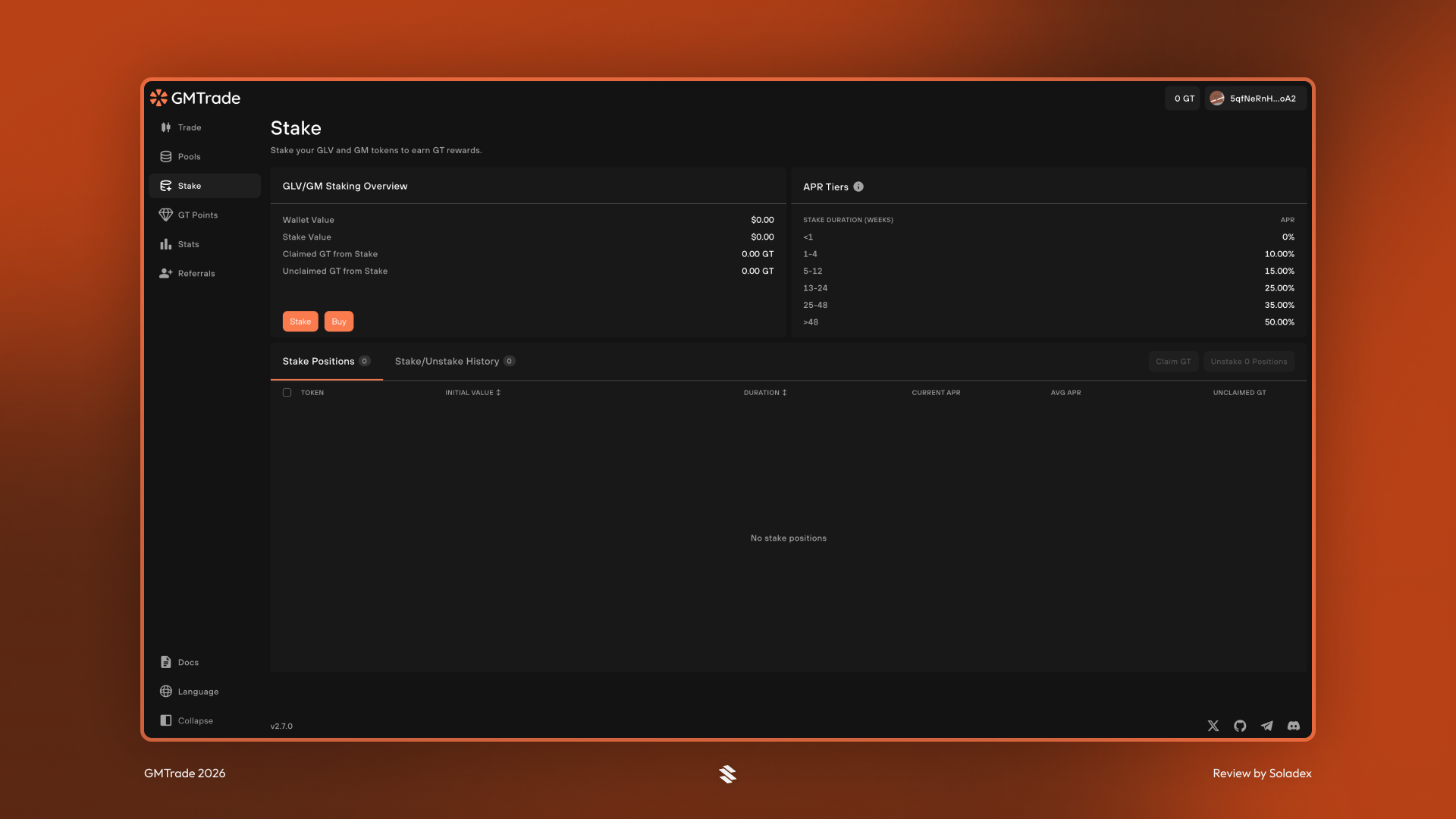
Staking liquidity tokens (GM and GLV tokens) on GMTrade provides a way to passively earn a share of protocol revenue and yields from the trading activities on the DEX. Liquidity providers can lock their tokens into the app’s liquidity pools to enjoy these benefits. Staking the GM and GLV tokens can be done in the staking section shown below.
Trading Fees on GMTrade
GMTrade charges fees for opening and closing leveraged positions, swaps, borrowing, and funding. In the SOL long trade I opened above, I was charged a small fee that is common to most decentralized exchanges. Trading fees vary by market type and by whether the trade improves the pool balance.
Fee Distribution
GMTrade distributes platform fees across three main areas:
- 75% to Liquidity Providers: Rewards are compounded into GM and GLV pools, increasing value for LPs.
- 15% to Treasury: The Treasury supports long-term platform sustainability and is governed by GT holders through a multi-signature setup.
- 10% to Technical Development: This supports ongoing development, maintenance, infrastructure, and product upgrades from the core team.
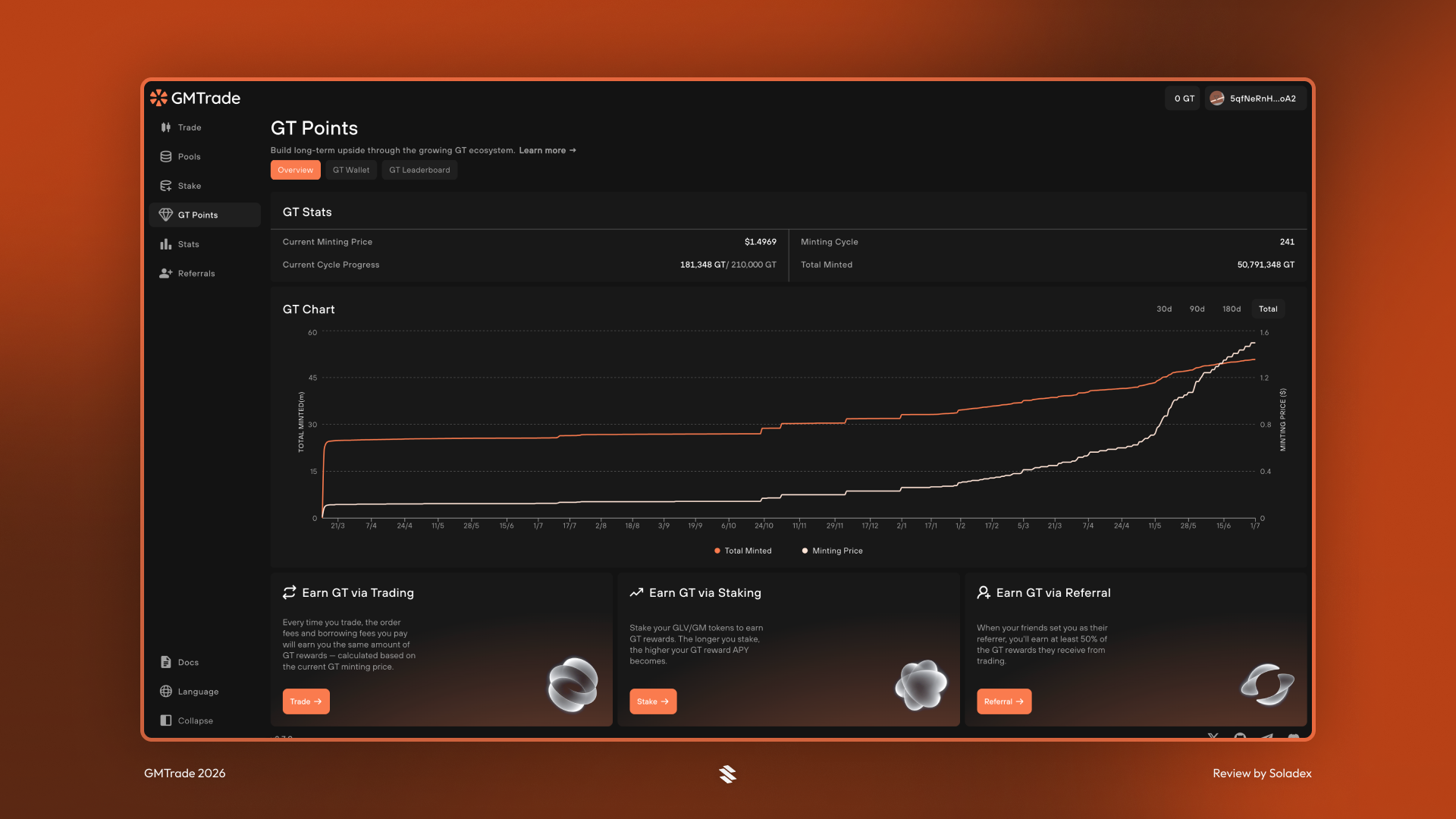
GT Points System
GMTrade uses GT Points to reward users who trade, provide liquidity, and refer others. GT Points also act as credentials for participation in the platform’s Token Generation Event.
Risks
Like all DeFi platforms, GMTrade involves risk, and a user should understand this before trading or providing liquidity. Main risks include:
- Smart contract vulnerabilities
- Liquidation risk from leveraged trading
- Counterparty risk for liquidity providers
- Price impact and liquidity limitations
Trade responsibly, use leverage carefully, and avoid depositing more than you can afford to lose.
Conclusion
GMTrade brings swaps, leverage trading, liquidity pools, staking, and GT rewards into one Solana-based trading platform. Traders can access long and short markets with advanced order tools, while liquidity providers can earn yield through the GM and GLV pools. With its pool-based liquidity model and GT incentive system, GMTrade offers a good DeFi trading experience for Solana users.